





 Portuguese
  English
  Spanish
  6 min of reading
  5 comments


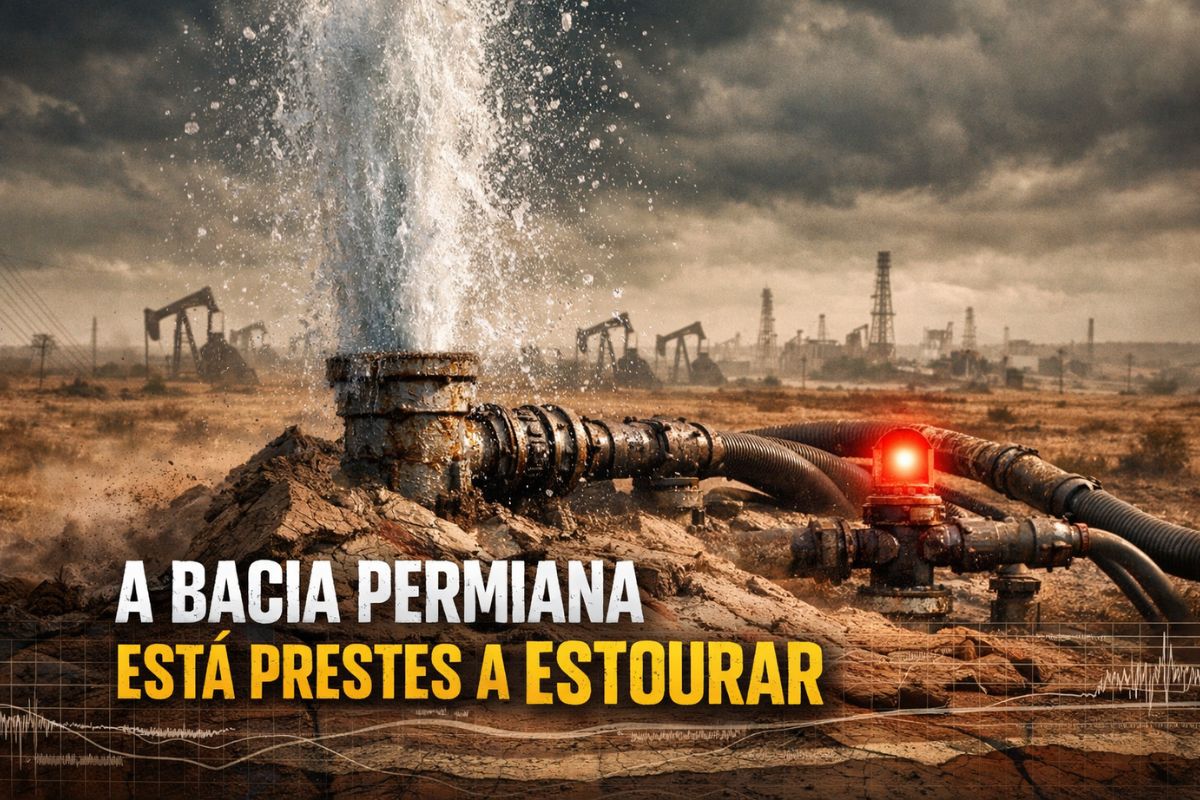


In The Largest Oil Field In The United States, In The Permian Basin, Companies Inject Billions Of Barrels Of Saltwater Underground; Pressure Rises, Abandoned Wells Spout Toxic Geysers, The Ground Elevates And Regulatory Agencies Spend Millions To Contain Leaks That May Threaten Aquifers And Rural Communities In Areas Of Texas.
In 2021, when Texas began to restrict deep disposal of wastewater, the Permian Basin, the largest oil field in the United States, was already producing about half of the country’s crude oil and extracting between five and six barrels of water for every barrel of oil. The solution found was to migrate injection to shallower reservoirs, reducing the earthquakes associated with deep injection, but redistributing the pressure to other layers underground.
In 2022, the pressure buildup exploded to the surface as a visual alert: a column of about 30 meters of extremely salty water gushed from an abandoned well in Crane County, near the community of Tubbs Corner. The Texas Railroad Commission took approximately 53 days and nearly US$ 2.5 million to contain the geyser, in an episode that exposed the degree of geological stress and the costs of managing the pressure generated by the aggressive injection of waste.
How The Largest Oil Field In The United States Became A Pressure Cooker

Companies in the shale sector transformed the Permian Basin into a kind of pressurized system. In addition to oil, each well produces enormous volumes of salty and toxic water, which are pushed back underground in disposal wells.
-
Offshore industrial demand in Macaé skyrockets with the recovery of oil and gas and could grow by up to 396% by 2026 in the Campos Basin.
-
Offshore industrial demand in Macaé surges with the recovery of oil and gas and could grow by up to 396% by 2026 in the Campos Basin.
-
Brazilian giant expands borders in the Southeast: Petrobras confirms new oil discovery in ultra-deep waters in the pre-salt of the Campos Basin.
-
Alert in the global energy market: Severe tropical cyclone hits the coast and disrupts gas production at major plants in Australia, threatening global supply.
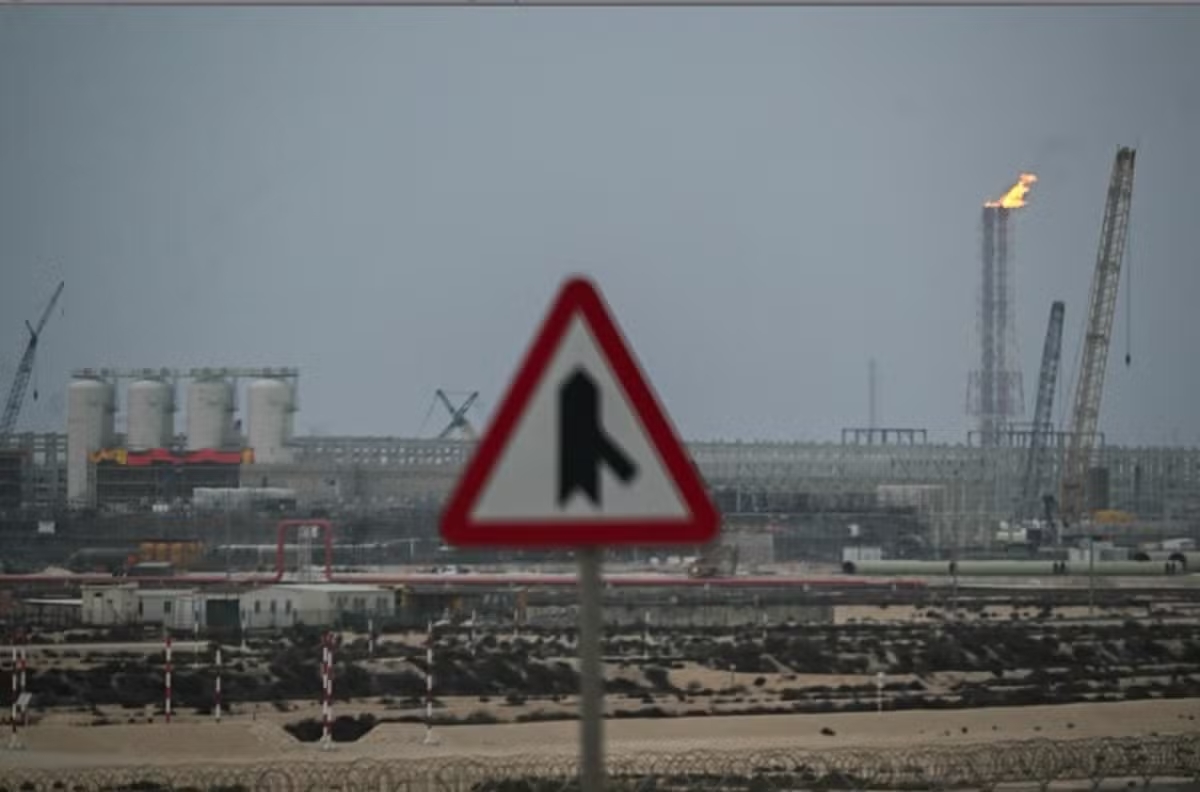

On average, in the Delaware part of the basin, drillers extract five to six barrels of water for each barrel of oil, creating a cumbersome and ongoing liability.
For years, the dominant practice was to send this fluid to deep formations.
The result was the occurrence of hundreds of earthquakes, some above magnitude 5, felt at great distances, even in cities like Dallas, El Paso, and San Antonio.
To reduce seismic risk, the state regulator began to restrict injection at great depths, forcing companies to use shallower reservoirs, which currently receive about three-quarters of the billions of barrels of water discarded annually in the region.
The measure reduced tremors but transferred the pressure to shallower formations closer to aquifers and old wells.
Reservoirs At Their Limits And Saltwater Geysers
In the most stressed areas of the Permian Basin, pressure in some injection reservoirs already reaches 0.7 pounds per square inch per foot, above the limit of 0.5 pounds per square inch per foot that Texas regulators consider a risk threshold for flow towards the surface.
When this barrier is crossed, any failure, fissure, or abandoned well becomes a potential escape route for saltwater.
That’s what happened in Tubbs Corner. In 2022, an old, deactivated well began to gush brackish water like an uncontrolled hydrant.
Chevron plugged the well, but almost two years later, the water reappeared in another nearby well, a sign that the initial blockage merely redistributed the pressure underground.
At the same time, satellite measurements indicate a slight uplift of the ground, another sign of compression in areas where fluid is being dammed.
Every intervention becomes an expensive game of whack-a-mole, with risks shifting from one point to another.
Risk To Aquifers, Farms And Rural Communities
The produced water in the largest oil field in the United States is highly brackish and carries residues associated with oil and gas production.
When it encounters weakened or abandoned water wells, it can migrate into layers used by rural producers and communities for cattle supply and human consumption.
Landowners report old artesian wells suddenly gushing salty water again, turning productive areas into focal points of risk.
Ranchers in the region warn that a single rupture in a water catchment area for livestock could jeopardize businesses overnight.
The concern is that the silent advance of wastewater plumes underground contaminates sources that still sustain farms and small towns, requiring high investments in new catchments or water treatment.
Groundwater conservation districts are starting campaigns to collect samples from wells and measure if the quality has already been altered, with local budgets estimated in the hundreds of thousands of dollars.
Regulator Pressured Between Economy And Environmental Safety
The Texas Railroad Commission, responsible for regulating the largest oil field in the United States, faces a delicate balance.
On one side, oil and gas production accounts for a decisive share of the state’s economy and attracts new projects, from data centers to initiatives for capturing carbon dioxide stored in industrial plants.
On the other hand, allowing the injection crisis to worsen could become a political, fiscal, and reputational problem for the agency and the sector itself.
The agency has begun using satellite data to track pressure buildup areas, imposed limits on injected volumes in certain zones, and received additional funding, around US$ 1.3 million to set up a specific team and an additional US$ 100 million to repair leaking wells.
Still, local managers point to a lack of field personnel and criticize the slow pace of sealing new leaks, such as in the case of a well in Pecos that took about four months to be blocked, at an estimated cost of US$ 350,000.
Rising Costs For The Oil And Gas Industry
On the companies’ side, underground instability increases costs and complexity.
Operators of the largest oil field in the United States report needing to drill in high-pressure zones, reinforce wells with additional linings, and apply barriers against corrosion caused by saltwater.
Each additional layer of protection, each extra reservoir study, adds millions to the cost of producing the same barrel of oil.
Some producers even claim that water injected by third parties is migrating to their own oil and gas reservoirs, flooding wells and reducing productivity.
There are ongoing lawsuits, such as the one filed by operator Pecos Valley against a water treatment company, alleging that the injection had invaded four oil and gas wells.
At the same time, experts warn that fields in other oil-producing regions of the United States also generate brackish water, though in smaller volumes than the Permian Basin, making the situation in Texas particularly critical.
Relief Technologies And Limits Of Geology
To relieve the pressure, the industry is testing solutions such as accelerated evaporation of water, salt removal for reuse in other activities, and even plans for discharging treated water into rivers, authorized by recent state legislation.
However, these alternatives do not eliminate the need for injection in the short term, especially as oil production in the largest oil field in the United States continues to rise.
Researchers from the Bureau of Economic Geology point out that there are areas in the Permian Basin where waste injection can be done safely, provided there is rigorous mapping and adherence to pressure limits.
The warning is clear: if the state says no to deep injection due to earthquakes, no to shallow injection due to surface flows, and does not consider the science that defines safe zones, the system could become paralyzed.
Geology imposes limits that neither the demand for oil nor the economic pressure can ignore for long.
In a scenario where the largest oil field in the United States sustains the economy but turns the underground into a pressure cooker and threatens water and farms, do you think Texas should prioritize reducing production or tighten injection regulations even further to protect the region’s future?





Interessante a matéria e nos faz associá-la à Salgema no NE brasileiro. Mexer com o subsolo é perigoso, o custo das intervenções e o estrago ao meio ambiente podem ser maiores que os benefícios da exploração de petróleo. Por outro lado, força a investimentos em pesquisas de novas técnicas de exploração e produção que podem nos abrir novas fronteiras de desenvolvimento.
Como disse o Trump: perfure , baby
Ele vai ser um dos responsáveis por essa tragédia ambiental e os americanos vão sofrer e a grande maioria não vai fazer correlação nenhuma com os danos ambientais que a prática de perfurar cada vez mais causa. A ambição humana desmedida ainda vai matar aos poucos a natureza e por consequência o ser humano. É muito triste e preocupante isso tudo
De acordo, mas a natureza vai seguir em frente e encontrar um novo equilíbrio, num mundo diferente deste. Só que nós não estaremos nele.
Cloro que sim, se foce no Brasil as ONG já estavam em cima , mais lá quem manda é o dinheiro, no Brasil as ONG estão fazendo campanha contra à margem Equatorial, por trás está quem USA é claro, para que o Brasil n se desenvolva, dizendo que vai prejudicar a margem da Amazônia.
Como !
Se o petróleo vai se retirado a milhas de distância, da margem equatorial.
Espero
que isto que esteja acontecendo no USA, passar ser resolvido da melhor forma para n prejudicar os ser humano, que mais interessa n dinheiro
Aula de português pra que né?