





 Português
  Inglês
  Espanhol
  3 min de leitura
  4 comentários


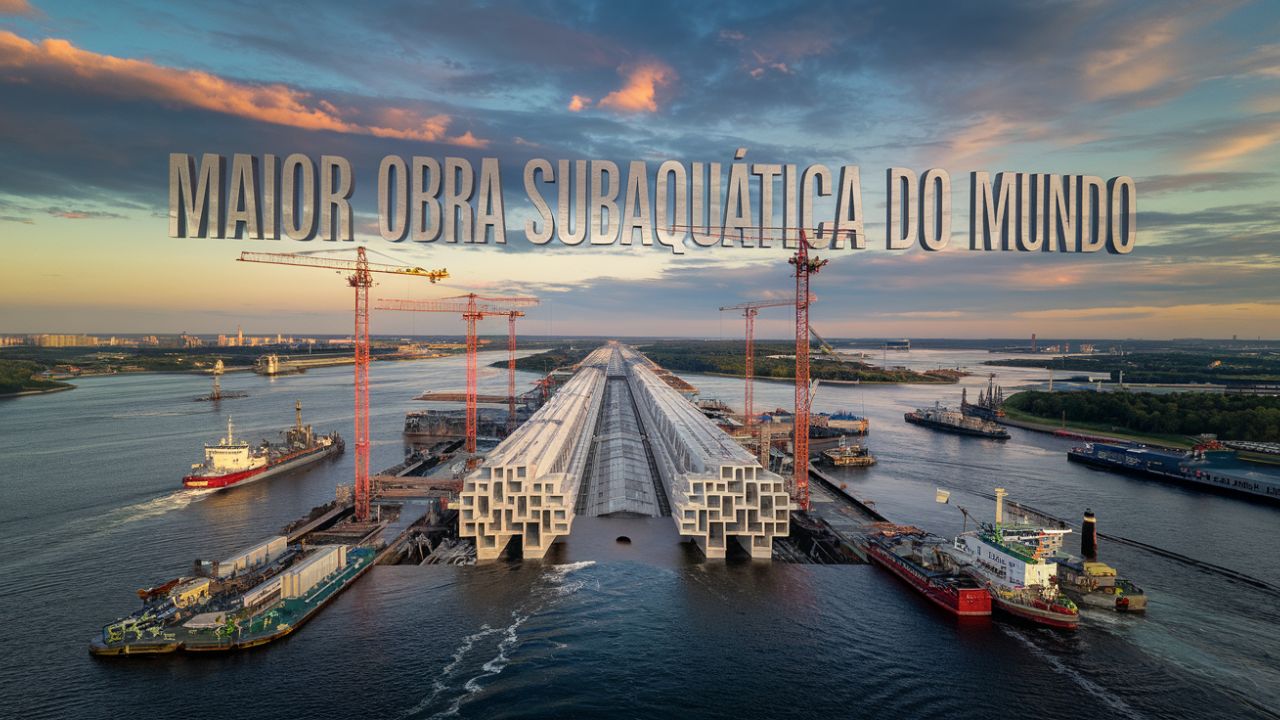


With 18 km in length, plunging 40 meters below the Baltic Sea, the largest underwater tunnel in the world is being constructed with 89 prefab sections, promising to revolutionize travel and trade between Germany and Denmark.
Have you ever stopped to think that some of the greatest revolutions happen far from our eyes? Right beneath the Baltic Sea, a colossal project is redefining what we know about construction: the Fehmarnbelt Tunnel. And the most impressive part? It is being constructed without a single drilling machine. Innovative, sustainable, and ambitious, this 18-kilometer tunnel, linking Germany to Denmark, is about to become the largest underwater tunnel in the world.
With a budget of US$ 7 billion and a completion forecast for 2029, the Fehmarnbelt is more than an engineering feat—it is a symbol of progress and collaboration.
How the Fehmarnbelt Tunnel Is Being Built Without Drilling Machines
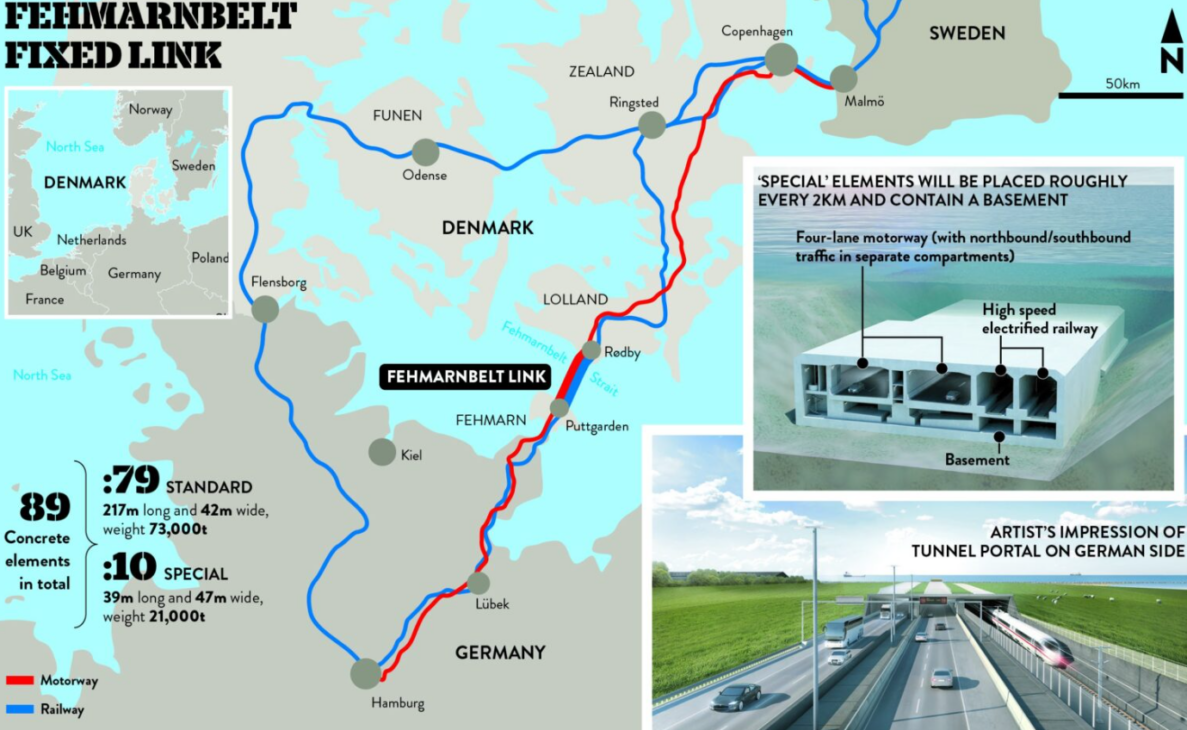
When we think of tunnels, it is common to imagine gigantic drilling machines tirelessly digging through mountains or underwater. But the largest Fehmarnbelt Tunnel decided to take another path, betting on a revolutionary method: the prefab sections.
-
A megaproject worth R$ 89 billion is advancing in Iraq and promises to change the game in global trade by creating a new corridor between Asia and Europe, reducing traditional routes and repositioning the country as a logistics powerhouse.

-
Goodbye bedside table: floating shelves become a trend in 2026 by freeing up space in the bedroom, improving circulation, bringing visual lightness, and integrating technology without taking up floor space.

-
Israel, Greece, and Cyprus signed an agreement in 2020 to transport gas from the Mediterranean to Europe via a 1,872 km pipeline, but Turkey claimed sovereignty over part of the maritime route, and the project never materialized.
-
Israel, Greece, and Cyprus signed an agreement in 2020 to transport gas from the Mediterranean to Europe via a 1,872 km pipeline, but Turkey claimed sovereignty over part of the maritime route, and the project never materialized.

Imagine building a giant puzzle, only underwater. That’s exactly what’s happening. Instead of excavating the sea floor, engineers are manufacturing 89 tunnel sections on dry land. Each segment is a true engineering masterpiece, measuring 217 meters long and weighing an incredible 73,500 tons.
These giant pieces are carefully transported and positioned on the sea floor. The level of precision is so high that even a millimeter makes a difference. Once in place, they are connected like LEGO blocks, creating a watertight and extremely safe structure.
The installation of these sections is no joke. The operation requires the use of advanced technology and highly specialized teams. Each segment is lowered slowly to the exact position, where it is connected to the other pieces. The result? A perfectly aligned tunnel, ready to withstand time and the forces of nature.
A Sustainable Project for the Baltic Sea
Building a tunnel of this scale in the midst of a delicate ecosystem like the Baltic Sea is no simple task. But the largest Fehmarnbelt Tunnel proves that it is possible to combine innovation with sustainability.
Engineers have taken stringent measures to minimize environmental impacts. Noise caused by construction has been reduced to a minimum, and the placement of the tunnel sections has been carefully planned to avoid sensitive marine life areas. In addition, constant monitoring ensures that the impact is as low as possible.
Sustainability does not stop at construction. The tunnel will be equipped with highly efficient lighting and ventilation systems, reducing its long-term environmental impact.
Benefits of the Tunnel for Travel and Trade
According to Daily Galaxy, the impact of the Fehmarnbelt Tunnel goes far beyond engineering. It promises to revolutionize travel and trade in Europe.
Today, crossing the Fehmarnbelt Strait takes about 45 minutes by ferry. With the tunnel, this journey will be reduced to just 7 minutes by train or 10 minutes by car. That’s like swapping a pothole-riddled road for a state-of-the-art highway.
For businesses, this means faster and more reliable transportation of goods. Logistics between Germany and Denmark will be strengthened, opening new opportunities for trade and stimulating economic growth in both regions.
A Symbol of Innovation and European Unity
The Fehmarnbelt Tunnel is not just an infrastructure project; it is a symbol of international cooperation. Germany and Denmark have joined forces to create something that will benefit not only their countries but all of Europe.
This project also shows that innovation and sustainability can go hand in hand. It redefines what is possible in modern construction and serves as an example for future projects around the world.









Então e o túnel de Seikan no Japão, e o da Mancha? Ou só não contam por serem ferroviários? Apesar do da Mancha ter um quarto que não é submisso, cerca de 11 KMS são fora de água, mas o de Seikan é recordista absoluto. Há túneis bem mais longos mas são subterrâneos.
subaquático, quer dizer que é no fundo do Mar. O da Mancha é subterrâneo.
Alemanha é rica e tem muita tecnologia. Aliás não tem nada que não começou na Alemanha. Até o pai do programa espacial americano foi um Alemão. Quanto a Dinamarca é rica e um país que dá vontade de morar.