





 Portuguese
  English
  Spanish
 7 min of reading


By: Leandro Coutinho, Specialist in Oil and Gas at Imagem Geosistemas
The demand for energy is on a growth curve worldwide. In the post-pandemic era, the upward trend in economic recovery found a parallel in energy consumption, as industry and commerce returned to ideal operational statuses.
However, the crisis in Ukraine, among other factors, caused all growth demand projections to be revised. The sudden interruption in energy supply is forcing many countries to reassess internal plans related to energy security and what types of investments will be priorities in the future.
For companies operating in the oil and gas market, the rising price of fossil fuels has injected pressure on operational costs throughout the supply chain, encouraging the adoption of new operational efficiency policies focused on ensuring the supply of inputs and protecting consumers. Financial health and resilience have gained prominence in terms of strategic planning.
-
Renewable energy advances over protected areas in Brazil, and a survey by the Energy Transition Observatory reveals silent impacts that challenge environmental conservation and pressure sensitive traditional territories.

-
Brazilian giant expands borders in the Southeast: Petrobras confirms new oil discovery in ultra-deep waters in the pre-salt of the Campos Basin.

-
Alert in the global energy market: Severe tropical cyclone hits the coast and disrupts gas production at major plants in Australia, threatening global supply.

-
Rio Grande do Sul accelerates energy transition: State invests in renewable technologies and consolidates decarbonization strategies and pathways to attract billions in new industrial investments.


Investment in Alternative Energies
On the other hand, this same price growth has triggered investment opportunities in new energy sources. Driven by the reduction in energy generation capacity through the burning of coal, fuel oil, and diesel oil for industrial use, many governments and companies are seizing the moment to launch initiatives aligned with the energy transition.
Moreover, financing incentives for technology development projects involving low carbon emissions reinforce these investment opportunities, making the energy transition increasingly operationally viable.
In Brazil, the demand for energy is also growing, as noted in the report “Perspectives for the Brazilian Fuel Market in the Short Term,” published by the Brazilian Energy Research Company – EPE in June 2023.
However, while the global energy matrix is significantly dependent on the burning of fossil fuels, the country has developed a diversified energy matrix, highlighting hydropower generation and emphasizing the demand for liquid fuels in road transportation.
Thus, the crisis in oil supply has also brought significant impact to the country but in a different way, realizing particular vulnerabilities of the national energy matrix, especially in moments such as:
· International Price Increases
o Fossil Fuels: the rise in the price of oil and its derivatives reflects in the country, resulting in increased prices for nearly all products transported by road modal.
o Renewable Fuels: the variation in international prices for sugar and soybeans makes it more attractive for producers to export these products rather than allocate the input for ethanol and biodiesel production, respectively. Creating scarcity of supply in the market.
· Low Reservoir Levels in Hydropower Plants
o Need to activate thermoelectric plants fueled, in large part, by diesel oil or fuel oil.
The current movement, therefore, makes increased large-scale investments favorable in the direction of diversifying energy generation sources within the low carbon emission group.
Thus, the term “energy transition” is objectively positioned in the sense of replacing traditional energy sources with new technologies that are more efficient in terms of reducing polluting gases and economically attractive.
A survey by Deloitte released in March 2023 conducted with 501 national companies at executive level (equivalent to 21% of the 2022 GDP) emphasizes that this movement has already been perceived and is already underway.
Transition Initiatives in the Upstream
Large oil and gas companies are also participating as investors. In the Upstream, Petrobras has taken the lead and created an energy transition directorate with three clear objectives:
1. Prepare the company for the energy transition by creating a dedicated area focused on the theme;
2. Gather engineering, technology, and innovation activities, strengthening the project development area with research and development efforts;
3. Concentrate corporate activities in an area focused on the company’s management, strengthening synergies among processes
Other companies are already working on the implementation of offshore wind farms. According to a survey by the epbr agency, Brazil closed the first quarter of 2023 with 74 offshore wind generation projects with licensing requests registered at IBAMA. Of this total, 45 projects (60.8%) are in RJ, ES, CE, and RN, which house or have housed an offshore oil industry.
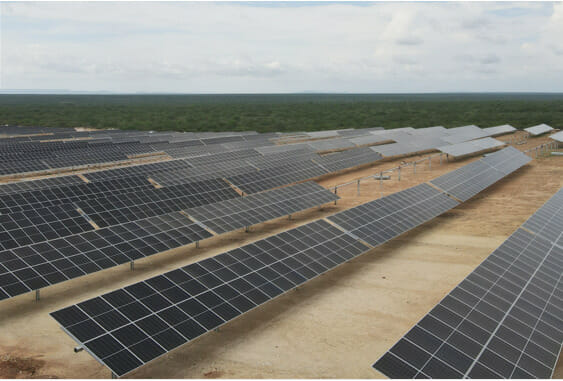
On the mainland, initiatives involving solar and wind energy reduce dependence on non-renewable energy sources in operational processes and as an enhancement of the product portfolio.
A good example is the “Complexo Solar Futura I,” with investments of around R$ 3.2 billion and operational start in May 2023. Derived from the incorporation of Focus Energia by Eneva, the complex features 1.4 million photovoltaic panels distributed across more than 1,600 hectares.
Transition Initiatives in the Midstream
In the Midstream, the expansion of gas pipelines towards industries and thermoelectric plants helps to drain the large current supply of natural gas in an alternative proposal to the burning of fuel oil and diesel oil. As a result, in addition to maintaining energy capacity, it is possible to achieve a reduction of at least 80% in the emissions of polluting residues.
Within this proposal is the agreement between the Urca Energia Group and the Nova Transportadora do Sudeste (NTS) for the injection in 2024 of 120 thousand m³ of biogas produced from the Seropédica landfill in Rio de Janeiro. The gas is 100% renewable and reduces greenhouse gas (GHG) emissions by 99.9%.
NTS has also included in its strategic plan feasibility studies to enter the natural gas storage (LNG) business. In this case, investments of around R$ 12 billion would be converted over 8 years to serve gas thermoelectric plants spread throughout the national territory.
Transition Initiatives in the Downstream
In the Downstream, large companies have been engaging for some years in joint ventures and acquiring smaller companies, broadening their product portfolio with the generation of wind and solar energy. Additionally, Brazil is one of the world leaders in the production and consumption of biofuels.
Brazilian legislation and programs like RenovaBio are subsidizing the evolution of consumption each year. Due to this portfolio diversification, many companies now self-designate as energy companies, as they do not expect to remain tethered to non-renewable energy supply.
Ipiranga, Raizen, and Vibra Energia Invest in Renewable Energy
There are many examples of initiatives in this subsector, notably Ipiranga, Raizen, and Vibra Energia.
At Ipiranga, the Ipiranga Usinas project already has photovoltaic plants capable of supplying around 900 service stations and franchises, with estimated gains of over 60 GWh/year of clean energy.
Raizen is a large producer of biofuels in the form of ethanol produced from sugarcane cultivation. A good portion of the residue in the form of bagasse is reused for the production of second-generation ethanol (E2G). The bagasse is also reused to create “pellets,” a type of solid fuel that can be transported over long distances with low combustion risk and used in thermal energy generation for small and medium-sized industries and commerce.
Finally, the products offered by the company also include the generation of biogas and bioelectricity from the same residues from ethanol production.
Vibra Energia has solar energy plants responsible for generating savings of up to 25% in its franchised stations. In addition to this initiative, the company’s joint venture with Copersucar allows for the large-scale commercialization of ethanol in a collaborative and integrated manner.
Furthermore, the acquisition of 50% of ZEG Biogás shares last year adds another product to its portfolio. At the time of acquisition, the company already announced investments of up to R$ 412 million in the coming years.
The Challenges of the Energy Transition for Oil and Gas Companies
As mentioned at the beginning of the article, the demand for energy will continue to grow despite adversities, and the energy transition represents a viable alternative to meet the projections of growing consumption in a sustainable manner, with market predictability. Whether from an environmental or economic perspective.
Even so, this is not a simple task. Implementing these alternative energy generation pathways requires technological development, assertive strategic planning, and constant operational monitoring.
Oil and gas companies have experience in energy generation of a similar nature. However, new variables impose themselves, such as:
· Specific investments in public and private infrastructure for generation and drainage of production;
· Selection of suitable locations for the implementation of new energy generation plants;
· Specific logistics that involve stock and movement throughout the supply chain;
· Among others.
As highlighted in the Deloitte research mentioned earlier, investments in intelligence technology are essential to overcome these adversities in several aspects:
· Storage, processing, and management systems for large volumes of data;
· Intelligence systems that help direct investments assertively;
· Asset monitoring systems;
· Systems aimed at stakeholder engagement.








Seja o primeiro a reagir!