





 Portuguese
  English
  Spanish
  4 min of reading
  21 comments


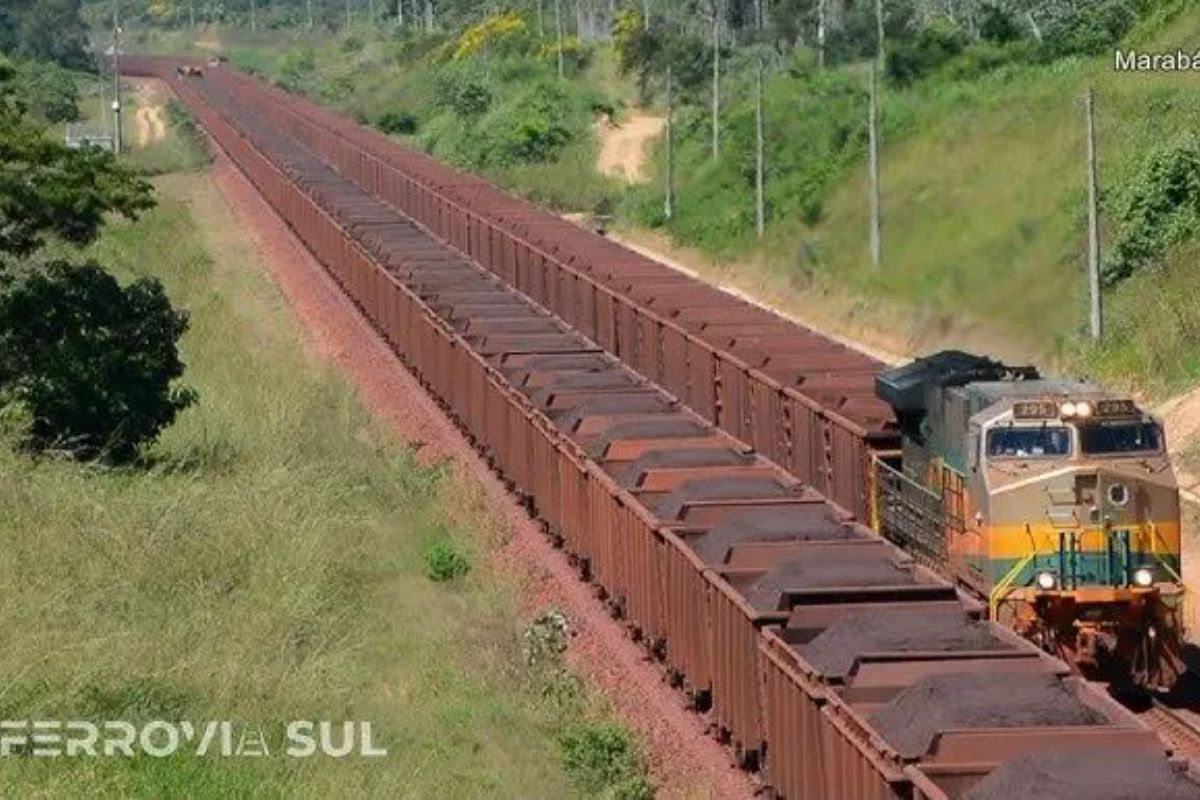


The Carajás Railway (EFC), operated by Vale, is home to some of the largest freight trains on the planet. Learn more about these gigantic compositions, what they transport, and their importance to Brazil.
In northern Brazil, a true logistical backbone cuts through the states of Pará and Maranhão: the Carajás Railway (EFC). Operated by Vale S.A., this railway is not only vital for the flow of the country’s mineral production but is also famous for its colossal trains, which are among the candidates for the longest freight train in the world.
The Carajás Railway (EFC), also designated EF-315, is a critically important railway infrastructure in Brazil. Operated by Vale S.A., it is essential for transporting the mineral production of the company’s Northern System. But beyond its cargo function, the EFC stands out for operating some of the longest and heaviest trains on the planet, true giants on rails.
The Carajás Railway (EFC): The Backbone of Vale in Northern Brazil
With an approximate length of 1,000 km and a broad gauge of 1.60m, the EFC connects the heart of Vale’s mineral production, in the Carajás mines in southeastern Pará, to the Ponta da Madeira Maritime Terminal in São Luís, Maranhão. Its history dates back to the Carajás Iron Project, with the official inauguration occurring on February 28, 1985, initially to transport iron and manganese ores for export.
-
In A European City, The Country’s Largest Railway Junction Was Modernized Without Closing Its Doors, Kept Trains Running During Years Of Construction, Now Serves Up To 60,000 Passengers Per Day, And Installed Solar Panels That Generate About 30% Of Its Energy
-
Famous Brazilian Railway May Become a Parking Lot
-
The Country of “Punctual As a Train” Admits It Has Lost Control: High-Speed Trains Delay, Stop, Disappear from the Map and Turn 6-Hour Trips into 10, While Deutsche Bahn Promises Restructuring in 2026 But Faces 19th Century Infrastructure, Staff Shortages and Sections Closed for Months
-
With an Investment of R$ 700 Million in One of the Country’s Main Rail Networks, VLI Reinforces Infrastructure, Receives 8 New Locomotives, and Expands the Corridor Connecting 7 States, Boosting Jobs and the Transportation of Grains, Ore, and Oil Products to the Port of Santos
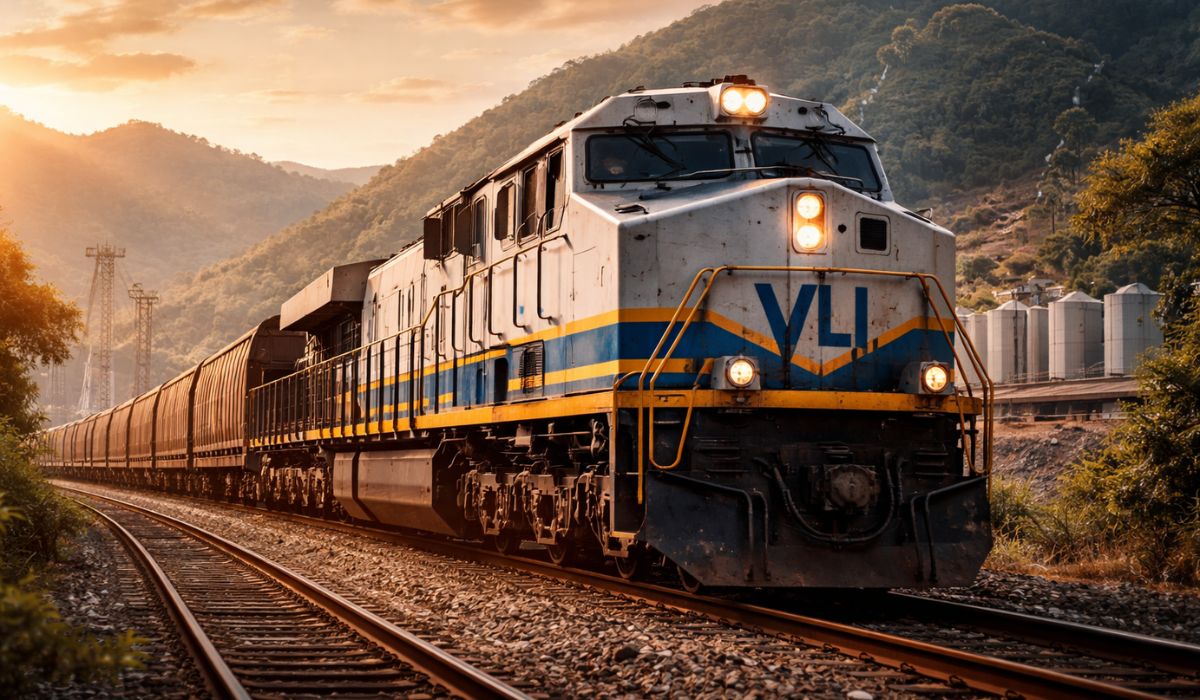

Specifications of the Longest Freight Train in the World (or one of them) on the EFC

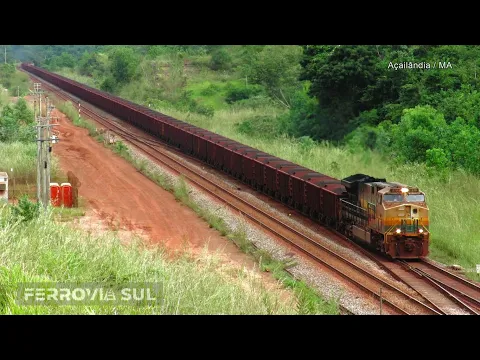
The trains operating on the Carajás Railway are truly impressive in their dimensions. The compositions can reach up to 3.5 kilometers in length. Each of these giants is made up of about 330 wagons and can transport over 40,000 metric tons of cargo at once. These numbers place the EFC’s trains among the longest and highest-capacity freight trains in the world.
The main cargo moved by the “rail monsters” of the EFC is iron ore, extracted from the Carajás mining complex, the largest open-pit iron mine in the world. In addition to iron ore, the railway transports other minerals mined by Vale, such as manganese and copper. The EFC is also crucial for transporting third-party cargo, including grains (soybeans, corn), cellulose, and fuels, connecting to the North-South Railway (FNS) in Açailândia (MA) and facilitating access to the Itaqui port complex.
Colossal Scale Operation
The EFC’s iron ore transport capacity has been expanded from 35 million tons per year (Mtpa) to the current 230 to 240 Mtpa, driven by projects such as S11D. To handle this volume, about 55 iron ore trains operate daily, supported by a fleet of approximately 300 locomotives and 24,000 wagons.
The EFC is recognized as one of the most efficient and safest railways in Brazil, receiving continuous investments in modernization, such as the New Carajás Program and the acquisition of new, more efficient and sustainable locomotives, including Wabtec’s FLXdrive battery models.
More than a Longest Freight Train in the World

In addition to its cargo vocation, the EFC plays a vital social role by operating one of the few long-distance passenger train services remaining in Brazil. The train connects approximately 27 to 28 municipalities along its 861 km route between Parauapebas (PA) and São Luís (MA), a journey that takes about 16 hours. In 2024, the service achieved a record of 423,000 passengers transported, and starting in 2027, it will operate daily in both directions, reinforcing its importance to local communities.
The impressive trains of the Carajás Railway, with their 3.5 km in length and capacity for over 40,000 tons, are a testament to engineering and large-scale logistics. They not only qualify as one of the “longest freight trains in the world”, but they are the vital artery that channels the mineral wealth of Carajás to the global market, boosting the economies of Pará, Maranhão, and Brazil. The ongoing modernization of the EFC and its fleet ensures that these giants on rails will continue to play their strategic role for many years to come.










O TREM DO MUNDO FICA NA EUSTRALIA NO DESERTO DA EMPRESA BHP NA MINERAÇÃO COM MAIS DE 6KM DE COMPRIMENTO ENTRE AS LOCOS E VAGÕES. A VALE PORQUEIRA GOSTA DE APARECER E DESTRUIR AS FERROVIAS BRASILEIRAS,SUCATEOU AS FERROVIAS DA SR2,SR4 LEOPOLDINA DE BH AO RIO DE JANEIRO VIA OURO PRETO MG E TAMBÉM DO DRIO DE JANEIRO A O ESPÍRITO SANTO SUCATEOU TUDO, O RAMAL DEANGRAS DIS REIS A LAVRAS.
Depois da Privatização ferroviária, o sistema logístico de cargas, ficou fragmentado, com muitas ferrovias abandonadas. Sem falar, na preferência pelas rotas de trajetos mais lucrativos. As concessões de ferrovias à iniciativa privada, se tornaram insuficientes para suprir as demandas do mercado nacional e internacional, sobrecarregando significativamente o sistema de transporte rodoviário de cargas e de passageiros.
Muito bem; impressionante composição ferroviária com 330 vagões de minério de ferro(hematita)!..,🤗😃☕️