





 Portuguese
  English
  Spanish
  4 min of reading
  0 comments


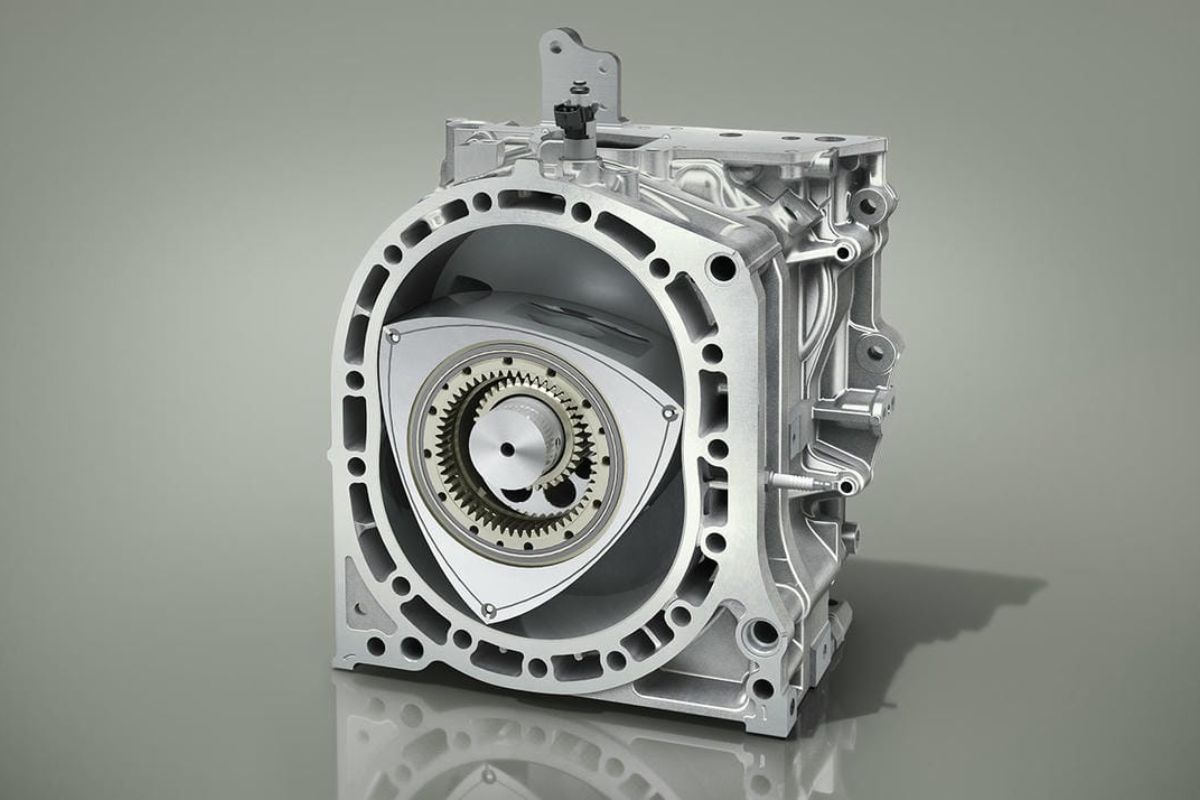
The History of the NSU Ro80 and Its Innovative Wankel Rotary Engine from NSU. How the Promise of Smoothness, Compactness, and High Performance Led to Chronic Durability Issues, Dragging the Iconic German Manufacturer to Bankruptcy and Leaving a Controversial Legacy.
Launched in 1967, the NSU Ro80 emerged as an icon of modernity, promising to revolutionize the automotive industry. At the heart of this promise was its KKM 612 engine, an advanced Wankel Rotary Engine from NSU that stood out for its smooth operation and impressive compactness.
However, what seemed to be the future of automotive propulsion quickly turned into a nightmare. Chronic durability issues, especially with the apex seals of the engine, undermined consumer confidence and led NSU to bankruptcy. This article unveils this tragic yet fascinating story of innovation, challenges, and consequences.
NSU Ro80 and the KKM 612: The Promise of a Rotary and Smooth Future
The NSU Ro80 was a groundbreaking car for its time, which earned it the prestigious title of Car of the Year in Europe in 1968. Its futuristic design, crafted by Claus Luthe, was complemented by a revolutionary mechanical setup. The highlight was the NSU KKM 612 Wankel rotary engine: a dual-rotor powerplant with only 995 cc, yet generating about 115 horsepower, offering a level of smoothness often compared to that of a turbine, and being remarkably compact and light.
-
A couple buys an old chalet, breaks the kitchen floor for renovation, and finds over a thousand coins of gold and silver hidden since the English Civil War over 4 centuries ago.

-
Rigid bags with their days numbered: new trend prioritizes comfort in 2026.

-
YouTuber creates an excavator equipped with a giant 4.5-meter sword to challenge his brother to a rematch, and the invention quickly goes viral on social media.
-
The U.S. Army surprises the world by presenting the UH-60MX Black Hawk helicopter capable of flying without pilots, controlled by a tablet, featuring the MATRIX system, smart sensors, and full autonomy in real combat and rescue missions.


In addition to the engine, the Ro80 featured other innovations. Its body had an aerodynamic design with a low drag coefficient (Cd 0.355). It boasted independent suspension on all four wheels, disc brakes on all of them (with the front ones mounted inboard, next to the differential, to reduce unsprung mass), and rack and pinion power steering. The transmission was a three-speed Fichtel & Sachs semi-automatic, with vacuum-actuated clutch.
The Durability Crisis of the Wankel Engine Apex Seals
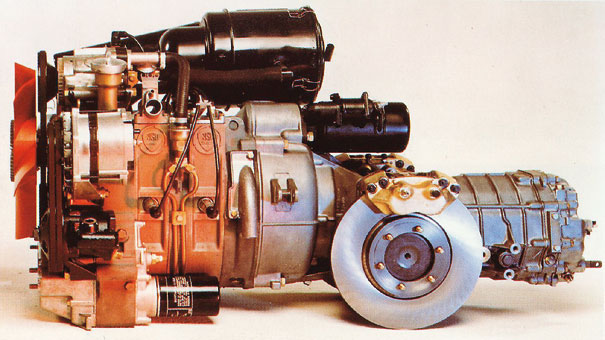
Despite the initial promise, the Wankel rotary engine from NSU in the Ro80 soon revealed a critical vulnerability. Reports of premature engine failures began to surface, often occurring before 50,000 kilometers, with serious issues manifesting in some cases as early as 24,000 km. The primary cause of these failures was the accelerated wear of the seals located at the three tips of the triangular rotor, known as apex seals.
These seals were crucial for maintaining compression in the combustion chambers. Their failure led to loss of compression, difficulty in starting, excessive oil and fuel consumption, and ultimately, complete engine failure. The causes for seal wear were multifactorial: the original tripartite design of the cast iron seals, materials with inadequate resistance to high thermal and mechanical stresses, and the engine’s sensitivity to certain operating regimes, such as constant high RPMs and urban use with many cold starts and short trips.
Correction Attempts and the Warranty Costs Spiral
Confronted with the reliability crisis, NSU invested in solutions. The company evolved the design of the apex seals, moving from the initial cast iron version to an interim solution and finally, in the mid-1970s (for the 1971 model year), introducing seals with a central piece made of Iron-TiC, a high hardness steel alloy with titanium carbide. This modification significantly improved engine durability.
However, NSU adopted a warranty policy considered “generous,” mass-replacing defective engines, often more than once for the same vehicle. This approach, while aimed at satisfying customers, generated warranty costs that spiraled, undermining the company’s financial health. The complexity of the new engine also posed a challenge for the dealership network, which often lacked the training or tools necessary, leading to unnecessary engine replacements that could have been repaired.
How the Wankel Rotary Engine Led NSU to Bankruptcy
The combination of the enormous development costs of NSU’s Wankel rotary engine – an extremely ambitious endeavor for a company of its size – with the massive warranty expenses generated by the reliability issues of the Ro80 was fatal. These factors precipitated NSU’s loss of financial independence.
In 1969, Volkswagenwerk AG acquired NSU. Volkswagen merged NSU with Auto Union (which it had previously acquired), creating Audi NSU Auto Union AG, which would later evolve into modern Audi. It is important to note that VW’s primary interest in NSU was not the Ro80 or Wankel technology, but rather other assets and projects, such as the K70. The 1973 oil crisis, with the drastic rise in fuel prices, also accelerated the commercial decline of the Ro80, whose Wankel engine was known for its inherently higher fuel consumption. Production of the NSU Ro80 ceased in April 1977.
The Wankel Around the World: Why Did Mazda Succeed Where Others Failed?
NSU was not the only one facing difficulties with the Wankel. Comotor, a joint venture between NSU and Citroën to produce Wankel engines, also saw its projects, such as the Citroën M35 and GS Birotor, suffer from reliability issues and high consumption. Giants like General Motors and Mercedes-Benz also explored the rotary engine in the 1970s but abandoned their programs due to insurmountable challenges regarding consumption, emissions, and durability.
In striking contrast, Japanese manufacturer Mazda persisted. Through ongoing investment in research and development, Mazda was able to overcome many of the sealing and durability issues that plagued NSU, developing stronger materials for the seals and improving the engine design. The company achieved commercial and technical success with iconic models like the RX-7 and RX-8. Recently, Mazda demonstrated the versatility of the Wankel by reintroducing it as a range extender in its electric vehicle MX-30 R-EV.






Seja o primeiro a reagir!