





 Portuguese
  English
  Spanish
  5 min of reading
  9 comments


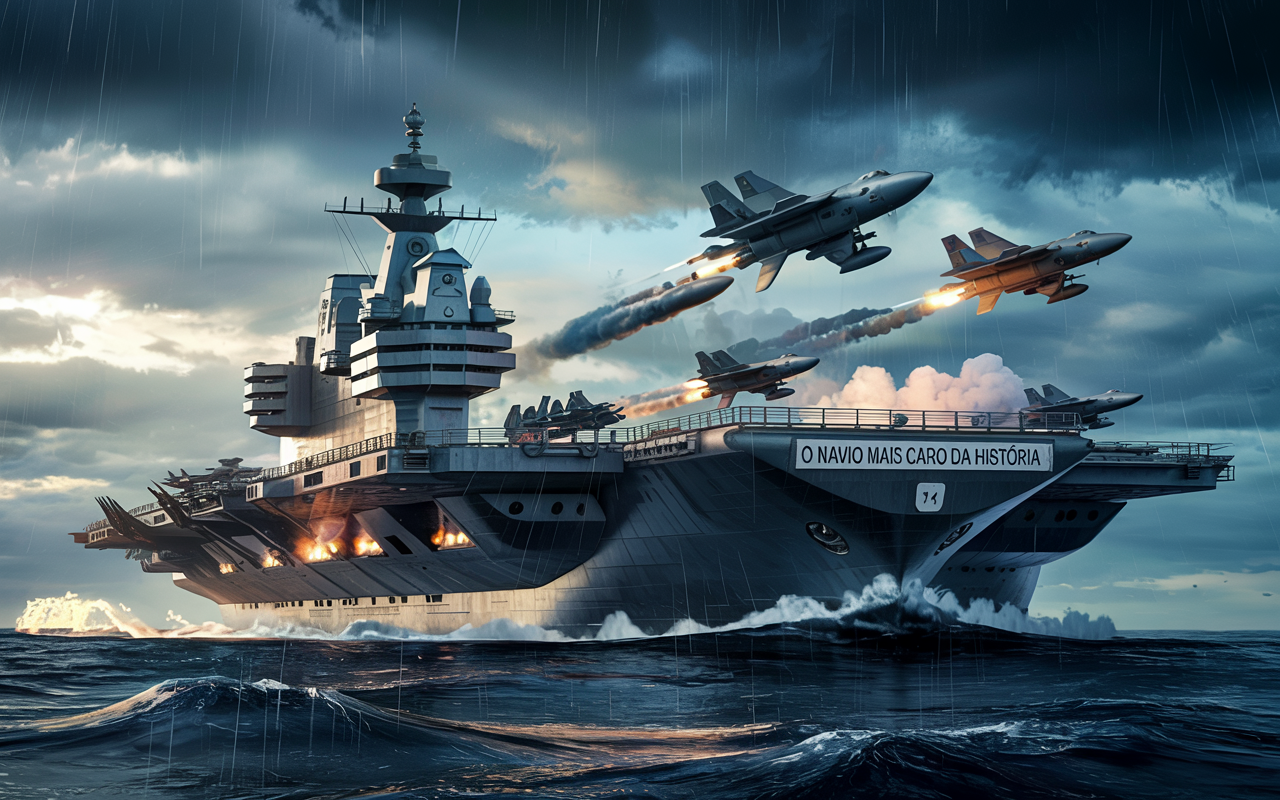

World’s Most Expensive Ship, USS Gerald R. Ford Almost Capsized During Tests: U.S. Navy’s Nuclear Aircraft Carrier Cost US$ 13 Billion and Redefined the Modern Military Ship Sector.
The USS Gerald R. Ford is the most expensive ship in the world, with an estimated cost of US$ 13 billion. Equipped with cutting-edge technology, this U.S. Navy nuclear aircraft carrier represents the pinnacle of modern naval engineering. Capable of launching fighter jets every 25 seconds, it redefines the concept of maritime superiority. However, the modern military ship also faced serious challenges, especially during its early sea trials, which nearly compromised its functionality and reputation. Also revealed: The world’s most powerful submarine can destroy entire cities from up to 11,300 km away — but it cost so much that its own country halved production
A Milestone in Naval Engineering: The USS Gerald R. Ford – The Colossal U.S. Navy Nuclear Aircraft Carrier


Leading a new class of aircraft carriers, the USS Gerald R. Ford (CVN-78) was commissioned in 2017. At 333 meters long and displacing more than 100,000 tons, it is the largest warship on the planet. It was designed to replace Nimitz-class ships, offering greater efficiency and reduced dependence on human crew.
The construction was carried out by Huntington Ingalls Industries, at the port of Newport News, Virginia. The ship has two A1B nuclear reactors, which provide enough power to operate continuously for 25 years without refueling. Additionally, its crew is about 600 people smaller than its predecessors, reflecting significant gains in automation.
-
Son of a seamstress from the rural area of Ceará who did not speak English wins a scholarship of over 2 million reais at Williams College, one of the top 10 universities in the United States, covering everything including dormitory, meals, and annual trips to Brazil.

-
Bill Gates revealed that the true secret behind every great achievement is not a brilliant leap but rather small improvements repeated over the years, and the data from his own career and the fight against climate change prove that he is right.

-
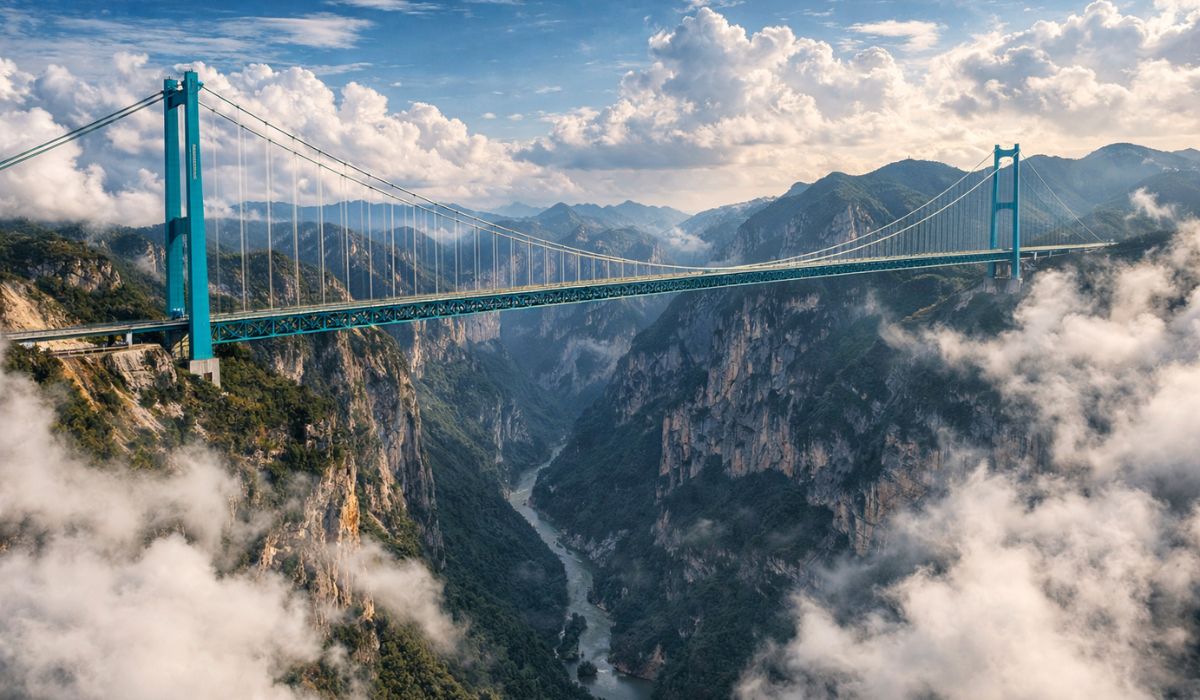
With 22 thousand tons of steel, a height nearly three times greater than the Eiffel Tower, and a cost of R$ 1.6 billion, China is building the highest bridge on the planet over a colossal canyon, reducing a crossing time of over 2 hours to just over 2 minutes.
-
With more than 635,000 doctors, Brazil sees competition increasing in large cities, and recent graduates are competing for shifts at an accelerated pace while the countryside still faces shortages.

Technological Innovations That Define a Modern Military Ship
The USS Gerald R. Ford nuclear aircraft carrier incorporates several technological innovations, such as the EMALS (Electromagnetic Aircraft Launch System), which replaces traditional steam catapults. This technology allows for smoother and more frequent launches, with just a 25-second interval between one fighter and another.
The ship also features the AAG (Advanced Arresting Gear) system, which makes the recovery of aircraft safer and more efficient. Another innovation is the use of electromagnetic weapons elevators that allow for faster and safer movement of munitions between internal compartments and the deck.
Combined, these technologies make the Gerald R. Ford a modern military ship, prepared for present and future operations. The U.S. aircraft carrier is also equipped with dual-band radars that offer superior target and threat detection capabilities.
Turbulent Tests: When the World’s Most Expensive Ship Almost Capsized
Despite the technological advancements, the USS Gerald R. Ford faced serious challenges during its testing phase. In 2021, it participated in “shock trials,” tests with simulated underwater explosions to verify the ship’s structural integrity. In one of these detonations, the impact registered a tremor of 3.9 on the Richter scale.

The tests revealed issues in the aircraft launching and recovery systems, as well as in the weapons elevators. There were occasions when the EMALS experienced severe failures, preventing launches for several days. These setbacks increased maintenance costs and delayed the ship’s full operational service.
Operational Capability and Strategic Presence of the U.S. Navy
Despite the setbacks, the USS Gerald R. Ford now plays an essential role in the global strategy of the U.S. Navy. In 2023, it was sent to the Eastern Mediterranean as part of the U.S. response to tensions in the Middle East, demonstrating its importance as a tool of deterrence and power projection.
The ship can carry more than 75 aircraft, including F/A-18 Super Hornet fighters, E-2D Hawkeye early warning aircraft, and MQ-25 Stingray drones. With a crew of about 4,600 people, it operates as a floating airbase, capable of autonomous combat for months.
Its presence in strategic regions such as the Indo-Pacific reinforces the dominant role of the U.S. in international waters, contributing to global stability and security.
Comparison with Other Warships
Compared to other warships, the Gerald R. Ford stands out. Ships like the Chinese Liaoning or the Indian Vikramaditya have limited capability, shorter range, and rely on conventional technologies. The A1B nuclear reactor of the Gerald R. Ford provides enough energy for future weapon systems, such as lasers and electromagnetic guns.
This future-proofing ensures that the ship remains operationally relevant for decades. In addition, its modular design allows for constant upgrades without the need for major structural overhauls.
Costs, Criticisms, and Lessons from the USS Gerald R. Ford
The high cost of US$ 13 billion has generated criticisms regarding the investment’s efficiency. Initial technical problems and delays have reinforced skepticism. However, experts argue that the challenges faced by the Gerald R. Ford will allow for improvements in the next ships of the same class, such as the USS John F. Kennedy (CVN-79) and the USS Enterprise (CVN-80).
The accumulated knowledge also strengthens the U.S. defense industrial base, ensuring that future vessels are more efficient and sustainable. Moreover, the ship symbolizes the American commitment to maritime dominance and the protection of global interests.
A Giant of the Seas Ready for the Future
The USS Gerald R. Ford is more than just the most expensive ship in the world. It is the embodiment of the future of naval warfare. Even with failures in the initial tests, it has established itself as an indispensable nuclear aircraft carrier for American defense strategy.
Equipped with advanced technology, unprecedented operational capacity, and potential for evolution, the Gerald R. Ford symbolizes the power and innovation of the U.S. Navy. In a world of constant threats and geopolitical competition, the most imposing modern military ship on the planet remains a pillar of American naval supremacy.
With this combination of strength, intelligence, and strategic presence, the Gerald R. Ford not only fulfills its military role but also redefines what is expected of a warship in the 21st century.
In the coming years, the Gerald R. Ford class is expected to save more than US$ 4 billion in operational costs compared to the previous class, according to the U.S. Congressional Budget Office (CBO). This figure reinforces the lasting impact of innovation in the global defense landscape.









Com a tecnologia atual dos mísseis hipersonicos, acho que se torna uma presa fácil!!
Até que não custou muito, o roubo no INSS foi de US$ 20 bilhões, o Brasil sabe roubar mais…..
Acho melhor atualizar as suas notícias… Estão bem fora da realidade
Ainda mais quando se tem um governo que virou as costas quando descobriu….
Fico imensamente feliz com essa notícia tão maravilhosa. É tão linda a capacidade do ser humano para destruir tudo ao seu redor, milhões de pessoas fulminadas numa fração de segundo, aqueles cogumelos atômicos deslumbrantes iluminando os céus. Igualzinho ao filme Doutor Fantástico.
Felizmente existem essas poderosas armas de guerra, para combater os loucos insanos que estão no poder em países que desrespeitam a humanidade, quais sejam: Rússia, Coréia do Norte, e os países terroristas do oriente médio.