





 Portuguese
  English
  Spanish
  5 min of reading
  22 comments


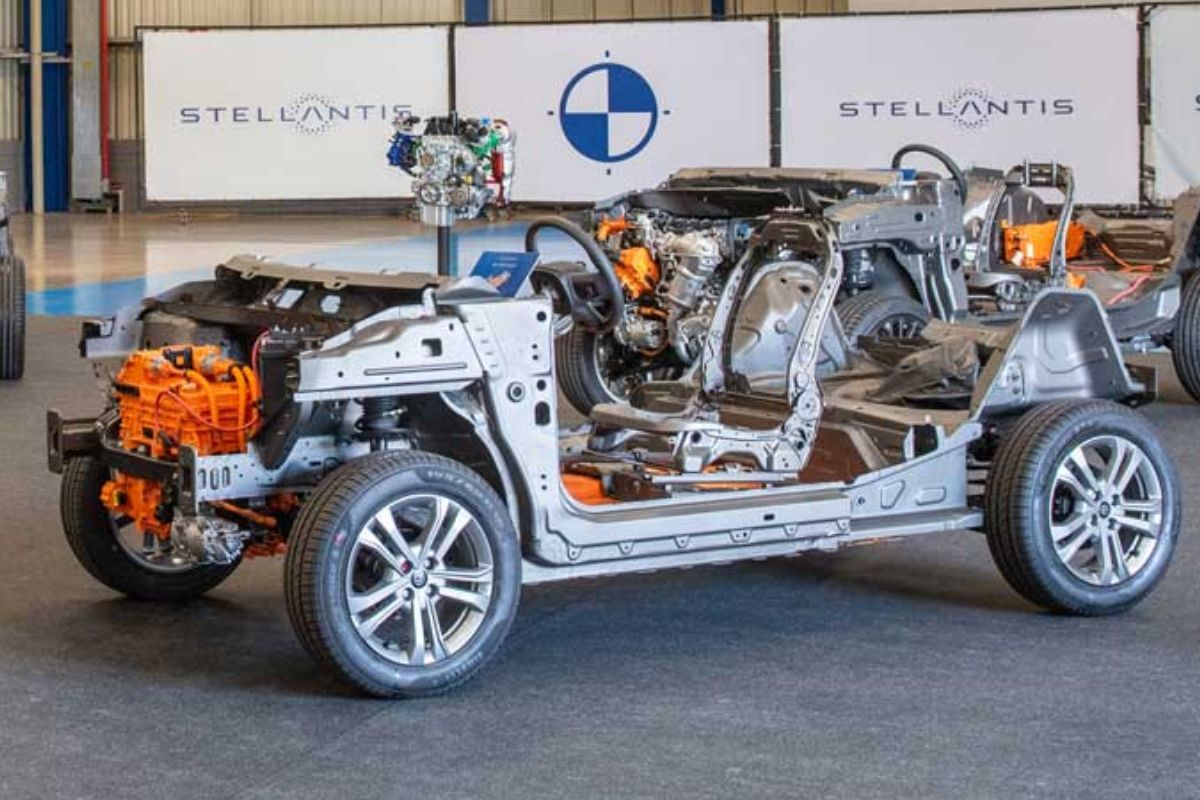


Stellantis Heavily Invests in the New Pure Brazilian Ethanol Engine, Promising Record Efficiency and Turbo Engine Performance. Is This Brazil’s Answer to Electric Cars and a New Chapter for Biofuel?
Stellantis is leading an ambitious technological offensive in Brazil with a total focus on ethanol. The company is developing a new pure Brazilian ethanol engine (E100), aiming for extraordinary efficiency of up to 30 km/l and performance comparable to already known gasoline turbo engines.
We will investigate the Bio-Hybrid technology already present in the market, the concrete plans for dedicated E100 engines, the technical innovations necessary for such a feat, and how Stellantis’s investment may challenge electric cars in the national scene, leveraging Brazil’s vocation for ethanol.
Stellantis’ Strategy: From Bio-Hybrid MHEV to Future Dedicated E100 Engines
Stellantis’s journey toward high-efficiency ethanol has already begun. Current Bio-Hybrid models, such as the Fiat Pulse and Fastback equipped with the T200 engine, are an important step. They utilize a mild hybrid (MHEV) system that already provides efficiency gains of 10% to 11.5% compared to non-electrified versions.
-
Costing R$ 16,000, the new Yamaha features a 125 cc hybrid engine with electric assistance, delivers 8.3 hp, includes ABS, optimized fuel consumption, Y-Connect connectivity, 25 liters of storage space, and a surprising 4-year warranty in the urban segment.
-
OMODA & JAECOO grows in Europe in 2026 with an integrated strategy of sales, innovation, local production, and technological advancement in the United Kingdom, Italy, and Spain.

-
OMODA & JAECOO expands after-sales service in Brazil with competitive maintenance, a 7-year warranty, and high availability of parts for technological SUVs.
-
OMODA & JAECOO appoints Alessandra Souza as executive marketing director in Brazil and accelerates brand expansion with a focus on innovation, networking, and hybrid portfolio.


The next big advancement is the new pure Brazilian ethanol engine. Stellantis has formally announced the development of engines dedicated 100% to ethanol, with an initial launch expected for corporate and government fleets, possibly during 2025, later reaching consumers. A robust investment of R$30 billion in South America, between 2025 and 2030, will support this and other new technologies, consolidating the Betim (MG) hub as a global Research and Development (R&D) center for the company’s Bio-Hybrid technology.
The Dream of 30 km/l with Ethanol: A Challenging but Strategic Goal
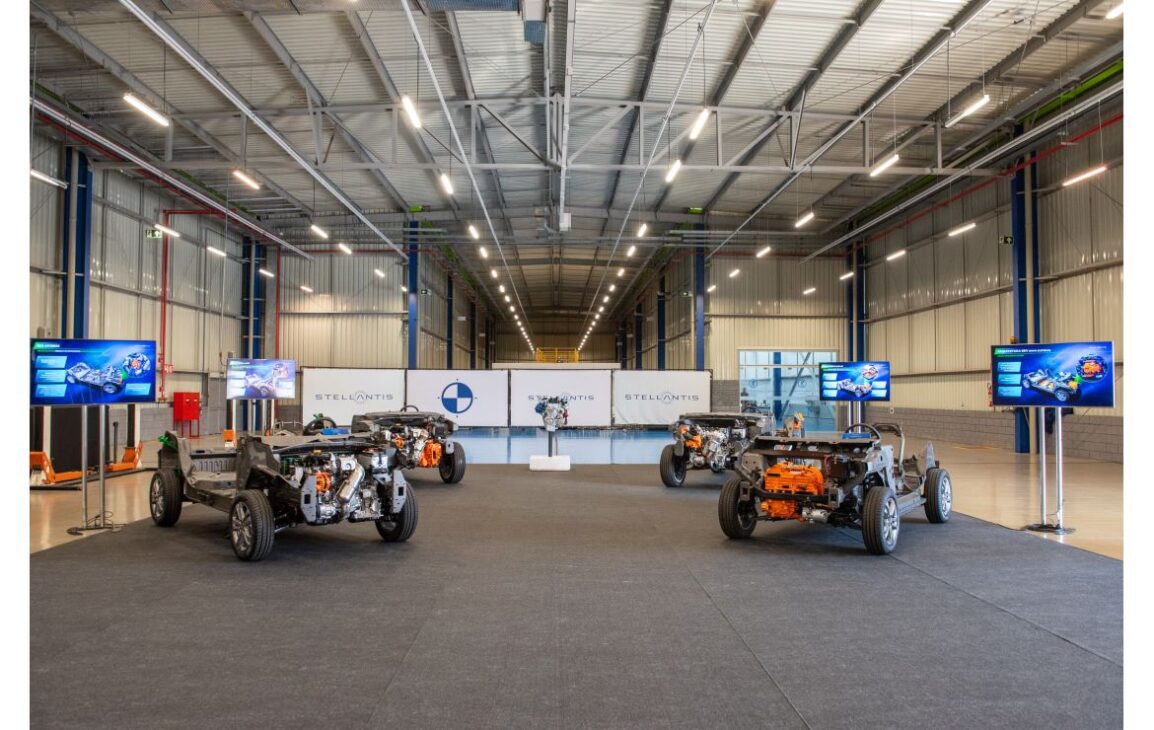
The goal of achieving 30 km/l with ethanol is ambitious. Current Bio-Hybrid MHEV models, like the Fiat Pulse, average about 9.3 km/l with ethanol in the city, according to INMETRO data. This demonstrates the magnitude of the technological challenge. Experts and the company itself view 30 km/l as a long-term aspirational target that drives research and development of cutting-edge technologies. To approach this mark, the combination of a highly optimized E100 engine with full hybrid (HEV) or plug-in (PHEV) systems will likely be necessary.
In terms of performance, the current T200 Bio-Hybrid engine already delivers 130 hp and is promoted as the most powerful in its segment. It is expected that a new pure Brazilian ethanol engine, optimized for the properties of the biofuel, could offer even greater specific power.
The Recipe for Super Ethanol: Key Technologies for High Efficiency of the New Pure Brazilian Ethanol Engine
Achieving such high efficiency with ethanol requires a set of innovations. Significantly higher compression ratios, potentially above 14:1, are crucial for taking advantage of the high octane rating of E100. Advanced direct fuel injection systems are also essential; ongoing research, such as that from Poli-USP in partnership with Stellantis, explores ultra-high-pressure technologies to optimize combustion.
Other technologies include efficient ethanol pre-heating systems to ensure cold starts without gasoline, and optimized turbocharging. However, synergy with hybridization is seen as the most promising path, evolving from current MHEVs to future Bio-Hybrid eDCT (full hybrids) and Bio-Hybrid Plug-In, which maximize energy recovery and allow greater electric-only range. Improvements in the quality of the ethanol itself, such as reducing water content, may also contribute.
New Pure Brazilian Ethanol Engine vs. Electric Cars: The Clash in Brazil
The bet on the new pure Brazilian ethanol engine also aims to position biofuel as a competitive alternative to electric vehicles (EVs) in the national context. In terms of CO2 emissions, “well-to-wheel” (WTW), recent data from the ICCT indicates that optimized future plug-in hybrids E100 could achieve about 30.3 gCO2e/km, while conventional E100 hybrids would be around 50.9 gCO2e/km. For comparison, battery electric vehicles (BEVs) in the Brazilian electric matrix (relatively clean) have an average of 22.1 gCO2e/km.
In terms of cost per kilometer (estimates for May 2025), the current Fiat Pulse Bio-Hybrid MHEV with ethanol runs at about R$0.478/km. A hypothetical E100 engine achieving 30 km/l (with ethanol at R$4.45/L) would cost approximately R$0.148/km. Electric cars, depending on the electricity tariff (e.g., R$0.58 to R$0.94/kWh), would have a cost between R$0.116/km and R$0.188/km. A significant advantage for ethanol is the vast established infrastructure of gas stations throughout Brazil, while the recharging network for EVs is still expanding.
Strategic Advantages for Brazil in Betting on High-Performance Ethanol
Investing in the new pure Brazilian ethanol engine brings significant strategic advantages for the country. Firstly, it strengthens energy self-sufficiency, leveraging Brazil’s global leadership in sugarcane ethanol production, a domestic and renewable resource. This also supports the important sugar-energy industry, a major job creator.
The development and manufacturing of these technologies in Brazil could create high-value jobs in engineering and automotive manufacturing. There is also the potential for Brazil to become a technological leader in optimizing engines for advanced biofuels, opening doors for export. This strategy aligns with national public policies such as the “Fuel of the Future” program and MOVER (Green Mobility and Innovation).
When Will the New Pure Brazilian Ethanol Engine Hit the Streets?
The Stellantis Bio-Hybrid MHEV models, such as the Fiat Pulse and Fastback, are already available on the Brazilian market. The expectation is that the first Stellantis vehicles equipped with dedicated 100% ethanol (E100) engines will initially be launched for corporate and government fleets in the second half of 2025, later reaching the general consumer.
The most advanced hybrid systems from Stellantis, such as the Bio-Hybrid eDCT (full hybrid) and the Bio-Hybrid Plug-In, which promise even greater efficiency, are expected to be gradually introduced to the market between 2025 and 2030. Many analysts see plug-in hybrids (PHEVs) powered 100% by ethanol as an important strategic bridge for the future of mobility in Brazil.








Na época do pró álcool o Brasil vendia a gasolina mais cara da América do Sul porque para que o carro a álcool fosse competitivo, era comum fila de brasileiros nas cidades próxima das fronteiras para comprar gasolina barata e pasmem a gasolina era fornecida pela Petrobras, o pró álcool acabou porque os usineiros deixaram os motoristas na mão porque teve falta de açúcar no exterior e quiseram lucrar com isso, quem vai confiar no agronegócio que faz a gente ter carne barata para sustentar o mundo, óleo de soja caro para vender soja mais barata para fazer ração, se o agronegócio pensasse na gente primeiro talvez valesse a pena ter carro 100% a álcool.
O brasileiro, como sempre, só chega depois da hora. E em se tratando de tecnologia, o futuro é ontem. Portanto, tudo que lhe resta é “planejar o passado”.
O mercado exigiu que houvessem mais veículos flex, porém os fabricantes resolveram parar de fabricar os veículos mono combustíveis, dá saudade do tempo em que você sentia a maior potência nos carros movidos somente a álcool, devido a possibilidade de uma maior taxa de compressão nos motores, quem sabe teremos isso de volta.