





 English
  Francês
  Alemão
  Italiano
  Japonês
  Norueguês
  Portuguese
  Spanish
  5 min of reading
  0 comments


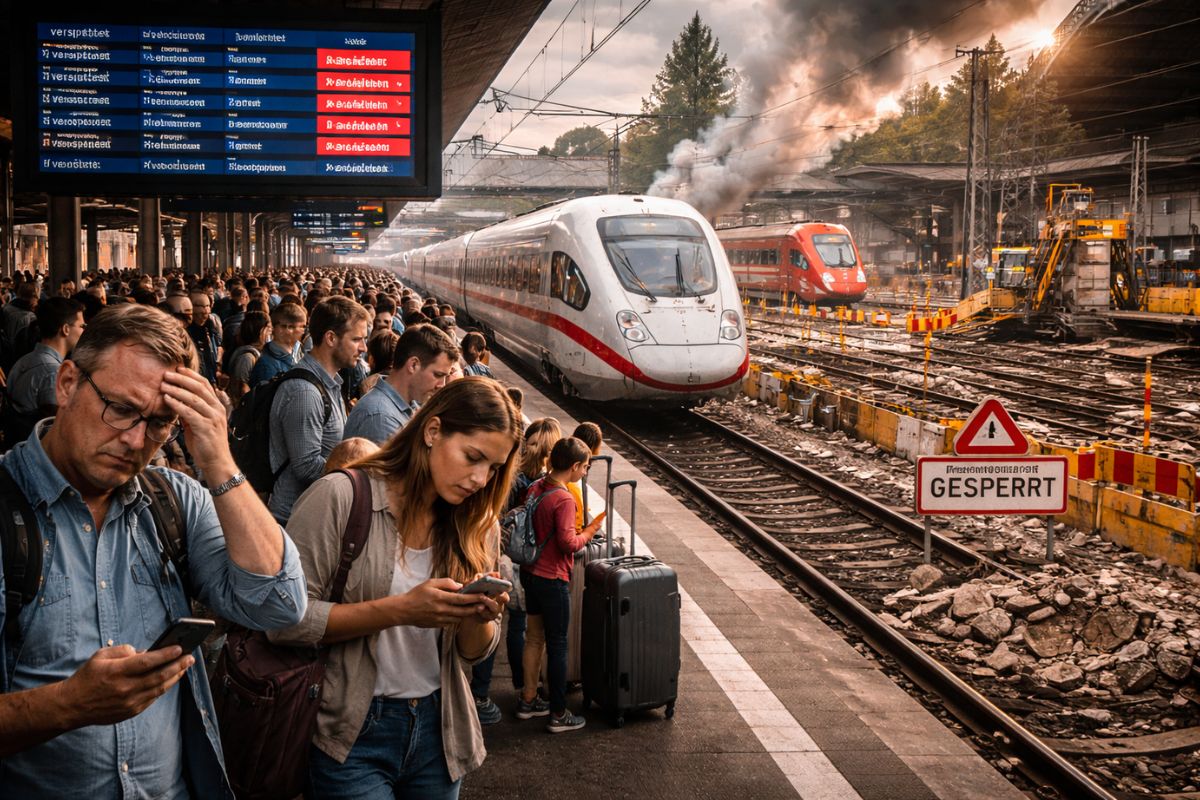
In 2025 Only 60% Of The Fast Trains ICE And IC Arrived On Time And Delay Is Already More Than 6 Minutes The Crisis Exposes Decades Of Underfunding Century-Old Signaling And Sections Closed For 4 To 5 Months Under New Management Since October Deutsche Bahn Promises Restructuring In 2026 For Real
The trains have become the cruelest thermometer of a country that once prided itself on its punctuality. In practice, what was predictable has turned into a gamble: fast trains are delayed, stop midway, are canceled, and there’s even the extra blow of a train simply not stopping at the desired station to try to “make up time.”
There are stories that hurt because they seem small until they become routine. A trip between Berlin and Bonn that should take 6 hours can turn into 10 with detours and tracks with issues. And those relying on connections feel the chain effect: six minutes aren’t “just six minutes” when the entire network is connected and the next door closes in your face.
When The Delay Stops Being Exception And Becomes System
In 2025, only about 60% of the fast trains, the ICE and IC, arrived on time. The rest fell into the category of chronic delay, counted when the train is more than 6 minutes late.
-
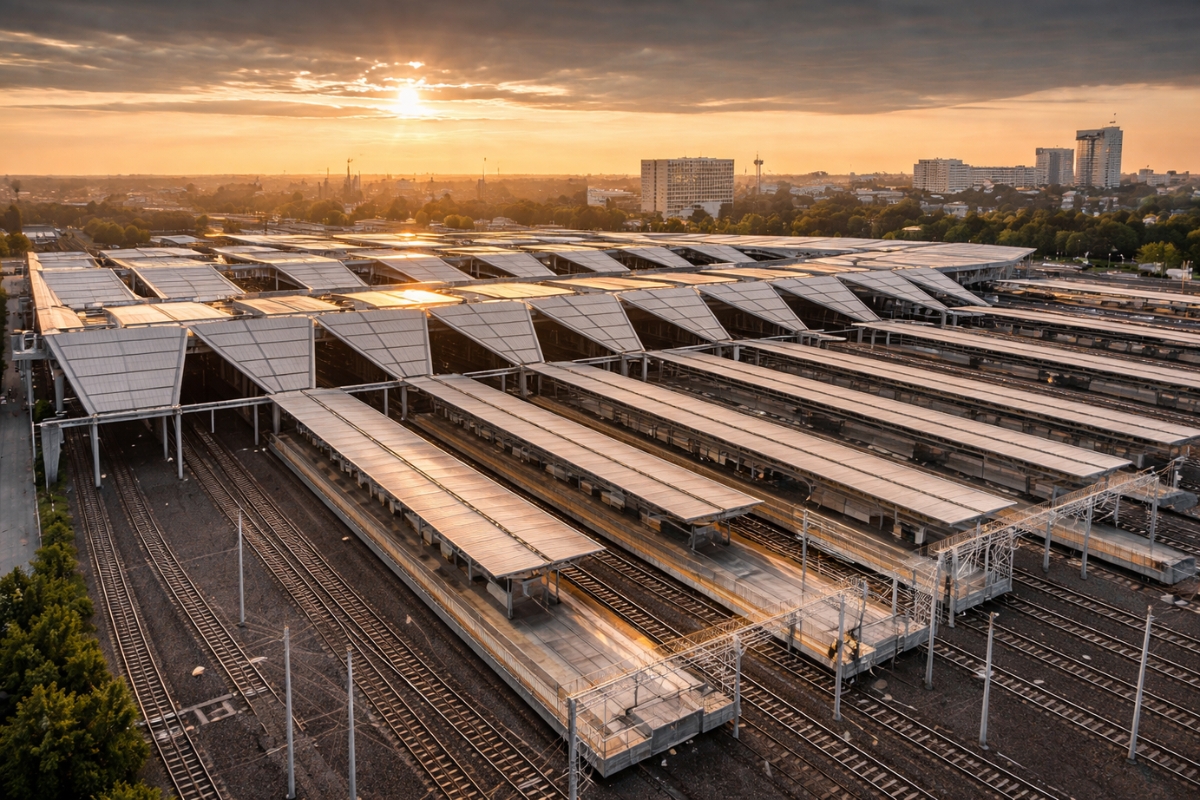
In A European City, The Country’s Largest Railway Junction Was Modernized Without Closing Its Doors, Kept Trains Running During Years Of Construction, Now Serves Up To 60,000 Passengers Per Day, And Installed Solar Panels That Generate About 30% Of Its Energy
-
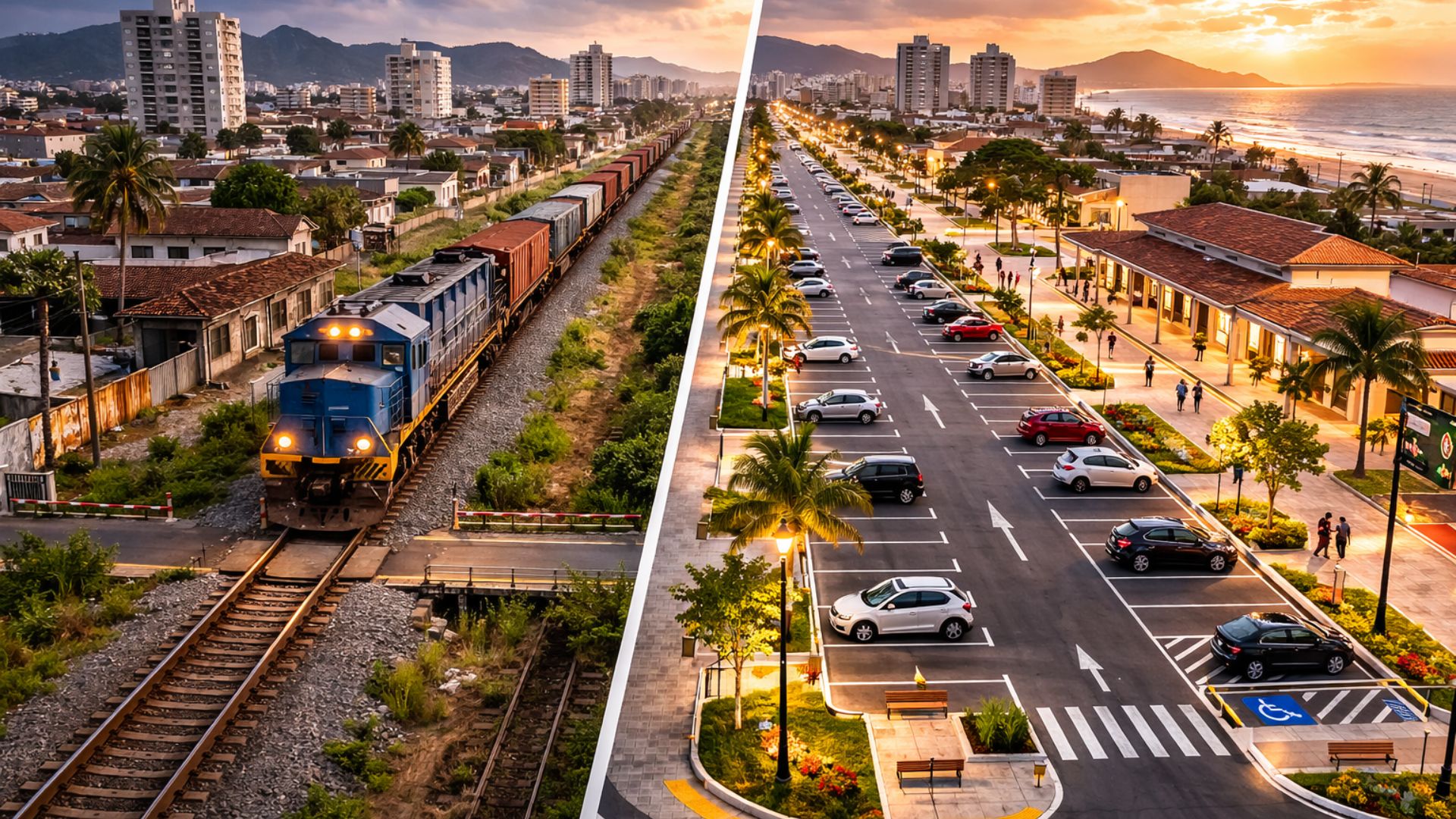
Famous Brazilian Railway May Become a Parking Lot
-
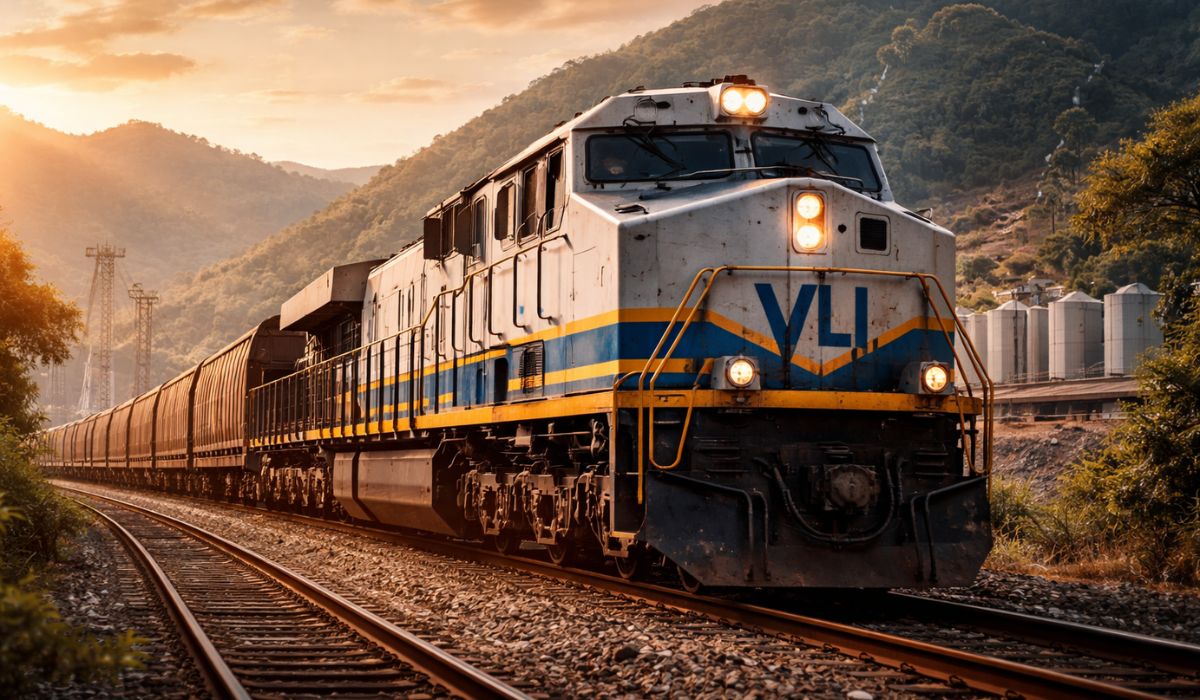
With an Investment of R$ 700 Million in One of the Country’s Main Rail Networks, VLI Reinforces Infrastructure, Receives 8 New Locomotives, and Expands the Corridor Connecting 7 States, Boosting Jobs and the Transportation of Grains, Ore, and Oil Products to the Port of Santos
-
Brazil’s Largest Train and Subway Manufacturer Disappeared: With Decades of Industrial Leadership, Stainless Steel Innovation in the 1980s, and Equipment That Operated Until 2020, How Did Cobrasma Collapse?


It may seem small, but this number acts as a trigger in a country where connections are part of the package and trust has always been the main product.
The most annoying thing is the sense of losing control. The passenger deals not only with the delay itself but with the practical disappearance of service: sometimes the train is delayed so much that it is canceled; sometimes it doesn’t stop where it should to try to shorten the path and go to larger cities.
The result is a displacement that may exist on time but does not exist in real life.
Nineteenth-Century Tracks And A Bottleneck That Won’t Fit In Discourse
The rail infrastructure is described as very old, built in the mid-nineteenth century and expanded as the cities grew around it.
This creates a physical limit: opening new routes is difficult, and fixing what exists requires heavy interventions. There are signaling boxes more than 100 years old in some locations, and that doesn’t match the expectation of fast trains operating like a clock.
The fixing comes at an immediate price. To replace old tracks and avoid risks, important sections need to be closed for 4 to 5 months.
Maintenance Turns Into A Double-Edged Sword: it is necessary, but it closes paths, pushes passengers onto detours, and spreads delays throughout the rest of the system, like a snowball rolling from station to station.
Fast Trains Sharing Tracks With Regional And Freight Trains
The problem isn’t just the state of the track; it’s also in how it is used. Fast trains share the same track with regional trains, and sometimes with slower compositions, including freight.
This creates a rhythm conflict: a fast train becomes a hostage to the slower flow, loses its window, loses priority, and carries delays to all subsequent connections.
The mentioned contrast with Japan is almost illustrative. There, the fast train has a dedicated track, which reduces interference and simplifies time management.
In Germany, the interconnected network is a historical virtue but has become an amplifier of failures. When everything is interconnected, every wrong minute multiplies.
A State-Owned Company With Market Logic And Delay As Liability
Deutsche Bahn is controlled by the government, but it has been designed to operate as a corporation with a market vision, promising competitiveness and results.
The plan to go public never materialized, and the company became trapped in a hybrid identity: public in control, private in management style. This generates internal noise, budget cuts, disputes, and decisions that do not always prioritize long-term investments.
The delay has also become a financial liability. In 2024, €200 million was paid in compensation to passengers due to delays, a jump from the previous year, which was cited as €70 million less.
When the system fails, it pays to fail, and that money comes from the same universe that should finance repairs, personnel, and modernization.
The Passenger In The Middle Of The Gearing And The Punctuality Of Delay
Those using fast trains in Germany rarely make a “straight” journey from end to end without transfers. The model depends on connections, much like an air network.
If a train arrives six minutes late, the next one may leave, and the passenger enters a race that mixes stress, overcrowding, and improvisation. This weighs even more for those coming from outside, who do not master the language or are unfamiliar with the system.
At the same time, an uncomfortable paradox arises: Germany has lost the punctuality of arriving at the promised time but has created a kind of punctuality of delay, with apps and alerts that inform of the delay with reasonable anticipation.
This helps plan for the damage but doesn’t erase the damage. Knowing you will arrive late doesn’t turn delay into an acceptable normality.
2026 As Promise And What The Restructuring Needs To Face
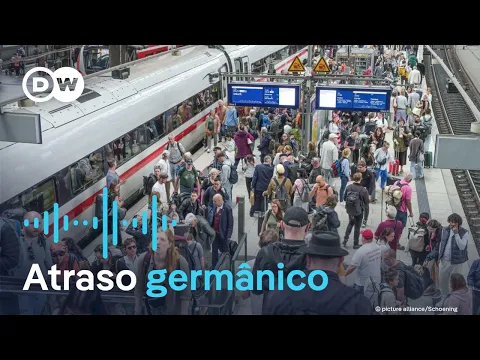

Deutsche Bahn has been under new management since October and plans a restructuring in 2026 with clear goals: to improve punctuality and efficiency.
One of the mentioned points is to cut a third of executive positions to simplify management and decentralize decisions. It is a sign that the company recognizes that part of the problem lies in leadership and internal sluggishness.
However, any realistic plan encounters what no one likes to hear: to improve, there will be more construction, more sections closed for months, and more inconvenience before any relief.
There’s also institutional friction, with questions about budget and the cost of inputs in a context of inflation and more expensive materials. Restructuring Without Short-Term Pain Turns Into A Calendar Promise, Not A Track Promise.
The crisis of trains in Germany does not seem to have a magical solution because the problem mixes aging infrastructure, shared tracks, lack of personnel, hybrid management, and the rising cost of delay.
Deutsche Bahn promises restructuring in 2026, but the time account is measured in years, not in press releases.
Now I want a concrete answer, from real life: if you were on a train that was delayed enough to threaten your connections, what would you do first to avoid being stuck mid-journey? Would you insist on the original route, switch to a different connection city, or abandon the trains and seek another means?









-

-

4 pessoas reagiram a isso.