





 Portuguese
  English
  Spanish
 4 min of reading
  4 comments


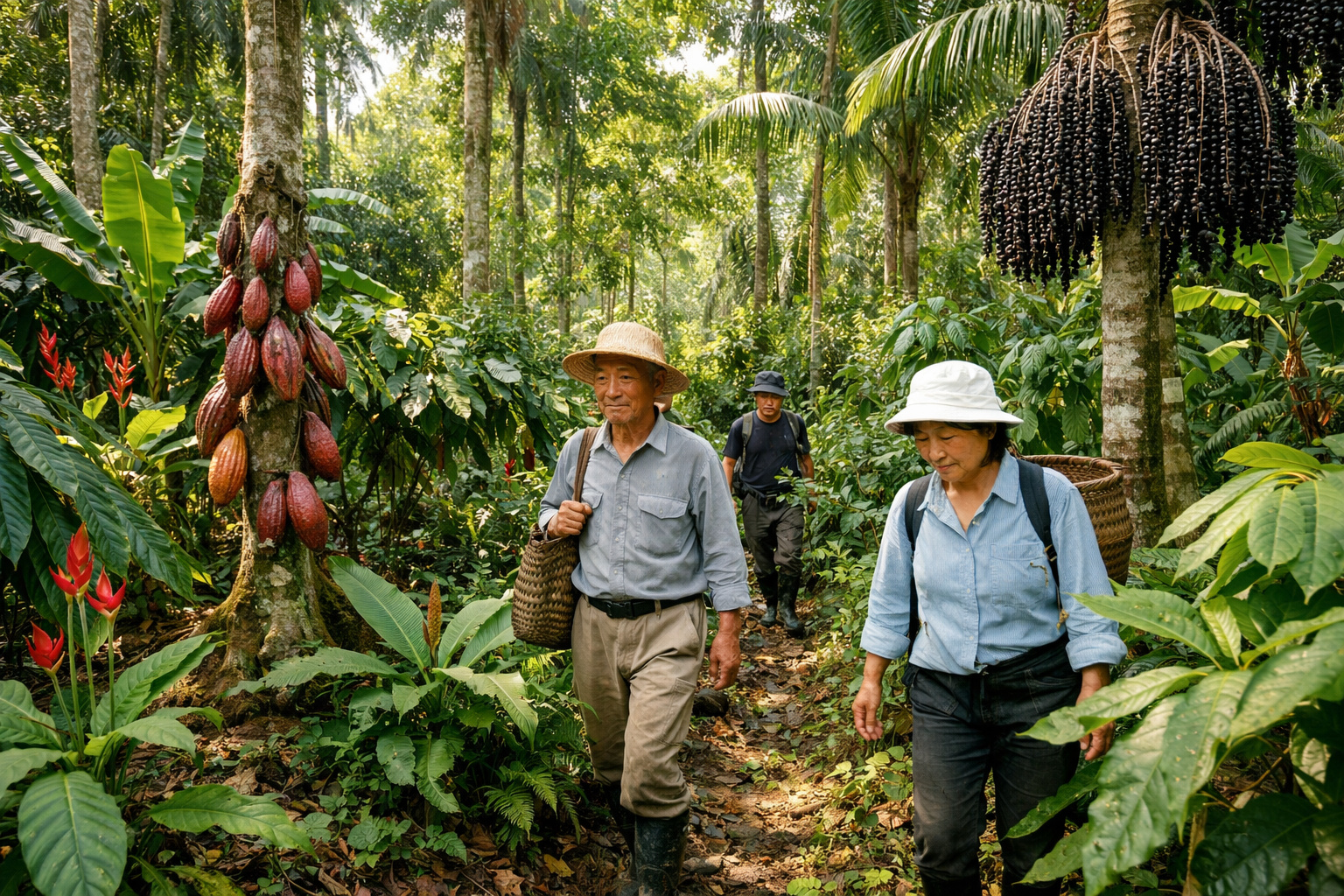


Community Formed by Asian Immigrants Created a Unique Agricultural Model Capable of Regenerating Degraded Areas, Producing Food Year-Round and Challenging the Historic Logic of Deforestation in the Amazon Region
When talking about Japanese immigration in Brazil, the most common image is usually São Paulo, the Liberdade neighborhood, and the large urban centers in the Southeast. However, far from this collective imaginary, there is a piece of the Amazon where the Japanese language still echoes, traditions have been preserved, and the relationship with the forest has gained a completely different meaning. This place is Tomé-Açu, in the interior of Pará, where a Japanese colony established deep roots since the early 20th century.
The story begins on September 22, 1929, when the first Japanese families arrived in the region. Among them was Hajime Yamada, who disembarked as a baby, at only two years old, in a scene dominated by dense forest. “It was forest. And I grew up in the middle of the forest practically,” he recalls. The initial idea of these immigrants was simple: stay for a few years, save money, and return to Japan. However, for many, that return never happened.

From Deforestation to Productive Reforestation: The Birth of a Revolutionary Agricultural System
During that period, Japan was facing a severe economic recession. Small in territory and with few prospects for land access, the country encouraged migration. About 160,000 Japanese came to Brazil in the largest migratory wave in Japanese history, and part of them was directed to the Amazon to boost agricultural development. Each family received 25 hectares for cultivating rice, beans, vegetables, tobacco, and cocoa.
-
A rural producer from Urubici cries as he shows 50 tons of plums thrown on the ground because no one wanted to buy them, and in desperation, he records a video asking anyone to come to the property to pick the fruits before they rot.

-
Unable to pass through Hormuz, Brazil activated a plan B that uses Turkey as a gateway to the Middle East: the route through Gibraltar and the Mediterranean is longer and more expensive but ensures that chicken, beef, and corn continue to reach Arab markets.

-
You grew up hearing that the good coffee from Brazil goes all abroad and the bad coffee stays for Brazilians, but this story has completely changed, and the numbers show that in the 1980s, thirty percent of the coffee sold here was adulterated with corn and barley.
-
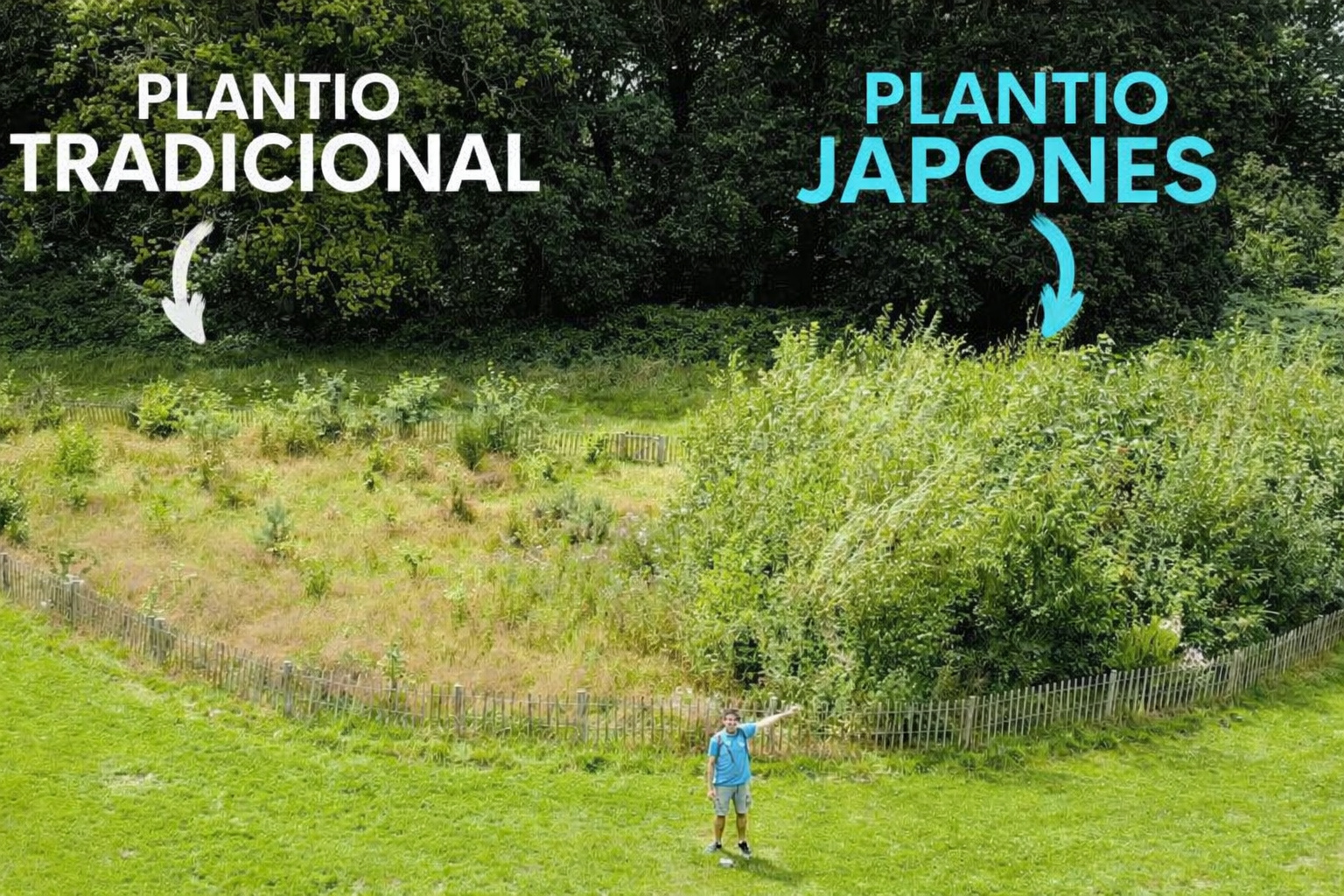
Engineer creates reforestation method that transforms small plots into dense forests in a few years using local biomass and can reduce environmental recovery costs.

The first impact was inevitable. Upon arrival, the immigrants found dense vegetation, large trees, and a practically intact forest. Thus, repeating the agricultural model of the time, they cut down and cleared the land to make way for fields and houses, many of which were built using traditional Japanese wooden joinery techniques, without the use of nails or screws.
Decades later, this same community would recognize the negative effects of this process. “With a matchstick, we set the entire forest on fire,” admits Michinori Konagano, a farmer born in Japan and raised in Pará. Soil degradation and crop exhaustion became evident, especially after the collapse of black pepper cultivation, which had ensured prosperity in the region since the 1960s.
The pepper cycle came to an end in the 1970s, when Fusarium wilt, a devastating pest, wiped out the plantations. With no income and no immediate alternatives, farmers needed to reinvent themselves. It was at this moment that a historic break occurred: instead of continuing to fight the forest, they decided to learn from it.


Ancient Techniques, Riverine Knowledge and the Sustainable Future of the Amazon
The turning point began with observing nature and the local riverine people. Inspired by the diversity of the forest and by concepts inherited from Japanese culture, such as “mottainai”, which means to waste nothing, farmers began to develop an agroforestry system based on the coexistence of species.
In this model, there are no weeds. All serve an ecological function. Pesticides and chemical fertilizers are completely discarded. Even insects are seen as allies. “Every insect has a role, even in pollination,” explains Michinori. Cocoa husks, for example, return to the soil as natural fertilizer, closing the production cycle.
Today, Michinori’s property encompasses 230 cultivated hectares, integrating cocoa, açaí, black pepper, and various forest species, with continuous production throughout the 12 months of the year. In just 15 years, areas previously degraded by abandoned pastures have recovered their closed forest appearance. The return of wildlife is visible: sloths, foxes, armadillos, pacas, opossums, hawks, and owls have returned to inhabit the area. Hunting is prohibited, and preservation is the rule.
Cocoa has become the flagship of this new phase. After undergoing controlled fermentation and drying processes, a significant portion of the production, classified as type 1 quality, is exported to Japan through cooperatives and supplies chocolate companies. This information was disclosed in a special report broadcast by TV Globo, based on interviews, historical records, and direct accounts from farmers in the region.
More than recovering vegetation, the agroforestry system has transformed Tomé-Açu into an international reference for sustainable production. Farmers from different parts of Brazil and other countries visit the region to learn the method. “We need to feed the population. Why not share this knowledge?” summarizes Michinori, who defines himself as more Brazilian than Japanese, despite his Oriental features.
Ultimately, the piece of the Amazon where Japanese is spoken shows that the future of the forest may lie precisely in the reconciliation between ancestral cultures, traditional knowledge, and respect for the cycles of nature.
Could it be that the future of the Amazon involves recovering ancient wisdom, uniting different cultures and learning from the forest itself instead of continuing to try to dominate it?







Porisso os militares na época tinham um lema.” Ocupar para não entregar ” porisso alem de não permitir ONGs se instalar ali. Eles criaram a zona franca de Manaus deram incentivo para indústrias se instalarem lá. Uma pena não terem aproveitado e deixar uma ferrovia e uma estrada decente concluídas para facilitar o transporte isso teria sido possível na época pq a Amazônia ainda não havia sido invadida por ONGs internacionais. Que atuam para atrapalhar o progresso e o desenvolvimento local. Ainda bem que essa comunidade nipônica ja estão lá há muito tempo pq se fosse hoje as ONGs internacionais não deixariam eles se instalarem ali.
**** com o pé de cacau 😂😂😂😂😂😂😂 Só faltou o cajueiro com o talo na castanha 🤣🤣
Amazônia com japoneses, chineses, franceses , noruegueses, alemães, … não demora muito e o Tramp pega pra ele!!!
Com esses governinhos da América Latrina, tudo vai ser americano em breve kkk
Já é AMÉRICA amigo!Wake UP!