





 English
  Francês
  Alemão
  Italiano
  Japonês
  Norueguês
  Portuguese
  Spanish
  3 min of reading


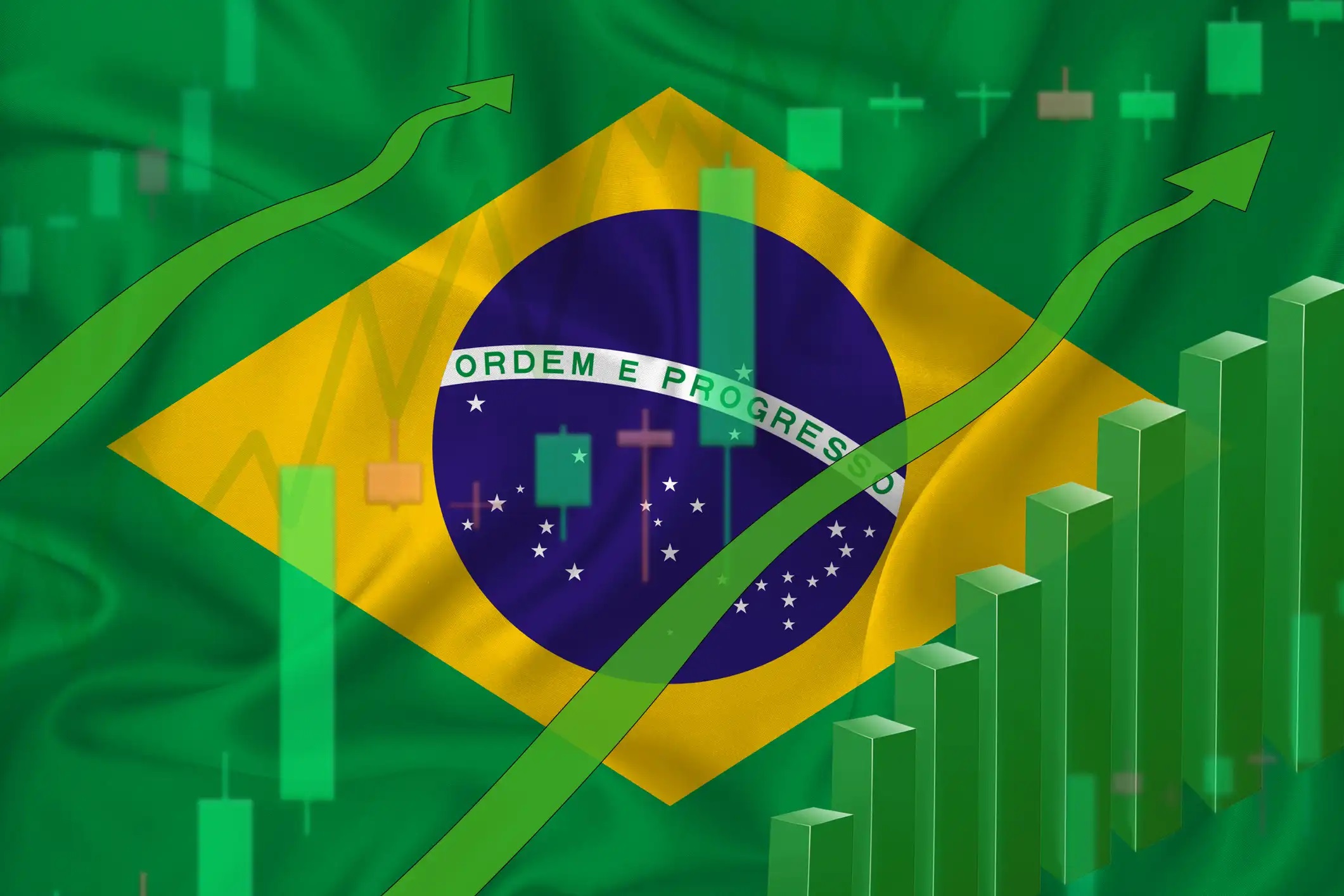
The Information and Communication Sectors, Followed by Transport, Storage, and Post, Were the Ones That Pulled the Numbers of the Brazilian Economy Up.
The data from the Brazilian Institute of Geography and Statistics (IBGE) for the economy indicates that Brazil’s Gross Domestic Product (GDP) in 2021 exceeded financial market expectations of 0.1% by reaching a growth of 4.6%, with R$ 8.7 trillion. The number of jobs reached 3.6 million between October and December, causing unemployment to drop to 11%.
The growth of GDP in Brazil in 2021 contrasts with the year 2020, when it did not exceed 3.9%. The 4.6% in 2021 is considered the best result since 2010, when the economy grew by 7.5%.


The good results compared to the year before last, according to analysts, are because 2020 was the hardest year of the Covid-19 pandemic, which not only caused loss of life but also economic contractions. The calculation of Brazil’s GDP is produced using data from IBGE, the Central Bank, the Federal Revenue, and the Getúlio Vargas Foundation.
-
Expansion of Federal Institutes: 38 new campuses and R$ 200 million for public education; see the cities included.

-
Lula’s government changes rule in important benefit and thousands of Brazilians will no longer receive it; see what has changed.
-
New Gripen fighter makes Argentines surrender to Brazil, and the heavy reaction exposes envy, frustration, and shock at Brazil’s technological leap.

-
This discovered deposit near the Andes could change the future of Argentina, attract billions, and even shake up the global metals market.
Brazil Exits Technical Recession with GDP Growth, but the Moment Remains a Time of Caution in the Economy
The country exited what is known as a technical recession, which is characterized by two consecutive quarters of GDP decline. In the second quarter of 2021, the economy showed a decrease of 0.3%, and in the third quarter, a contraction of 0.1%.
Although Brazil is now 0.5% above the fourth quarter of 2019, pre-pandemic period, GDP is still 2.8% below the historical series point reached in the first quarter of 2014.
The Federation of Industries of the State of São Paulo (Fiesp) predicts difficulties for GDP this year in 2022 and estimates growth below 1%. The institution itself considers that there are “difficult facts to justify based on the current fiscal scenario and the absence of a water crisis or a worsening of the pandemic.”
Economists from the financial market project growth of only 0.3% for GDP in 2022, the Central Bank projects growth of 1% for this year, and the Ministry of Economy expects a percentage of 2.1%.
| YEAR | Percentage (%) |
|---|---|
| 2010 | +7.5 |
| 2011 | +4 |
| 2012 | +1.9 |
| 2013 | +3 |
| 2014 | +0.5 |
| 2015 | -3.5 |
| 2016 | -3.3 |
| 2017 | +1.3 |
| 2018 | +1.8 |
| 2019 | +1.2 |
| 2020 | -3.9 |
| 2021 | +4.9 |
Sectors That Made 2021 Recover the Losses of 2020
Economic growth was driven by increases in the services sectors (4.7%) and industry (4.5%). These areas represent 90% of Brazil’s GDP and also contribute to job creation.
The services sector includes: Information and communication (12.3%), transport, storage, and post (11.4%), commerce (5.5%), real estate activities (2.2%), public administration, defense, health, and education, and social security (1.5%), and financial activities, insurance, and related services (0.7%).
In industrial growth, it is worth highlighting construction (9.7%), which had fallen by 6.3% in 2020. The manufacturing industries grew by 4.5% due to high demand for the manufacturing of machinery and equipment, metallurgy, manufacturing of other transport equipment, and production of non-metallic mineral products, in addition to the automotive industry.








Seja o primeiro a reagir!