





 Portuguese
  English
  Spanish
  3 min of reading
  0 comments


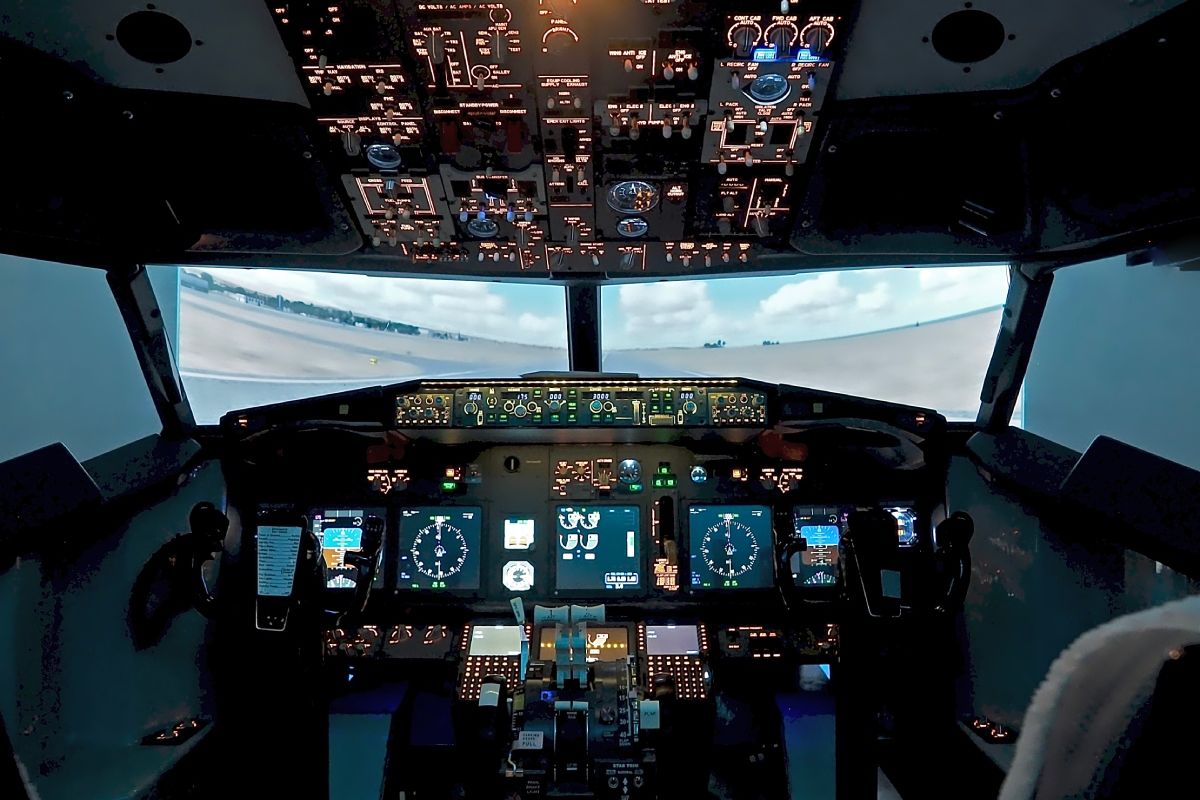
Understand How the Autopilot of a Commercial Airplane Works, Its Capacity to Land in Zero Visibility, and Why the Human Pilot Remains Irreplaceable
The autopilot of a modern commercial airplane is one of the most sophisticated and precise technologies in aviation. While the idea of “millions of micro-adjustments per second” is a way to illustrate its capability, the technical reality is that systems like the FMS (Flight Management System) issue hundreds of commands per second to keep the airplane on its route with a consistency impossible for a human being.
This precision is what enables complex maneuvers, such as automatic landings in zero visibility conditions. However, despite all the technology, the role of the human pilot remains fundamental. Automation is a tool to assist, not to replace the intuition and decision-making ability of the crew in critical moments.
The Evolution of Automation, from an “Assistant” in 1912 to the Brain of the Airplane
Automation in aviation is not a novelty. The first “pilot assistant” was developed in 1912 by Sperry Corporation, using gyroscopes to keep the airplane stable. The significant leap occurred in 1947, when a U.S. military airplane completed a transatlantic flight, including takeoff and landing, entirely automatically.
-
A forgotten cord on the floor of a basement in Vienna leads a plumber to a box containing 30 kilograms of gold with Mozart’s face, hidden before World War II. The treasure, worth 2.3 million euros, was just centimeters away from a worker who ignored the sign a day earlier.

-
A couple buys an old chalet, breaks the kitchen floor for renovation, and finds over a thousand coins of gold and silver hidden since the English Civil War over 4 centuries ago.

-
Rigid bags with their days numbered: new trend prioritizes comfort in 2026.

-
YouTuber creates an excavator equipped with a giant 4.5-meter sword to challenge his brother to a rematch, and the invention quickly goes viral on social media.

The real revolution came with the Flight Management System (FMS), which became standard in aircraft such as the Airbus A310 and Boeing 757 in the 1980s. The FMS acts as the “brain” of the aircraft, integrating navigation, flight planning, and performance monitoring, transforming the autopilot of a commercial airplane into a high-precision tool.
How the Flight Management System (FMS) Works and Its Precision
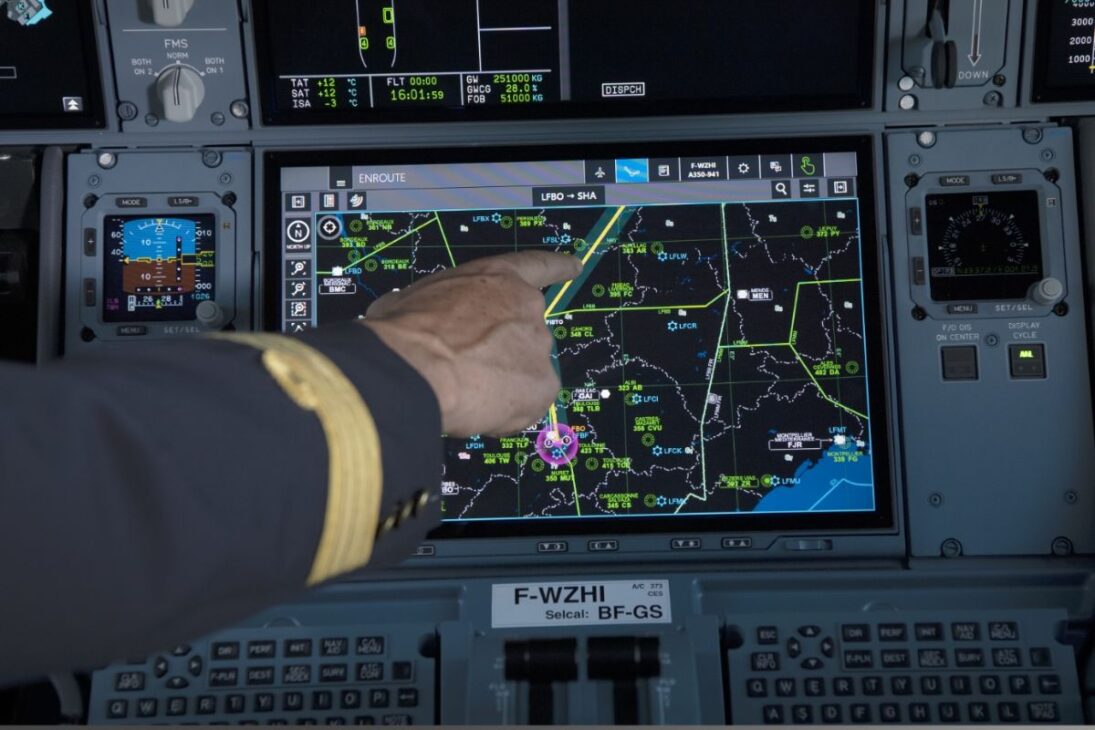
The FMS is the central system that commands the autopilot. It operates based on a flight plan entered by the pilots and receives continuous data from GPS, onboard sensors, and ground stations. From there, it calculates the most efficient route and sends commands to the aircraft’s control surfaces (ailerons, elevators, etc.).
The frequency of these commands is impressive. Modern systems can send hundreds of commands per second, with update rates of up to 100 Hz. This speed allows the airplane to react to turbulence and other disturbances much more quickly and smoothly than a human pilot could, ensuring a stable and safe flight.
Landing in Zero Visibility, the Capability of the Autopilot in CAT III Conditions
One of the most incredible capabilities of the autopilot of a commercial airplane is automatic landing, or “Autoland”. This system allows the aircraft to land in extremely low visibility conditions, classified as Category III (CAT III).
In a CAT IIIc approach, the aircraft can theoretically land with zero visibility and decision height. To do this, it uses the Instrument Landing System (ILS) of the airport and a high-precision radar altimeter onboard. Although technically possible, landings in zero visibility are not routine due to the challenges of taxiing at the airport after landing.
Autopilot vs Human Pilot, When the Machine is More Accurate and When it is Not
Automation excels in consistency and performing repetitive tasks. However, it lacks intuition or judgment to deal with the unexpected. This is where the human pilot becomes irreplaceable.
The autopilot of a commercial airplane has limitations, especially in strong crosswind conditions. For example, the limit for automatic landing in an Airbus A320 is 20 knots of crosswind, while a trained human pilot can land with up to 38 knots. The “feel” of the aircraft and the ability to adapt in real-time remain human advantages.
The Future in 2025, The Integration of AI and the Challenges for a Pilotless Flight

In 2025, the trend is for an increasing integration of Artificial Intelligence (AI) into autopilot systems. AI can optimize routes in real-time, save fuel, and further enhance safety by analyzing a much larger amount of data than a human.
Despite this, a fully autonomous commercial flight or one with only a single pilot still faces enormous barriers. Complete redesigns of the cockpits would be necessary, new regulations, and, most importantly, public acceptance. For now, aviation will continue to be a collaboration between the precision of the machine and the irreplaceable intelligence of the human pilot.








-

-

-

-

-

-

14 pessoas reagiram a isso.