





 English
  Francês
  Alemão
  Italiano
  Japonês
  Norueguês
  Portuguese
  Spanish
 3 min of reading


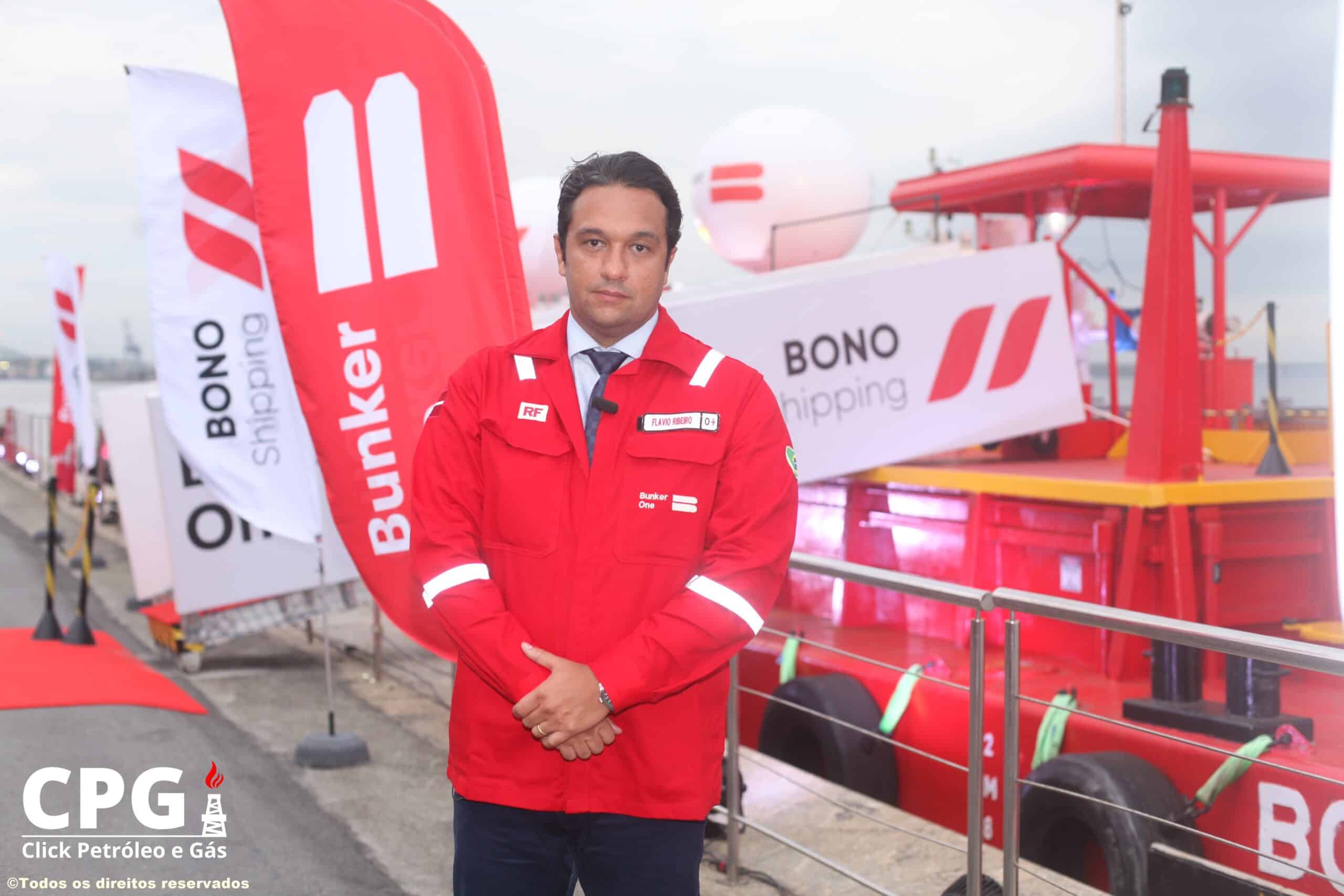
The Barge-Tank, Where the Company’s Booth Was Located, Was the Highlight of the Fair, Providing a Realistic Experience by Being Open for Public Visits
The event Rio Oil & Gas, one of the largest in the oil, fuel, and gas sector worldwide, took place this week, from September 26 to 29, and featured the participation of industry giants. One of the most prominent companies was Bunker One, a leader in the fuel sector. They brought an innovative vessel, a barge-tank or affectionately called “floating fuel station”, with the capacity to carry over 1 million liters of diesel, which was open for public visits. Flávio Ribeiro, president of Bunker One Brazil, shares how it operates and his impressions of the congress.
Video: How Bunker One’s Operations Work in Brazil
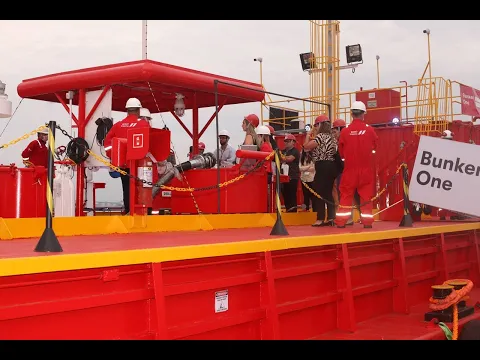

This vessel was one of the most sought-after attractions during the event due to its impressive size and features. The large barge-tank measures 45 meters in length and was docked in Guanabara Bay, with access from the Olympic Boulevard. Want to know more? Keep reading.
The Fuel Station Should Go to the Vessels
On land, vehicles have gas stations for refueling. However, at sea, the situation is different, and there is a need for this “gas station” to go to the vessels. After all, the vessels are very large, making it difficult to move them. Therefore, a floating platform, like a barge-tank, must move to these vessels.
-
The largest South American oil company, Petrobras, is preparing for a historic leap in production with new FPSO platforms and the expansion of refining — projects that could add up to 900,000 barrels per day and strengthen Brazil’s energy security.
-
Billions of barrels in the Equatorial Margin could double Amapá’s oil production in Brazil and attract companies from the Campos Basin.

-
Mature Fields Take Center Stage and Are Expected to Generate New Opportunities in the Oil and Gas Sector
-
Offshore And New Investment Opportunities Will Be At The Center Of Discussions At Macaé Energy 2026

Bunker One brought this new innovative barge-tank to the Rio Oil & Gas event that performs the service of delivering diesel and fuel to the vessels. Thus, all interested visitors could tour the floating platform and experience the real dimensions of such a tool at sea.
According to the CEO of the company, Flavio Ribeiro, this exhibition was crucial to demonstrate to people how real refueling of ships at sea works. After all, although many people work in the offshore sector, there is still widespread ignorance of some simple processes, such as refueling a vessel at sea. Through this experience, people were able to get closer to the naval sector and better understand this refueling process.
Visiting Experience on a Diesel Vessel, Bunker One Promoted Its Activities and Sustainable Fuels
The tour promoted by the Bunker One barge-tank aimed to provide a new experience for visitors and also to showcase the activities that the company has been developing. In this regard, the company announced that it is seeking the use of more sustainable fuels for its fleet of vessels and navigation.
Furthermore, Bunker One announced that it recently partnered with the Federal University of Rio Grande do Norte (UFRN) to develop feasibility research on fuels. This research aims to assess the possibility of adding a percentage of 7% of biodiesel to the marine diesel oil used in vessels at sea.
Through these initiatives, the company seeks to stimulate the energy transition and reduce greenhouse gas (GHG) emissions that contribute to global warming. Additionally, the research in partnership with UFRN aims to utilize biodiesel produced in Brazil, one of the largest producers of these fuels in the world.
About Bunker One, World Leader in Fuels
Bunker One is a company that originated in Denmark and is now one of the largest in the world in the bunkering industry, that is, in the maritime fueling of vessels. The multinational operates in over 22 countries and has more than 140 bunkering specialists.
Moreover, it is the only company in Brazil that works 100% with maritime refueling and excels in developing operations. The company invests in sustainable solutions to stimulate the energy transition, such as the use of biodiesel.









Seja o primeiro a reagir!