





 Português
  Inglês
  Espanhol
  3 min de leitura
  0 comentários


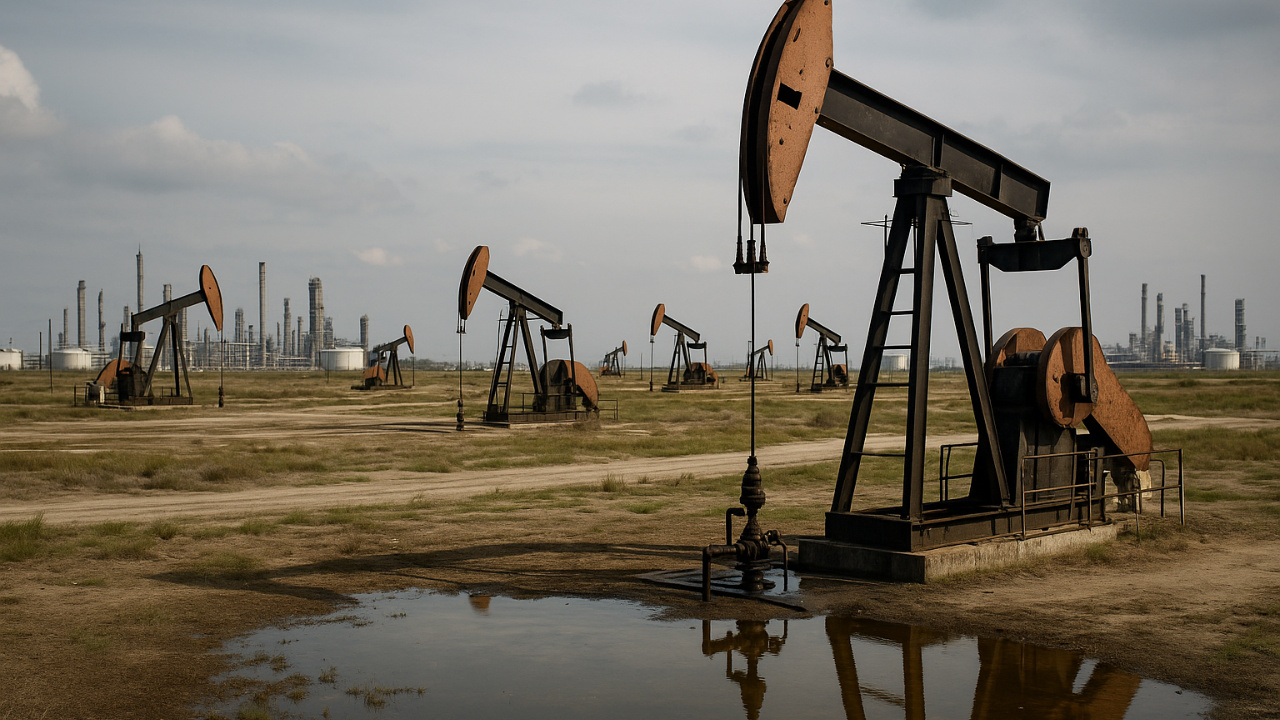
Comprehensive Analysis Shows Why The Latin America Region With More Oil Than All Of Saudi Arabia
The Latin America region with more oil than all of Saudi Arabia, but produces 12 times less, returns to the center of the global debate after new data reveals the extent of energy waste.
What is at stake is the gigantic Orinoco Oil Belt in Venezuela, a territory with official reserves of 300.878 billion barrels, announced by state-owned PDVSA, which exceeds the 267 billion barrels of Saudi Arabia.
Even so, Venezuelan production has plummeted to only 770,000 barrels per day, according to recent figures.
-
Offshore industrial demand in Macaé skyrockets with the recovery of oil and gas and could grow by up to 396% by 2026 in the Campos Basin.
-
Offshore industrial demand in Macaé surges with the recovery of oil and gas and could grow by up to 396% by 2026 in the Campos Basin.
-
Brazilian giant expands borders in the Southeast: Petrobras confirms new oil discovery in ultra-deep waters in the pre-salt of the Campos Basin.

-
Alert in the global energy market: Severe tropical cyclone hits the coast and disrupts gas production at major plants in Australia, threatening global supply.


The contrast exposes a critical scenario involving politics, economics, technology, and international pressures, and helps explain why one of the planet’s greatest potentials remains locked.
The Largest Reservoir In The World And The Low Production Paradox
Latin America exclusively hosts the region with more oil than all of Saudi Arabia, but produces 12 times less, and this has a name: Orinoco.
The belt, considered one of the most voluminous reserves on the planet, places Venezuela at the top of the global ranking in terms of crude oil volume.
The advantage, however, runs into a structural problem.
Despite accumulating at least 34 billion barrels more than the Saudis, the country has dropped to the 21st position among oil producers, falling behind Colombia, Mexico, and Brazil.
At its peak, Venezuela extracted around 3 million barrels per day, a number that is now four times lower.
Why Venezuelan Oil Does Not Reach The Market?
The main obstacle lies in the type of oil predominant in the region: heavy oil. It requires more expensive, complex, and slower techniques for extraction, transportation, and refining.
As highlighted in a report by Global Americans, this type of oil “is expensive to produce, transport, and refine,” which places Venezuela at a competitive disadvantage.
Thus, the country is forced to sell this oil at significantly lower prices for international refineries to accept it.
Jorge Navarro, vice president of the Spanish Association of Geologists and Geophysicists of Oil (AGGEP), reinforced the seriousness of the situation in an interview with El Economista.
According to him, the problem is not just geological but also managerial.
Years Of Crisis Has Destroyed The Energy Sector
In addition to technical difficulties, the Venezuelan oil industry faces a history of neglect, corruption, and economic collapse.
The deterioration of infrastructure has caused PDVSA to lose extraction, refining, and export capacity.
As a result, the Latin America region with more oil than all of Saudi Arabia, but produces 12 times less, remains stalled, despite its evident potential.
Foreign Intervention: Hope And Controversy
Given the internal incapacity to recover the sector alone, international presence has begun to be seen as an inevitable way out.
In 2023, the United States temporarily lifted sanctions on Venezuelan oil, gas, and gold for six months, creating room for foreign companies to show interest in the Orinoco Belt.
This opening exposed two realities:
Venezuela depends on external capital, technology, and expertise to modernize its production chain.
The diplomatic relief does not mean normalization: Washington maintains sanctions as a political pressure tool over Nicolás Maduro’s government.
Thus, today, international companies can apply for individual licenses to operate in the country, rekindling expectations for a gradual recovery of production.
Between Elections, Uncertainties, And Opportunities
Even with renewed interest and the energy power of the Latin America region with more oil than all of Saudi Arabia…
The political dispute following the 2024 elections has brought new internal tensions, while investors await minimum guarantees of stability.
The challenge now is to rebuild an industry that was once a continental reference.
Thus, the reactivation of Orinoco depends on heavy investments, legal security, and international cooperation—factors that have not yet progressed together.










Seja o primeiro a reagir!