





 Portuguese
  English
  Spanish
  4 min of reading
  0 comments



Many Think That Hybrid Cars Only Gained Popularity at the Turn of the Millennium. However, the First Mass-Produced Hybrid Car, the Toyota Prius, Hit the Japanese Market in 1997, Redefining the Industry.
The history of automotive technology has a milestone often incorrectly situated: the emergence of the first mass-produced hybrid car. Contrary to the common perception that these vehicles only scaled up in the 2000s, global pioneering belongs to the Toyota Prius, launched in Japan in October 1997.
The belief that mass-produced hybrid cars are an invention of the early 2000s is widespread. However, the Toyota Prius, launched in Japan in October 1997, is unequivocally the first mass-produced hybrid car in the world, marking its presence long before the technology became popular.
Before the Prius: The First Steps and the Limited Concepts of Hybrid Vehicles in Automotive History
The concept of hybrid propulsion is considerably older than the Prius. In the early 20th century, Ferdinand Porsche developed the Lohner-Porsche Mixte (c. 1900-1901), recognized as the first functional hybrid automobile. Other notable attempts included the Woods Motor Vehicle Dual Power (1915-1918).
-
Costing R$ 16,000, the new Yamaha features a 125 cc hybrid engine with electric assistance, delivers 8.3 hp, includes ABS, optimized fuel consumption, Y-Connect connectivity, 25 liters of storage space, and a surprising 4-year warranty in the urban segment.

-
OMODA & JAECOO grows in Europe in 2026 with an integrated strategy of sales, innovation, local production, and technological advancement in the United Kingdom, Italy, and Spain.

-
OMODA & JAECOO expands after-sales service in Brazil with competitive maintenance, a 7-year warranty, and high availability of parts for technological SUVs.

-
OMODA & JAECOO appoints Alessandra Souza as executive marketing director in Brazil and accelerates brand expansion with a focus on innovation, networking, and hybrid portfolio.


However, these early endeavors did not achieve significant mass production, failing due to costs, complexity, or lack of infrastructure. Interest in hybrids resurfaced between the 1960s and 1970s, with prototypes from Toyota (1976) and Audi (Duo, 1989/1997), but still with limited production. The crucial distinction of the Prius was achieving viability for large-scale production.
Toyota Prius (1997): The Birth of the First Mass-Produced Hybrid Car in Japan and Its Revolutionary Technology

The journey of the Prius began in 1993 with Toyota’s “Project G21” aiming for a vehicle of revolutionary efficiency. In October 1997, the Toyota Prius (model NHW10) was launched in Japan, with the slogan “Just in Time for the 21st Century”. Its launch was strategically aligned with the COP3 climate conference in Kyoto.
This compact sedan was equipped with the innovative Toyota Hybrid System (THS), a series-parallel hybrid system that combined a 1.5L gasoline engine with an electric motor and Nickel-Metal Hydride (NiMH) batteries. It promised an efficiency of 28.0 km/L in the Japanese test cycle. Despite a mixed initial reception, the Prius won the Japan Car of the Year award in 1997. The global introduction (model NHW11) began in September 2000, gaining popularity in the United States, including among celebrities.
The First Wave of Hybrids in the Mass Market: The Honda Insight and the Expansion of the Technology to the Popular SUV Segment
Although the Prius was the pioneer in global mass production, other manufacturers followed. The Honda Insight (first generation) was introduced in Japan in November 1999 and became the first hybrid available in North America in December 1999, seven months ahead of the Prius in the U.S. It utilized Integrated Motor Assist (IMA) technology, a parallel hybrid system.
Hybrid technology also expanded to other segments. The Ford Escape Hybrid, launched in 2004 (model year 2005), was the first hybrid SUV and the first hybrid from an American manufacturer. Shortly after, in 2005, the Lexus RX 400h emerged as the world’s first luxury hybrid SUV.
How the First Mass-Produced Hybrid Car Forever Changed the Global Automotive Industry
The impact of the 1997 Toyota Prius was profound and lasting. The Toyota Hybrid System (THS) evolved into the Hybrid Synergy Drive (HSD), which was implemented in a wide range of Toyota and Lexus models, and even licensed to other brands like Nissan. The Prius served as a key catalyst for the growth of the hybrid vehicle market and for vehicle electrification in general. Its cumulative sales surpassed 1 million units in 2008.
More than that, the Prius significantly raised global public awareness about sustainable transportation, fuel efficiency, and the viability of cleaner automotive technologies. It demonstrated to the industry and policymakers that low-emission vehicles for the mass market were feasible, influencing the dialogue on emissions and environmental policies.
The 1997 Toyota Prius as an Unequivocal Milestone and the True First Mass-Produced Hybrid Car in Global Automotive History
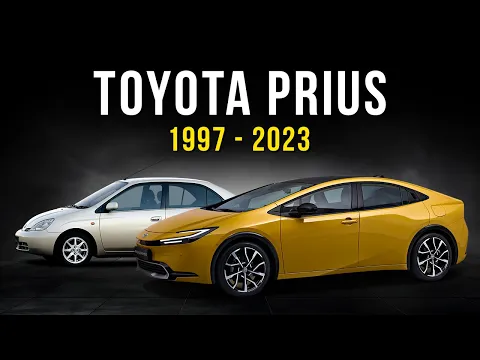

The historical and technological analysis confirms: the Toyota Prius, launched in Japan in October 1997, holds the title of the first mass-produced hybrid car in the world. This fact, sometimes obscured by its later global popularity, is crucial for the correct understanding of automotive evolution.
The Prius was not only the first in mass production; its innovations established a new paradigm, paving the way for the era of vehicle electrification that defines the contemporary automotive landscape in Brazil and worldwide.









-

Uma pessoa reagiu a isso.