





 Portuguese
  English
  Spanish
  3 min of reading
  0 comments


Meet the Shidao Bay Nuclear Power Plant and Its HTR-PM Technology, Which Promises Safer Nuclear Energy and Became a Global Milestone at the End of 2023
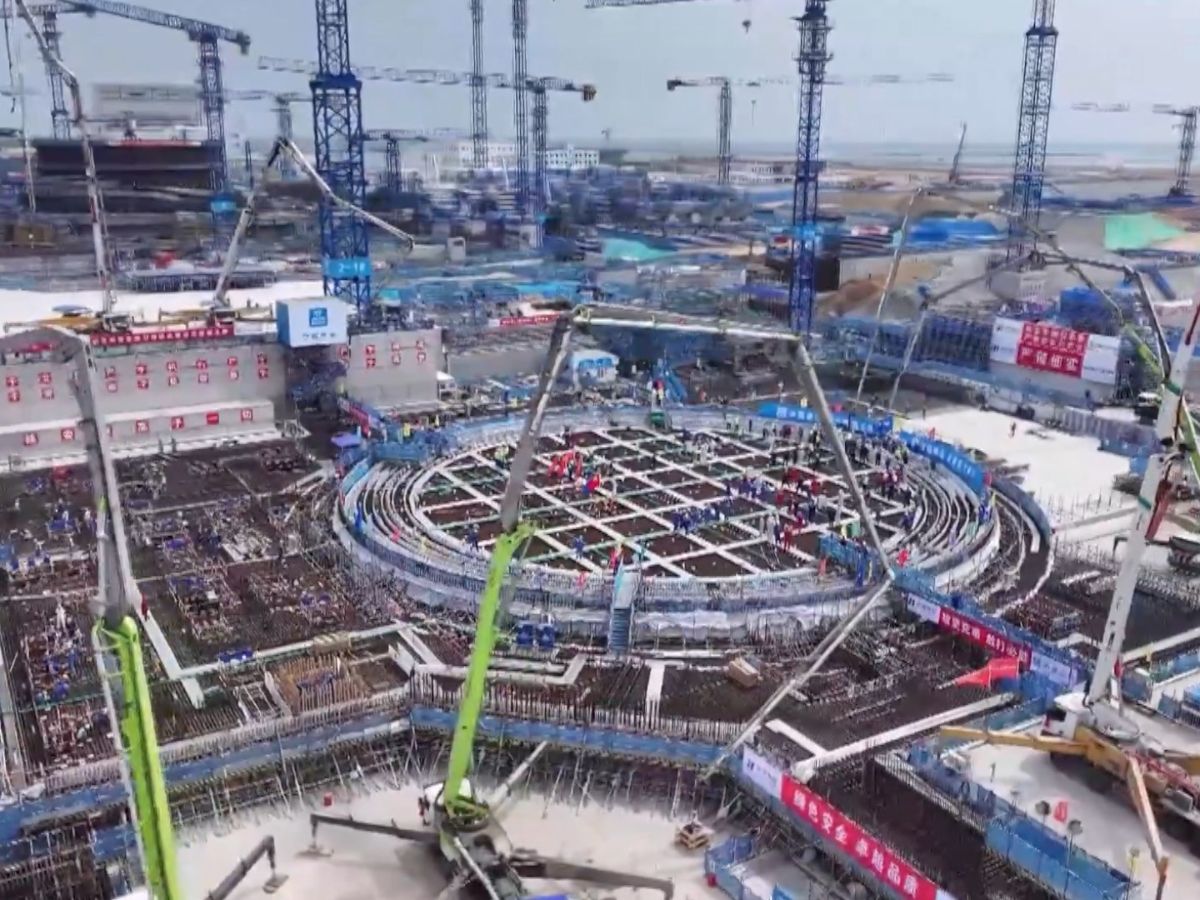
China marked a turning point in energy history by bringing the world’s first commercial fourth-generation nuclear reactor online. Located at the Shidao Bay Nuclear Power Plant, the technology, known as HTR-PM, represents the next frontier of nuclear energy, promising greater safety and less radioactive waste production.
Since the end of 2023, the plant has been connected to the power grid, an achievement that positions China as a global leader in advanced nuclear reactors. The project is closely monitored by the entire industry, as its innovative technology and performance could define the future of nuclear energy worldwide.
What Is the HTR-PM Reactor and Its “Pebble Bed” Technology?
The HTR-PM is a High-Temperature Gas-Cooled Reactor. Unlike conventional reactors, it does not use water for cooling but rather helium gas. Its core is filled with over 400,000 small fuel spheres, known as “pebbles,” which gives it the name “pebble bed” reactor.
-
Where there was only sand and wind at 40 degrees, China built a megacity of 500,000 inhabitants with farms, vineyards, and universities in the middle of the desert using melted glacier water from hundreds of kilometers away.

-
In the middle of the desert, Saudi Arabia wants to make it snow, build a billion-dollar ski resort on a 2,600-meter mountain, and prove to the world that even sand can become a luxury winter destination.

-
Without a button, sensor, or any electronic system, Harvard scientists create a solar device that autonomously decides whether to generate energy or heat and can transform energy use in homes and buildings.

-
Theories about UFOs have resurfaced strongly after an aerospace scientist and a general connected to the Roswell case mysteriously disappeared in the United States within a few months, and even the FBI was called in to investigate.


Each “pebble” has a diameter of 60 mm and contains thousands of uranium particles coated with ceramic (TRISO fuel). This technology allows the reactor to operate at extremely high temperatures, with helium exiting the core at up to 750°C, enabling more efficient energy generation.
The Tests That Proved the Reactor Cannot Melt
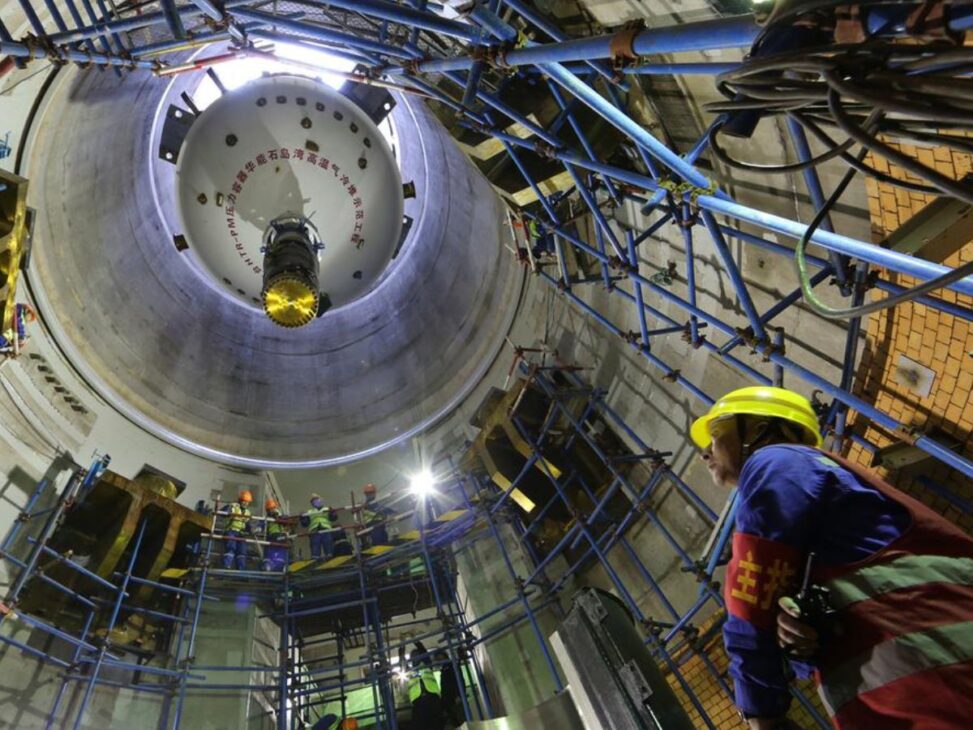
The main advantage of the first fourth-generation nuclear reactor is its inherent safety. The design of the HTR-PM ensures that it remains safe even in the event of total power loss, without the need for human intervention or active emergency systems.
This was demonstrated in tests conducted in 2023. During a power loss simulation, the reactor passively cooled through natural convection, eliminating the risk of a core meltdown. Safety is further reinforced by the TRISO fuel, which can contain radioactivity even at temperatures of up to 1620°C.
From Construction in 2012 to Commercial Operation in 2023
The HTR-PM project at Shidao Bay progressed at a remarkably rapid pace for such an innovative technology. Construction officially began on December 9, 2012. Nearly nine years later, on December 20, 2021, the first of two reactors was connected to the power grid.
After a series of tests, including a continuous operation of 168 hours, the plant went into commercial operation on December 5, 2023. This 11-year timeline, from the start of construction to full operation, is a testament to China’s management capability and technological maturity in the nuclear sector.
Less Radioactive Waste? The Reality About HTR-PM Waste
One of the promises of fourth-generation reactors is the reduction of radioactive waste. Theoretical calculations suggest that the HTR-PM may produce about 37% less long-lived waste compared to conventional reactors. The design of the “pebbles” fuel also allows it to be stored safely after use.
However, the waste issue is complex. The first fourth-generation nuclear reactor uses a large amount of graphite as a moderator, which becomes radioactive over time. Managing this activated graphite during the decommissioning of the plant is still a technical challenge and a topic of research and debate in the nuclear community.
More Than Electricity, the Potential to Decarbonize Industry with 750°C Heat

In addition to generating 210 megawatts of electricity, the HTR-PM has a strategic advantage: it produces high-temperature process heat, which can reach 750°C. This heat can be used to decarbonize industrial sectors that currently rely on fossil fuels.
Applications include the production of clean hydrogen, an essential fuel for the future, and providing energy for industries such as petrochemicals and steelmaking. This versatility aligns the first fourth-generation nuclear reactor with China’s ambitious climate goals to achieve carbon neutrality by 2060.






Seja o primeiro a reagir!