





 English
  Francês
  Alemão
  Italiano
  Japonês
  Norueguês
  Portuguese
  Spanish
  3 min of reading
  2 comments


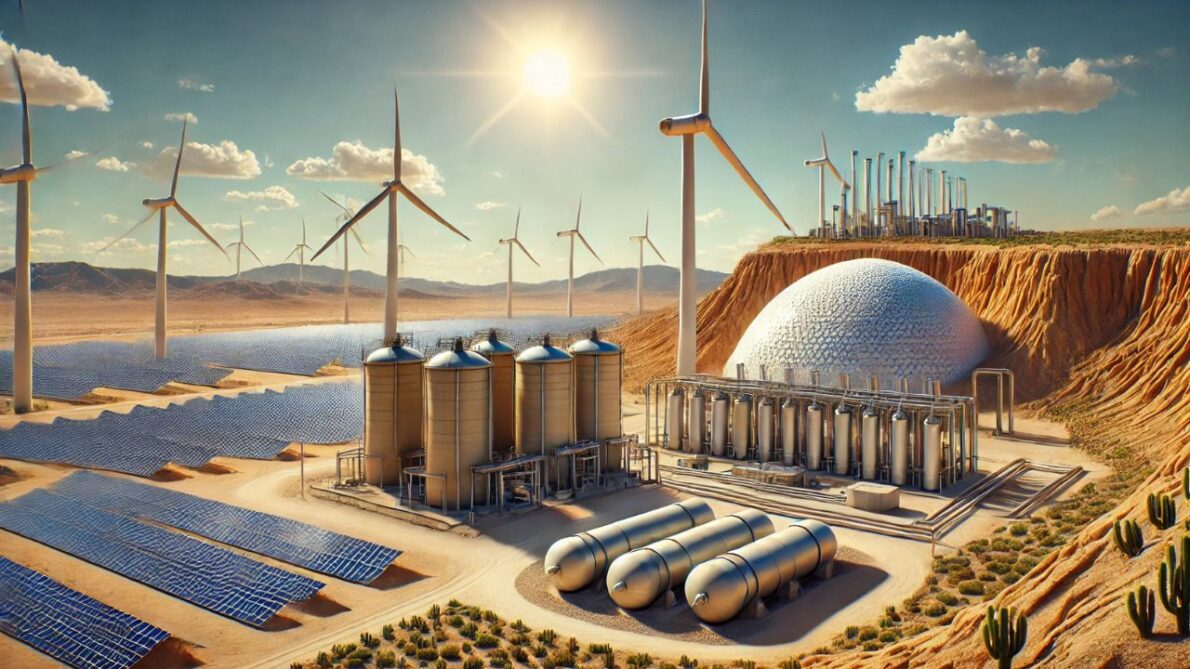

The Most Ambitious Green Hydrogen Project in the World, in the United States, Promises to Store Up to 6 TWh of Energy in Salt Caverns, Using a 2.2 GW Electrolysis Powered by 3.75 GW of Renewable Energy
The most ambitious green hydrogen project in the world, in the United States, promises to store up to 6 TWh of energy in salt caverns, using a 2.2 GW electrolysis powered by 3.75 GW of renewable energy. Hydrogen City is the world’s most ambitious project for green hydrogen production, focusing on the salt dome of Piedras Pintas, a geological formation south of Texas ideal for storing hydrogen.
Texas is one of the largest oil producers in the world thanks to fracking. What will happen to its giant industry when reserves are depleted or demand for fossil fuels begins to decline due to emission commitments? The answer is an ambitious project known as Hydrogen City.
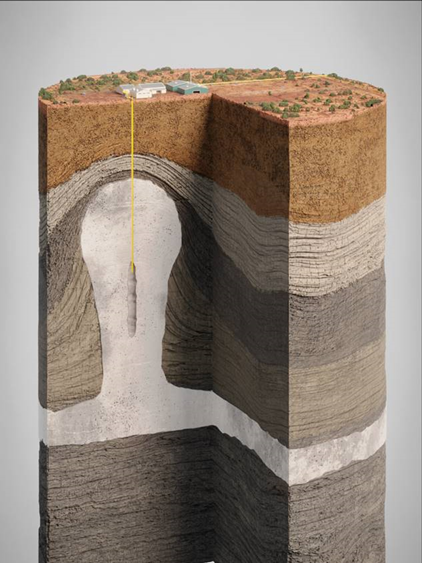
Welcome to Hydrogen City
The largest project in the world for the production, storage, and transportation of green hydrogen in ammonia form. At least on paper. The initiative focuses on the salt dome of Piedras Pintas, a geological formation south of Texas that is ideal for storing enormous amounts of hydrogen due to its impermeability, stability, and constant temperature.
-
Historic bankruptcy of Centauro shocks the market, and the century-old company puts more than 500,000 products, machines, and complete infrastructure up for online auction.

-
Renewable energy advances over protected areas in Brazil, and a survey by the Energy Transition Observatory reveals silent impacts that challenge environmental conservation and pressure sensitive traditional territories.

-
Rio Grande do Sul accelerates energy transition: State invests in renewable technologies and consolidates decarbonization strategies and pathways to attract billions in new industrial investments.

-
With 160,000 m² of collectors, an area larger than 20 football fields, Silkeborg, in Denmark, hosts a solar thermal plant that heats 19,500 homes and could become the largest solar heating plant in the world.


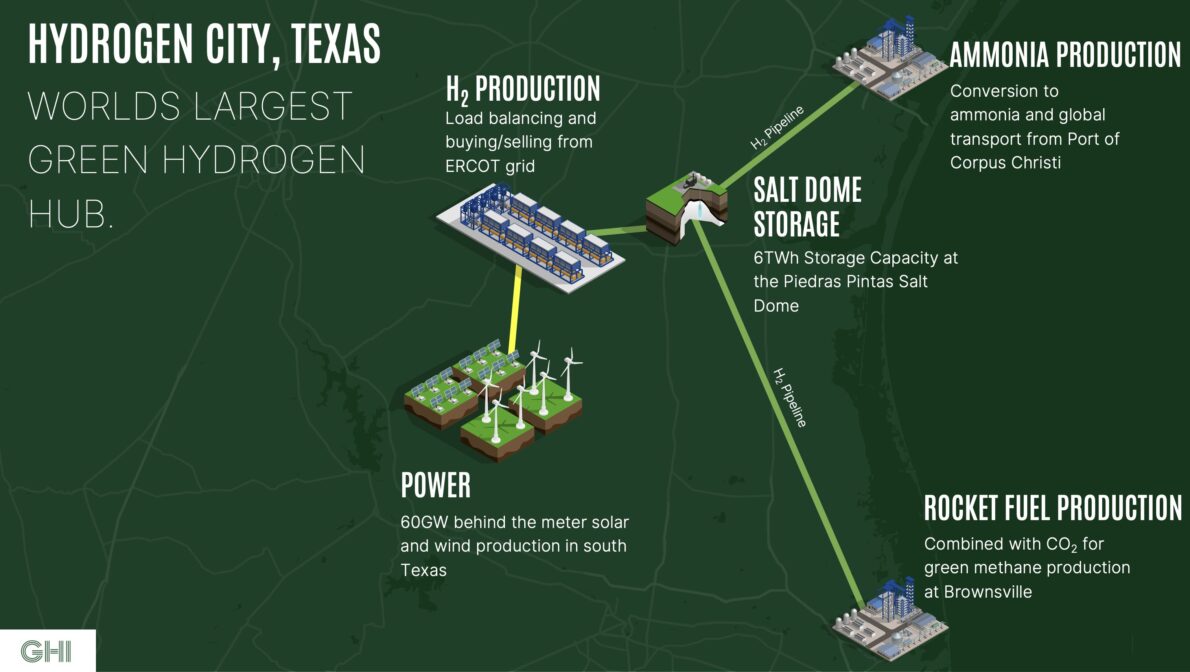
The Texas oil of the future. The goal of Hydrogen City is to harness Texas’s abundant solar and wind energy to produce green hydrogen from water electrolysis, store it in gaseous form in a salt cavern, and transport it on demand through a 120 km pipeline to an ammonia plant in Corpus Christi.
The estimated production of the project is 280,000 tons of hydrogen annually, which aims to generate one million tons of green ammonia ready for export to international markets, such as the Asian market.
Who Is Behind the Project?
Hydrogen City is an initiative of Green Hydrogen International (GHI), a Houston-based company founded in 2019 by American geologist Brian Maxwell. In these four years, Inpex Corporation, Japan’s largest oil and gas company, and ABB, the Swedish-Swiss giant that manufactures industrial equipment and components for electric power generation, have joined the project.
When Will Construction Start?
Construction is expected to begin in 2026. What is most ambitious is the plan to start commercial production just three years later, in 2029, with a 2.2 GW electrolysis powered by 3.75 GW of solar and wind energy.
If anything can attract public and private interest to accelerate the project, it is the enormous storage capacity of Piedras Pintas. The salt dome could store up to 6 terawatt-hours (TWh) of energy long-term, a true revolution for the multiple industries that depend on ammonia.
The Great Obstacle: A Sustainable Electrolysis
Although green ammonia can be produced from green hydrogen without the need for fossil fuels, the energy cost of water electrolysis casts doubt on projects of this kind, as they cannot always operate with wind turbines and solar panels.
Hydrogen City will purchase electricity from the Texas power grid operator (ERCOT) during off-peak hours to offset fluctuations in solar and wind power generation, reducing costs while decreasing demand for non-renewable energy sources. It remains to be seen whether this will contain the production cost of hydrogen and consequently of ammonia.










Falam tanto de hidrogênio como combustível, mas se esquecem do preço! Na Califórnia tem gente encostando seus toyotas devido ao alto preço. viabilidade econômica não há tecnologia que resista.
E ainda tem o problema da estrutura de distribuição.
Eo campo de batalha,só interessa a vitóriaaaa é vençer,vençer e vençer quem tiver o combustível +barato ,para produzir ao menor custo,menor o custo de fabricação do produto×a tecnologia +moderna,vencerar a competição a concorrência,o segredo está no combustível produzido +barato para alimentar a indústria com fabricação de produtos e alimentos +batato.