





 Portuguese
  English
  Spanish
  3 min of reading
  2 comments


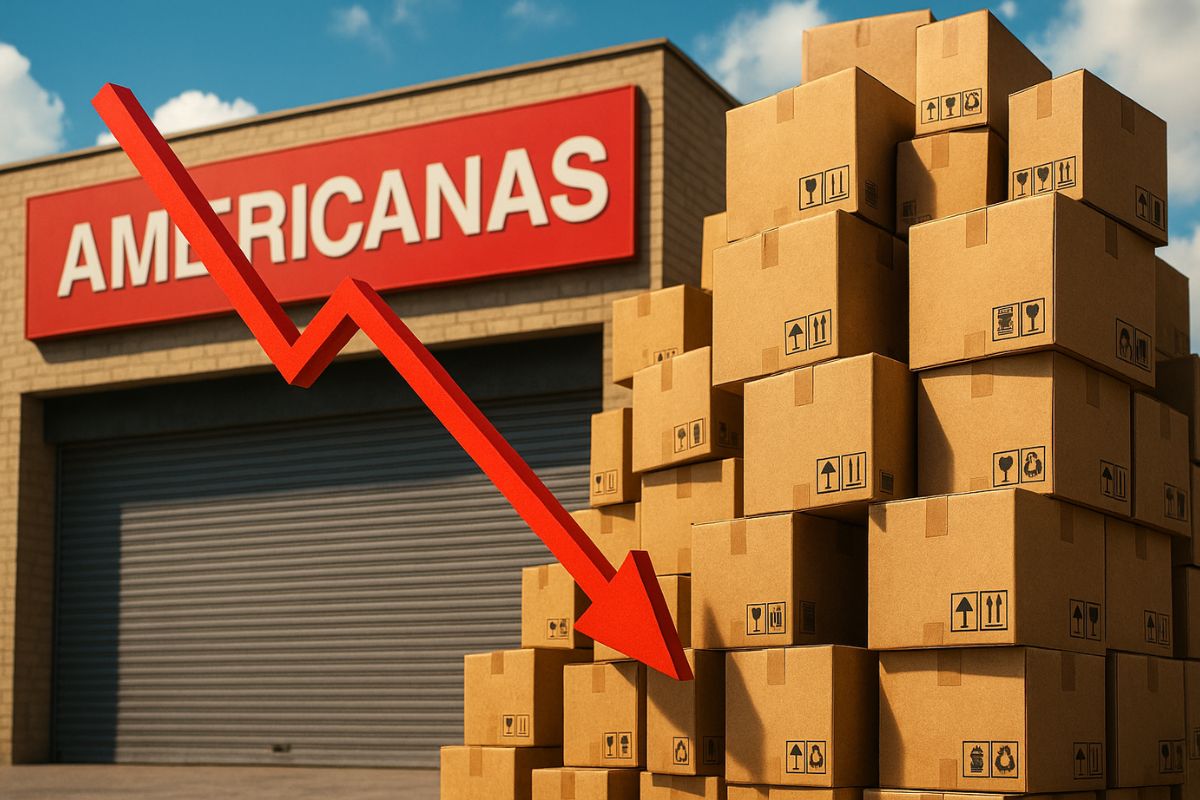


Smaller and More Focused: The Paths of Americanas to Overcome the Billion-Dollar Crisis. After Judicial Recovery and the Closure of Thousands of Stores, the Company Is Betting on Streamlining, Loyalty, and Digitalization to Face the Billion-Dollar Crisis.
The billion-dollar crisis of Americanas, revealed in 2023 with an unprecedented accounting shortfall, shook the Brazilian retail sector and raised questions about the survival of one of the country’s most traditional brands. Two and a half years later, the company seeks to show signs of recovery, but for that, it needed to reduce its structure, sell assets, and rethink its way of operating.
Under the leadership of CEO Leonardo Coelho and CFO Camille Faria, Americanas is attempting to rebuild its reputation and win back customers, suppliers, and investors. The path, however, involves a smaller, leaner company focused on convenience, leaving behind the strategy of runaway expansion.
How Americanas Shrunk to Face the Billion-Dollar Crisis
Before the billion-dollar crisis, Americanas was already the retailer with the largest number of stores in Brazil, surpassing 3,600 units. Today, that number has fallen to around 1,500 points of sale, and further closures are still expected. The goal is to maintain operations only in strategic locations, cutting fixed costs and renegotiating lease contracts.
-
With an investment of R$ 612 million, a capacity to process 1.2 million liters of milk per day, Piracanjuba inaugurates a mega cheese factory that increases national production, reduces dependence on imports, and repositions Brazil on the global dairy map.

-
Brazilian city gains industrial hub for 85 companies that is equivalent to 55 football fields.

-
Peugeot and Citroën factory in Argentina cuts production by half and opens a layoff program for more than 2,000 employees after Brazil drastically reduced purchases of Argentine vehicles.

-
A Brazilian city gains a factory worth R$ 300 million with the capacity to process 200 thousand tons of wheat per year, a mill of 660 tons/day, silos for 42 thousand tons, and an industrial area of 276 thousand m².

This streamlining is also reflected in the portfolio. Brands acquired over the years, such as Natural da Terra, Pqno, and Imaginarium, are being put up for sale. The new management’s assessment is that, although healthy, these operations do not form part of the company’s core and consume energy at a time when the priority is to do the basics well.
What Changes in Physical Stores and Digital
The stores of Americanas continue to be treated as convenience points. Fast-moving consumer goods, snacks, small appliances, and household utilities remain at the center of the strategy. The bet is on turning each store into a mini-logistics hub, functioning as a pickup point or origin for quick deliveries.
In the digital space, the company also changed course. If before Americanas’ marketplace hosted around 4,000 sellers, the new goal is to limit the number to just 100 major partners, who account for 80% of online sales. The idea is to complement physical stores by offering categories that are not part of the traditional assortment, such as furniture, larger electronics, and automotive parts.
New Programs to Retain Customers
Another avenue to reverse the billion-dollar crisis is strengthening the relationship with customers. Americanas has resumed issuing credit cards in partnership with Visa and Brasil Card and plans to launch, in the coming months, a loyalty program called Cliente A, integrated with the Dots points platform.
The goal is to create a cycle of recurring purchases, offering exclusive discounts and conveniences in exchange for more frequent consumption and higher average ticket prices. The strategy aims to regain the trust of consumers who distanced themselves from the brand after the financial scandals.
Challenges Still Ahead
Despite the progress, Americanas continues to face significant challenges. The billion-dollar crisis still weighs on market confidence, and the company needs to prove that the new model is sustainable. The firm also faces fierce competition from digital players and more established retail chains, in addition to dealing with a macroeconomic scenario of high interest rates and retracted consumption.
Analysts believe that the success of Americanas will depend on its ability to generate profit in a simpler and more focused operation, without repeating the mistakes of excessive expansion and weak internal controls that led to the crisis.
The restructuring shows that Americanas has learned, at least in part, from past mistakes. Smaller, more focused, and willing to regain public trust, the retailer shows signs of recovery but still needs to overcome the distrust of investors and consumers.
And you, do you believe that Americanas will be able to recover from the billion-dollar crisis and become relevant in the national retail sector again, or will this streamlined model be insufficient to face competitors? Share your opinion in the comments — we want to hear from those who closely follow this market.







Acredito sim no ressurgimento da marca, na qualidade dos produtos, na reestruturação da empresa, porque ela faz parte da memória cultural do Brasil.
Por gerações a Americanas sempre foi o Shopping do Brasil!
Acredito bastante no sucesso da Americanas, sou um transportador terceirizado e como dica, acho que deveriam ter uma logística mais séria, funcionários mais comprometidos, por aí pode ir um bom volume de dinheiro para o “ralo”.