





 Portuguese
  English
  Spanish
  4 min of reading
  0 comments


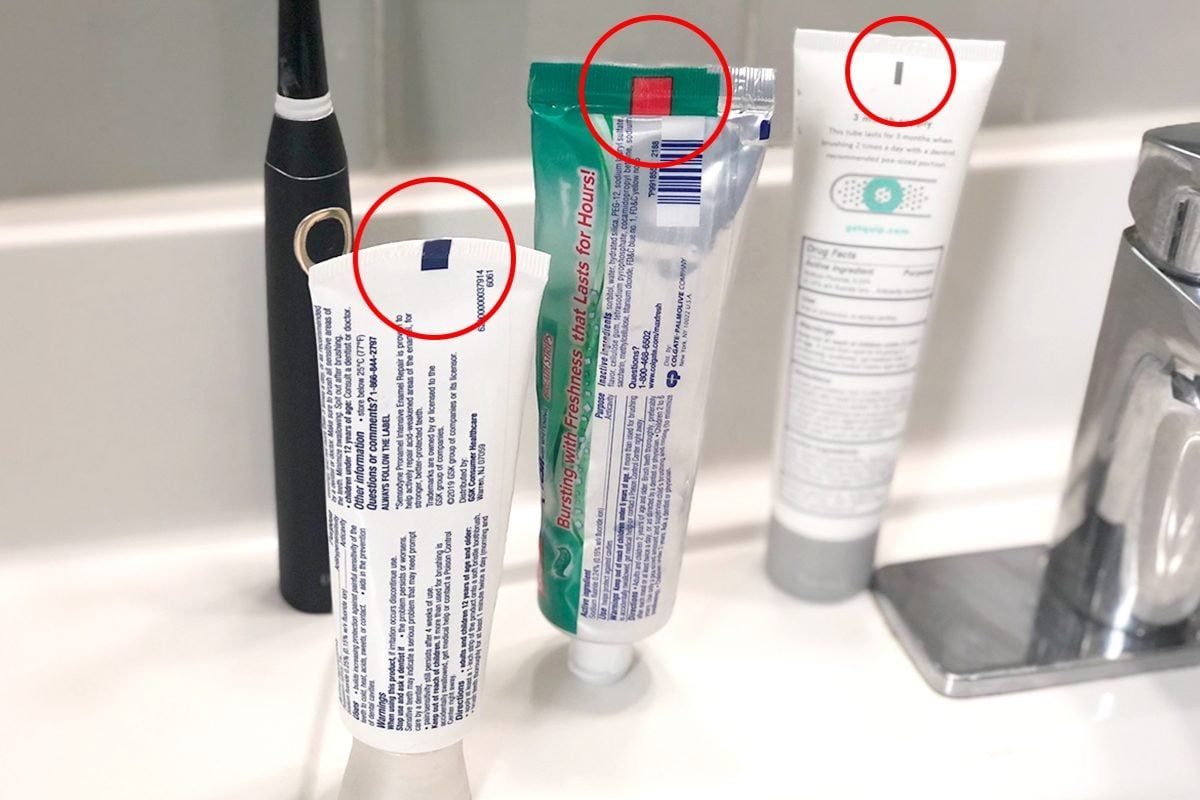
The Theory That The Colors On The Tube Base Reveal Whether The Formula Is “Natural” Or “Chemical” Is False; The Real Explanation Is A Detail Of The Manufacturing Process That Has Existed Since The 90s.
An old but persistent myth has resurfaced on social media, generating curiosity and concern among consumers. It is the theory that the small colored squares at the base of every toothpaste package function as a secret code, revealing whether its ingredients are “natural” or “chemical”.
Despite having been debunked numerous times by manufacturers and experts, the claim gained new life in January 2024, after a clip on the subject went viral on a podcast on TikTok. The truth, however, is much simpler and has nothing to do with the product’s formula, but rather with the manufacturing process of the tubes.
What Does The Myth That Resurfaced On TikTok In January 2024 Say?
The false theory, which has circulated on the Internet for years, attributes a specific meaning to each color of square found at the bottom of the toothpaste tube. The “key” to the supposed code would be as follows:
-
A couple buys an old chalet, breaks the kitchen floor for renovation, and finds over a thousand coins of gold and silver hidden since the English Civil War over 4 centuries ago.

-
Rigid bags with their days numbered: new trend prioritizes comfort in 2026.

-
YouTuber creates an excavator equipped with a giant 4.5-meter sword to challenge his brother to a rematch, and the invention quickly goes viral on social media.

-
The U.S. Army surprises the world by presenting the UH-60MX Black Hawk helicopter capable of flying without pilots, controlled by a tablet, featuring the MATRIX system, smart sensors, and full autonomy in real combat and rescue missions.


Green: Would indicate a “completely natural” composition.
Blue: A mixture of “natural and medicinal” ingredients.
Red: A combination of “natural and chemical” ingredients.
Black: Would mean a formula with “only chemical ingredients.”
This misleading narrative advises consumers to avoid packaging with red or black marks, exploiting the fear that many people have of “chemical” products.
The Technical Truth: The Function Of “Eye Marks” In The Industrial Process Since The 90s
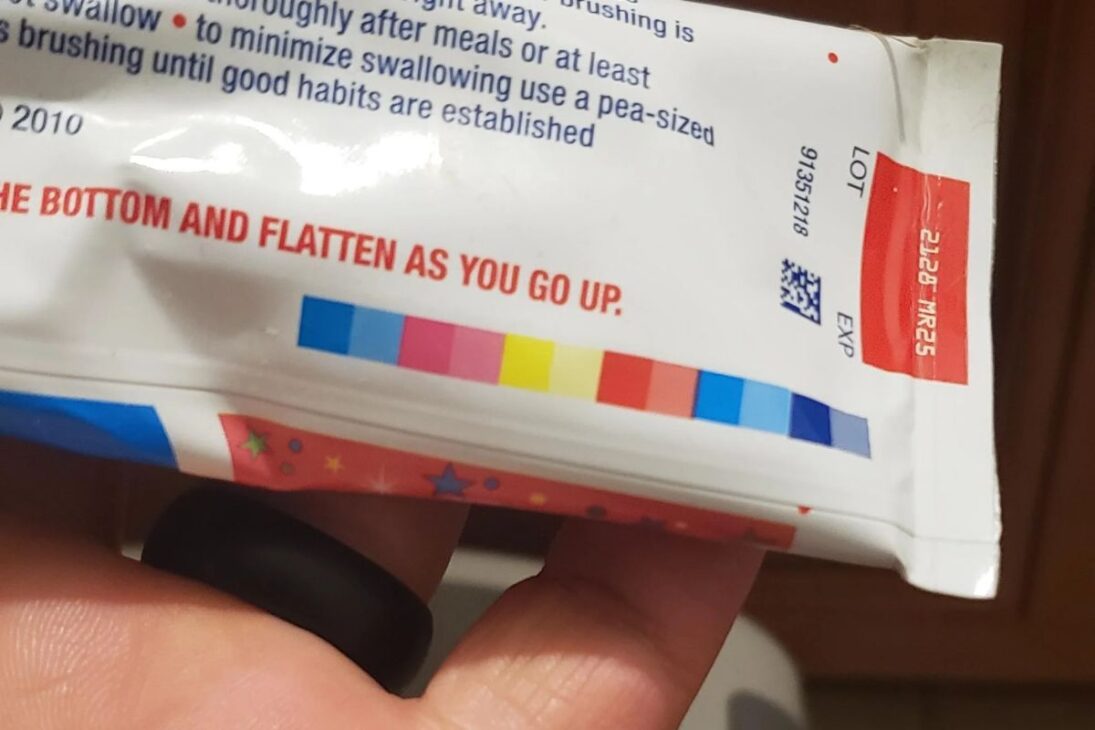
In reality, the colored squares have nothing to do with the ingredients of your toothpaste. They are technically known as “eye marks” and serve a purely industrial purpose.
These marks are read by light beam sensors in high-speed packaging machines. The sensors use the mark as a guide to know exactly where the tube should be cut, folded, and sealed. This ensures that the packaging print remains centered and that the filling process is precise and efficient.
The color of the mark (which can be green, blue, black, pink, or any other) is chosen solely for the contrast it provides with the tube’s background color, to facilitate sensor reading. This technology has been used in the packaging industry since the 1990s.
The Fallacy Of “Natural Vs. Chemical”: Why This Separation Does Not Make Sense
The myth relies on a scientifically inaccurate idea: that “natural” is always good and “chemical” is always bad. In fact, everything that exists is made up of chemical substances, from the water (H₂O) we drink to the food we eat.
The origin of an ingredient does not determine its safety. There are natural substances that can be toxic, just as there are synthetic substances created in a lab that are safe and extremely effective.
The classification used in the myth is vague and does not provide any useful information about the quality of the toothpaste.
How To Know What Really Is In Your Toothpaste: Reading The Ingredients List
The only safe and reliable way to know what is inside the tube is to read the ingredients list printed on the packaging. By law, all manufacturers are required to list the components of their products. No company uses color codes to hide information.
Most toothpastes contain a mixture of:
Mild Abrasives (such as silica) for cleaning.
Humectants (such as glycerol) to prevent drying out.
Thickeners to provide consistency.
Flavorings to provide taste.
Fluoride (such as sodium fluoride), the most important ingredient for cavity prevention.
What Do Manufacturers And Experts Say: Colgate And Dental Associations Debunk The Rumor


In light of the persistence of the myth, the main authorities on the subject are unanimous. Colgate, one of the largest manufacturers in the world, states on its official website (in a publication updated on January 26, 2023) that the theory is a “hoax” and that the marks only serve the manufacturing process.
Dental associations, such as the American Dental Association (ADA), also reinforce that the rumor is false.
The recommendation of these entities is to always choose a toothpaste that contains fluoride and, in case of doubt, consult a dentist, who is the most qualified professional to recommend the ideal product for your needs.








-

Uma pessoa reagiu a isso.