





 Português
  Inglês
  Espanhol
  4 min de leitura
  0 comentários


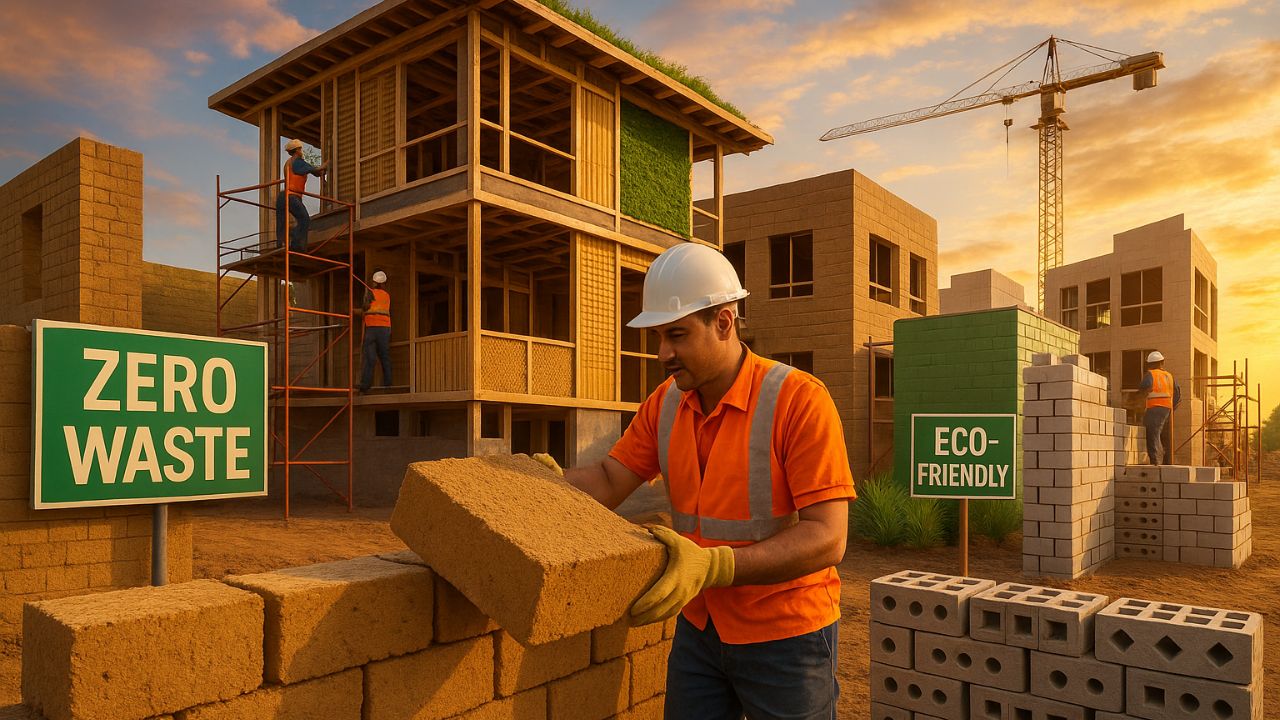
Discover the Advances in Eco-Friendly Bricks, Permeable Concrete, and Insulating Paints Developed in the Country That Promote Savings, Efficiency, and Less Environmental Impact in Civil Construction.
The Brazilian civil construction sector is undergoing a silent revolution. It is driven by the need for more sustainable practices. In light of high resource consumption and significant waste generation, innovations in materials emerge. These solutions promise more efficient and resilient buildings. This article explores three notable advancements developed in Brazil. They are: eco-friendly bricks, permeable concrete, and insulating paints. Their contributions to a greener future are highlighted here.
The Foundation for Low-Impact Construction
Eco-friendly bricks are a sustainable alternative to conventional ceramic models. In Brazil, the development focuses on two main fronts: soil-cement bricks and those that incorporate industrial waste.
The soil-cement brick is produced cold. Its manufacturing results from the mixture of soil, cement, and water, which is pressed and cured in the shade. This process eliminates firing in kilns, drastically reducing CO₂ emissions. Additionally, it can generate up to 40% savings in social housing projects. This is due to the use of local soil and decreased need for setting mortar, thanks to its interlocking system. Research from the Federal University of Southern and Southeastern Pará (UNIFESSPA) confirms its benefits. However, studies from the Federal University of the Recôncavo da Bahia (UFRB) warn: the quality of the soil is crucial to ensure the resistance required by ABNT standards.
-
A megaproject worth R$ 89 billion is advancing in Iraq and promises to change the game in global trade by creating a new corridor between Asia and Europe, reducing traditional routes and repositioning the country as a logistics powerhouse.
-
Goodbye bedside table: floating shelves become a trend in 2026 by freeing up space in the bedroom, improving circulation, bringing visual lightness, and integrating technology without taking up floor space.

-
Israel, Greece, and Cyprus signed an agreement in 2020 to transport gas from the Mediterranean to Europe via a 1,872 km pipeline, but Turkey claimed sovereignty over part of the maritime route, and the project never materialized.
-
Israel, Greece, and Cyprus signed an agreement in 2020 to transport gas from the Mediterranean to Europe via a 1,872 km pipeline, but Turkey claimed sovereignty over part of the maritime route, and the project never materialized.

Another promising avenue is the valorization of waste. The National Institute of Technology (INT), for example, developed a brick made from limestone waste and resin. This innovative material does not require firing, has very low water absorption, and 600% higher resistance than the minimum required by legislation. Research also explores the use of marble rejects and foundry sand, aligning construction with the principles of the circular economy.
An Intelligent Solution for Cities
Permeable concrete, or draining concrete, is an innovative response to urban flooding. Its porous structure allows rainwater to pass directly into the soil. This relieves drainage systems and helps recharge the groundwater table.
Its technology consists of reducing or eliminating sand from the mix, creating interconnected voids. The benefits are numerous. In addition to combating floods, permeable concrete helps mitigate the heat island effect and can filter pollutants from the water. A pavement of this type can absorb about 60% of rainwater, compared to only 5% of regular asphalt.
Pioneering projects using eco-friendly materials for civil construction are already a reality in Brazil. The city of Vila Velha (ES), in a project with UFES, implemented the material to reduce flooding. Curitiba (PR) and São Paulo (SP) also use the solution in sidewalks and parking lots. The main challenge is maintenance. The pores can be blocked by sediments, a phenomenon known as clogging. Regular cleaning is essential to ensure its long-term effectiveness. The ABNT NBR 16416 standard is the main technical reference for the design and execution of these pavements.
Comfort and Energy Efficiency
The quest for comfort and energy efficiency drives the development of special paints and coatings. Thermal paints, for example, are formulated to reduce heat transfer in roofs and walls. They work in two ways: reflecting solar radiation and insulating the surface.
Brazilian companies offer construction products with hollow ceramic microspheres, which create a barrier against heat. A thermal paint can reduce the temperature of a roof by up to 50%, decreasing the need for air conditioning and generating savings on the electricity bill.
In the field of acoustic insulation, domestic production stands out. The company Biolã, with 100% Brazilian capital, manufactures products based on rock wool. This material can provide insulation of over 50 dB, ensuring healthier and more productive environments. Academic research is also advancing. UFRGS, for example, develops multifunctional intumescent coatings made from biomass, which protect structures against fire and corrosion simultaneously.
Impact and Future of Ecological Construction in Brazil
The adoption of ecological materials promotes a virtuous cycle. Environmental, social, and economic benefits reinforce each other. Reducing energy consumption with thermal insulators, for instance, diminishes environmental impact and costs for the consumer. The use of waste generates new business opportunities and reduces landfill disposal.
However, the mass adoption of these innovations faces barriers. The initial cost, a lack of qualified labor, and traditional construction culture are the main challenges. To overcome them, policies for incentives, professional training, and the dissemination of information are essential.
The ABNT technical standards and sustainability certifications, such as the LEED certification, play a crucial role. They establish quality standards, ensure safety, and add value to properties. By creating a clear reference, they enhance market confidence and stimulate the entire production chain of sustainable construction. Brazil has a unique opportunity to become a leader in developing construction solutions adapted to tropical climates, paving the way for a more resilient and balanced future.







Seja o primeiro a reagir!