





 Portuguese
  English
  Spanish
  5 min of reading
  0 comments


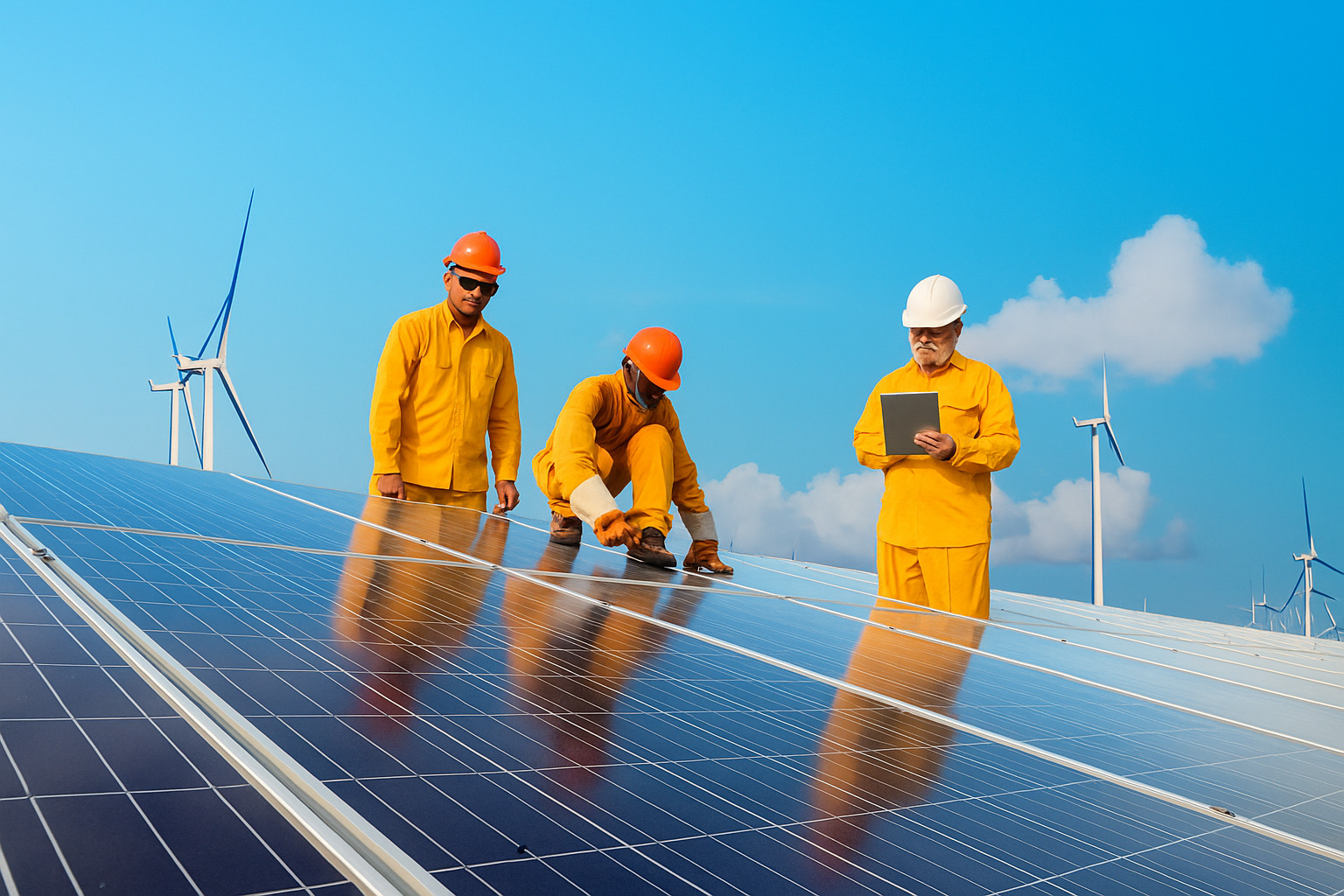
Discover How Agriculture Is the Main Responsible for Renewable Energy Used in Brazil and Its Strategic Importance for the National Energy Matrix.
The renewable energy used in Brazil has always played a prominent role in the national energy matrix. From an early stage, the country took advantage of its vast natural resources and favorable climatic conditions. Thus, it became a global reference when it comes to clean and sustainable sources.
Although many first think of hydropower or wind farms, the agricultural sector also stands out as one of the key protagonists in this journey.
According to a recent study by the Getulio Vargas Foundation (FGV), published by the institution’s Bioeconomy Observatory, the Brazilian agribusiness generates 60% of the renewable energy consumed in the country.
-
The Brazilian state accelerates industrial competitiveness with a focus on the extraction of strategic minerals to boost the energy transition in Goiás.

-
A Canadian retiree creates a hydroelectric system on a real river, generating energy continuously throughout the day and demonstrating how the power of water can supply a house with stability even in a simple structure.

-
Petrobras reaffirms its commitment to the market and ensures that it will carry out the energy transition safely to maintain national sovereignty.

-
Researchers discover a possible hydrogen deposit of up to 46 million tons beneath an ancient coal basin, and the volume could exceed half of the entire global production.


Therefore, this surprising data evidences how the countryside contributes decisively to the Brazilian energy transition — an essential process to reduce emissions and combat climate change.
A History of Energy Protagonism
To understand the current importance of agriculture, it’s fundamental to look back in time. Brazil has a strategic history in using renewable energy, especially since the 20th century, when it invested in building large hydropower plants.
In this way, the country consolidated a much cleaner energy matrix than the global average.
In the 1970s, faced with the oil crisis, the government created the National Alcohol Program (Proálcool). This stimulated the production of ethanol from sugarcane.
As a result, Brazil positioned itself as a world leader in the use of biofuels.
Throughout the following decades, even with the advancement of fossil sources like oil and natural gas, the country maintained a high renewability index.
According to data from the National Energy Balance (BEN), 49% of the Brazilian energy matrix comes from clean sources — which is much higher than the global average, estimated at around 15%.
However, according to FGV, without the agricultural sector’s involvement, this rate would drop to about 20%.
This makes it clear that rural production not only drives the economy but also sustains a greener and more balanced energy matrix.
The Natural and Structural Conditions of Agriculture
The Brazilian agribusiness brings together unique natural and structural conditions that favor the use of clean sources.
For example, the tropical climate boosts the cultivation of crops with high energy potential, such as sugarcane.
In addition, the low need for irrigation in many regions helps reduce electricity consumption in the fields.
At the same time, productivity per hectare is high, and producers adopt technologies tailored to the characteristics of the soil, terrain, and climate in Brazil.
Therefore, the countryside achieves increasing rates of energy efficiency.
Additionally, many properties utilize agricultural production waste to generate energy.
Through biodigesters, it’s possible to transform organic residues into biogas, which fuels machinery or is converted into electricity.
Simultaneously, ethanol and biodiesel, produced from sugarcane and soybeans, replace fossil fuels in transportation and agricultural machinery.
Moreover, solar energy is also gaining strength in the countryside. Small and medium-sized farms have been installing solar panels to reduce electricity costs and gain greater energy autonomy.
In this way, access to renewable energy is expanding, while agriculture becomes increasingly sustainable.
The Dependence on Diesel and Its Risks
Despite all these advancements, the sector still faces a significant challenge: the high dependence on diesel.
In 2022, according to FGV, 73% of the energy used directly in agricultural activities came from fossil fuels.
Among them, diesel remains the most used.
Consequently, this dependence makes the sector vulnerable to external factors, such as international crises, fluctuations in oil prices, and logistical instabilities.
All these factors directly affect production costs and reduce the profit margin of rural producers.
Given this scenario, the sector needs to increase its investments in alternative solutions, such as hybrid tractors, electric vehicles adapted for the field, and the use of hydrotreated vegetable oil (HVO).
In various regions of Brazil, these technologies are already in testing phases and are showing good results.
Additionally, public and private initiatives that encourage this transition are gaining more and more space.
Partnerships between universities, governments, and cooperatives can also accelerate the use of clean energies in agricultural machinery.
Indicators of Energy Efficiency in the Field
The FGV study also analyzed the energy efficiency of the rural sector, using the GJ/USD1000 indicator.
This index measures how much energy is consumed to generate one thousand dollars in gross agricultural production value.
In 2022, Brazil recorded an energy intensity of 1.9 GJ per thousand dollars, a number that is close to the global average of 1.7 GJ.
For this reason, the country presents a moderate energy competitiveness, but with good prospects for advancement.
In general, productive chains with higher added value — such as fruits, coffee, meats, and industrialized products — tend to generate more value with lower energy consumption.
On the other hand, less sophisticated sectors face greater efficiency challenges.
Therefore, improving this indicator requires conscious resource management, technical training, and access to technology.
Rural extension programs that teach good energy practices already show a positive impact and are likely to expand with public and private support.
Sources and Credibility of the Research
To ensure accuracy in results, FGV based its analysis on reliable sources.
The study used data from the National Energy Balance (BEN), FAO, IBGE, and EPE.
Furthermore, the report incorporated international models, such as GTAP-Power, an extended version of the GTAP database focused on electricity analysis.
This methodological approach allows for safe comparisons between Brazil and the global energy scenario.
Thanks to these sources and methods, the study provides a robust and useful overview for both public policy makers and investors, producers, and researchers.
The Field as a Protagonist of the Energy Transition
The role of the agricultural sector in the production and use of renewable energy proves that Brazil is on the right track.
However, the energy transition requires continuity, focus, and articulation among different agents.
Therefore, to ensure progress, the country needs consistent public policies, access to green credit, incentives for innovation, and technical support.
This way, it will be possible to expand the use of clean sources without compromising the competitiveness of agricultural production.
With one of the largest biodiversities on the planet and vast biomass potential, Brazil occupies a strategic position in the global sustainability landscape.
In this context, the agribusiness not only feeds the world but also provides the clean energy base for the country to grow with environmental responsibility.
The future of the renewable energy used in Brazil does not depend solely on large works or megaprojects.
In fact, it is born every day in the plantations, cooperatives, biodigesters, and solar panels spread across the rural areas of the country.










Seja o primeiro a reagir!