





 Portuguese
  English
  Spanish
  4 min of reading
  0 comments


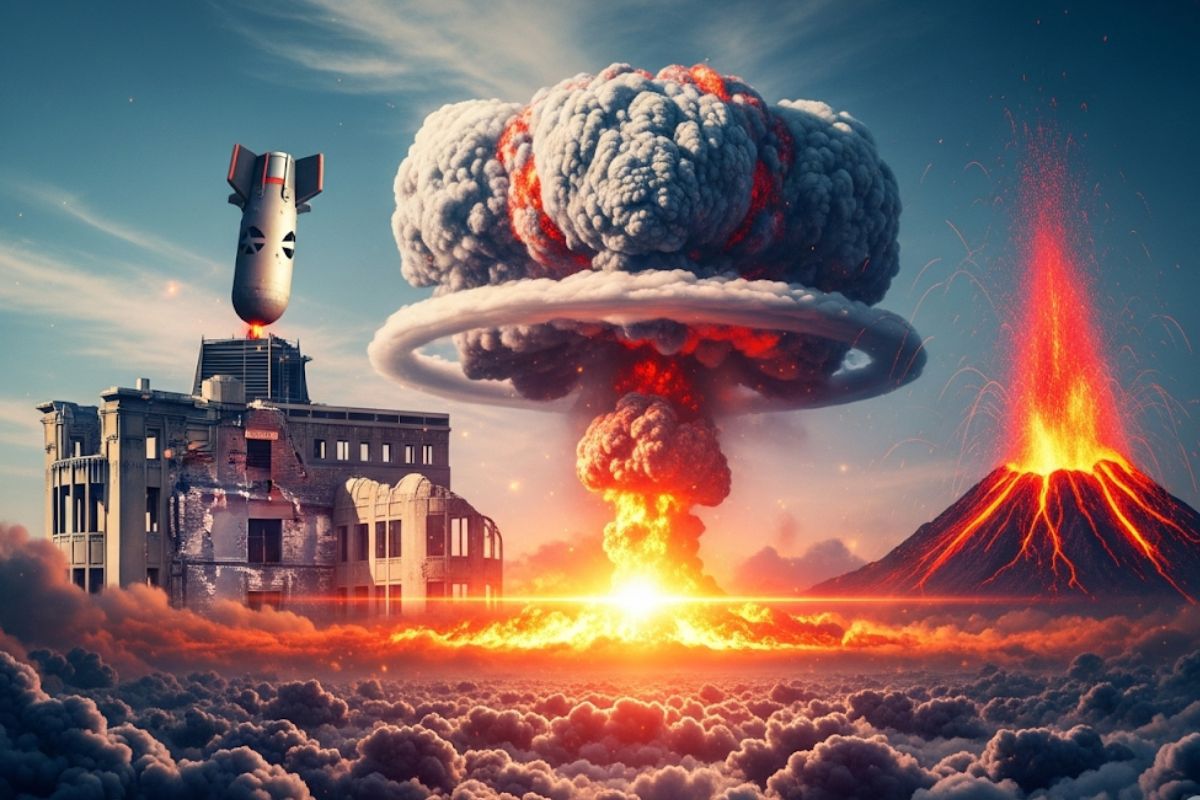
Forgotten Atomic Bombs, The Title Of The Loudest Sound Ever Recorded In Recent History Belongs To The Catastrophic Eruption Of The Krakatoa Volcano In 1883, An Event Whose Sound Waves Traveled Around The World And Caused Destruction Kilometers Away.
The search for the loudest sound ever recorded in recent history leads us not to a human artifact, but to a fury of nature: the eruption of the Krakatoa volcano in Indonesia in 1883. This cataclysmic event produced a roar of planetary proportions, exceeding even the most powerful nuclear detonations in terms of globally documented acoustic impact.
The claim that the Krakatoa eruption in 1883 generated the loudest sound ever recorded in recent history is factually supported. “Recent history,” in this context, refers to the period with scientific instrumentation capable of recording such phenomena. Although prehistoric events may have been more energetic, Krakatoa stands out for its immense power coupled with an emerging global network of scientific observation in the 19th century. Its sound not only ruptured eardrums but traveled around the globe multiple times.
The Growing Fury Of The Krakatoa Volcano In August 1883
The 1883 eruption was a growing sequence of explosions. Activity began in May, with explosions audible up to 160 km away. On August 26, the volcano entered its climactic phase, with nearly continuous eruptions. The climax occurred in the morning of August 27, 1883, with a series of four colossal explosions.
-
A couple buys an old chalet, breaks the kitchen floor for renovation, and finds over a thousand coins of gold and silver hidden since the English Civil War over 4 centuries ago.

-
Rigid bags with their days numbered: new trend prioritizes comfort in 2026.

-
YouTuber creates an excavator equipped with a giant 4.5-meter sword to challenge his brother to a rematch, and the invention quickly goes viral on social media.

-
The U.S. Army surprises the world by presenting the UH-60MX Black Hawk helicopter capable of flying without pilots, controlled by a tablet, featuring the MATRIX system, smart sensors, and full autonomy in real combat and rescue missions.


The third of these, around 10:02 AM (local time), is recognized as the event that generated the most intense sound. This paroxysm was associated with the collapse of most of the island of Krakatoa into a submarine caldera and violent phreatomagmatic explosions from the interaction of magma with seawater.
The Decibels Of The Krakatoa Eruption And Its Direct And Devastating Physical Effects
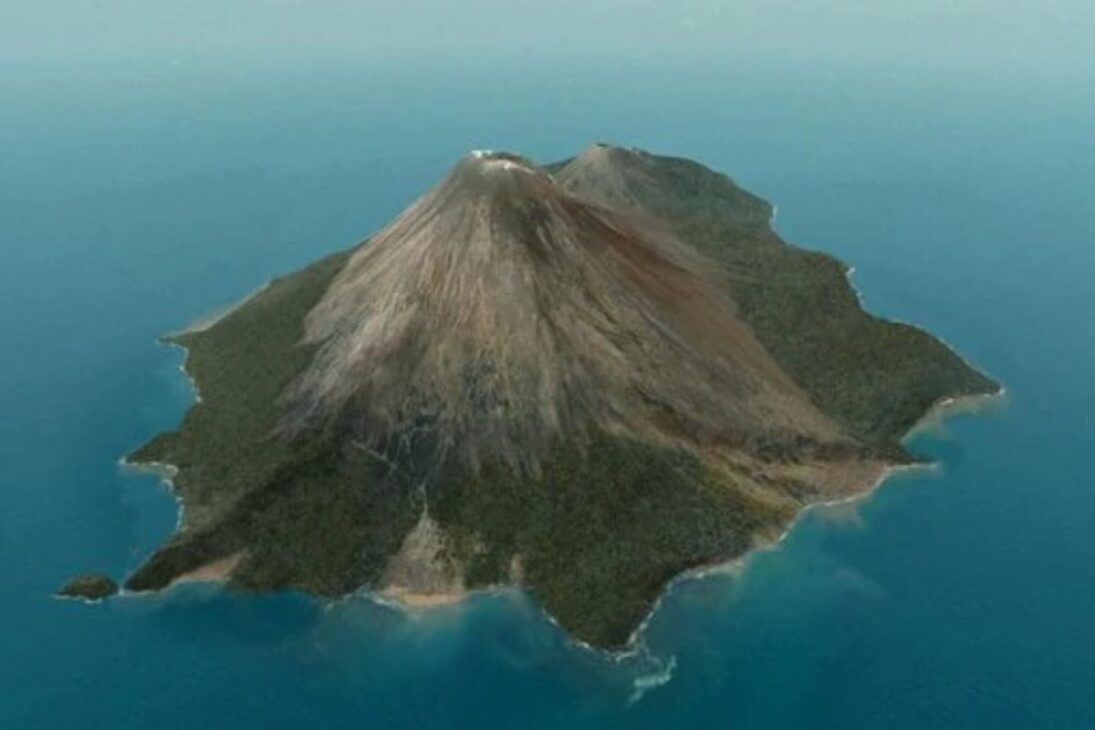
The sound intensity of Krakatoa was extraordinary. A barometer in Batavia (now Jakarta), 160 km from the volcano, registered a peak atmospheric pressure of over 8.5 kPa, equivalent to about 172 decibels (dB) SPL. Other sources round this to 180 dB at the same distance.
For comparison, the human pain threshold is approximately 130 dB. The figure of 310 dB SPL is often attributed to the source of the eruption, representing not a conventional sound (whose theoretical limit in air is ~194 dB), but an extrapolation of shock wave energy.
The physical effects were direct and brutal. Sailors on the British ship Norham Castle, 64 km from Krakatoa, had their eardrums ruptured. In Batavia, 160 km away, the pressure wave broke windows and cracked walls.
The Global Propagation Of The “Great Air Wave” From Krakatoa
The main explosion of Krakatoa was audible at impressive distances, such as on Rodrigues Island, 4,800 km away, where it was described as “distant cannon fire.” In Perth, Australia (3,100 km), it sounded like artillery. The most robust evidence, however, came from barometric records.
The atmospheric pressure wave generated, nicknamed “the great air wave,” was detected by barometers around the world, traveling multiple times around the Earth – from three to seven passages over five days, with recurring peaks every 34 hours (the time for a sound wave to circumnavigate the planet).
Comparing The Loudest Sound Ever Recorded In History With Atomic Bombs And Other Colossal Natural Events


The total energy of the Krakatoa eruption was estimated at 200 megatons of TNT, thousands of times greater than the Hiroshima bomb (15-20 kilotons) and about four times more powerful than the Soviet Tsar Bomba (50-55 megatons).
While atomic bombs generate shock waves with high decibels at the source (Tsar Bomba ~224-280 dB), the sound of Krakatoa is often cited as acoustically more significant globally. This is partly due to its more sustained geological process generating long-period pressure waves that propagate efficiently through the atmosphere.
Other natural events have been immensely loud. The eruption of Tambora in 1815 (VEI 7) was volcanologically greater than Krakatoa (VEI 6) and its sound was heard over 2,600 km away, but global acoustic documentation was less comprehensive. The Tunguska explosion in 1908 (meteoroid) had an estimated source intensity of 300-315 dB and also generated global air waves. More recently, the Hunga Tonga-Hunga Haʻapai eruption in 2022 produced an atmospheric pressure wave comparable to that of Krakatoa, circling the Earth four times, and was audible up to 10,000 km away in Alaska.








-

-

2 pessoas reagiram a isso.