





 English
  Francês
  Alemão
  Italiano
  Japonês
  Norueguês
  Portuguese
  Spanish
 3 min of reading


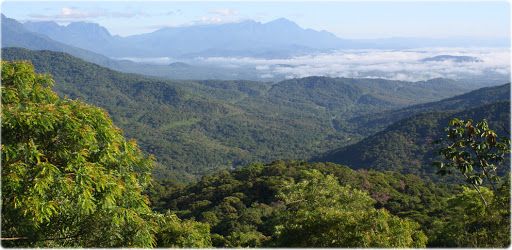
A Total Of 100 Square Kilometers Have Been Reforested, A Part Of The Native Vegetation, In The State Of São Paulo
The state of São Paulo has managed to recover a portion of the native vegetation. The before and after of the Serra do Mar in Cubatão are a portrayal that humans can indeed correct the mistakes made in nature. In a report published by Jornal Nacional, it showed that the project aimed for aerial seeding, with seeds packaged in gel capsules.
Check Out Other News:
- Votorantim Energia Has Job Openings Available On This Day 21
- Infotec Brasil Wins Contract In The Energy Sector For Services At The Volta Grande Hydroelectric Plant In Minas Gerais
- From The Civil Engineering Sector, The Leader OAS Hires Professionals In Procurement And Internships On This Day 21
Biologist Renata Mendonça says, “I feel very proud. Cubatão was known at the time as the most polluted city in the world.”
Geographer Roney Santos and biologist Renata were part of the team that collected the seeds for reforestation at the time. The geographer states, “Here we conducted an applied research process. We started practically from scratch and achieved results that we see here today, 30 years later.”
-
Chinese giant worth nearly R$ 4 billion that manufactures cables for electric cars, solar energy, and robotics wants to open a factory in SC.

-
Many employers do not know, but the law guarantees domestic workers a 25% increase in salary during trips, 50% for overtime, 20% for night shifts, and 17 additional benefits that can lead to labor lawsuits if not paid.

-
Gasoline prices soar and the question arises: is ethanol more advantageous? The 70% rule reveals the limit with gasoline.

-
The government has made a decision and is starting a test with more ethanol in gasoline, anticipating a mixture of up to 35%, diesel with 25% biodiesel, and a study to assess the impacts on engines.


100 kilometers of Atlantic forest have been reforested in the city of Cubatão. The project is a milestone in the environmental movement, prompting other similar decisions to be made in the coming years. The State Forest Inventory has been changing its morphology throughout the reforestation process.
A map of the area in the 2000s shows the location completely deforested. The most current map shows that over ten years, the native forest increased from 4,340,000 to 5,670,000 hectares, a total forest cover of 22.9%. Marco Aurélio Nalon, a physicist and the inventory coordinator, states that there has been an increase of five percentage points.
Marco Aurélio says, “This increase may seem small at first, but it is very significant given the intense economic and social dynamics of the state of São Paulo. The most important thing is that it has occurred in areas of the state where we have historically seen the greatest losses of native vegetation cover.”
João Paulo Capobianco, a biologist and vice president of the Institute of Democracy and Sustainability, stated at the time, “This replanting is very significant. It is an important initiative.” He added, “What happened there was a total reversal of a dramatic situation to a very positive one. This demonstrates that organized societal action produces results.”
Another factor that was quite representative, besides the involvement of NGOs and public policy, was the preservation of the environment in agribusiness.
João emphasizes, “There is no agribusiness without preserved environmental conditions. There is no pollination. There is no abundant water in the necessary quantity for production. There is no associated biodiversity. There is no soil conservation. Environmental protection is part of agricultural production.”






Seja o primeiro a reagir!