





 Português
  Inglês
  Espanhol
  3 min de leitura
  0 comentários


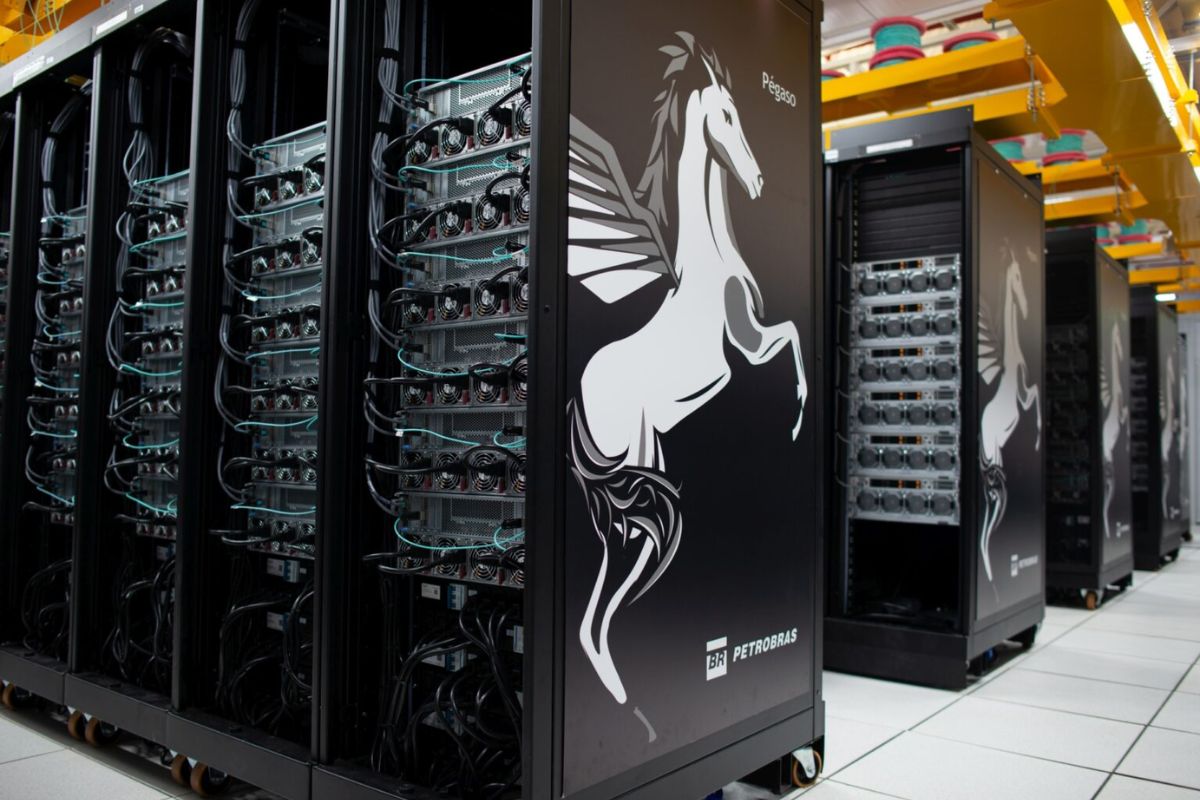
With a Capacity of 21 Quadrillion Calculations Per Second, the Supercomputer of Petrobras Helps to Reduce Risks and Costs in Oil Exploration in Ultra-Deep Waters
Oil exploration in the pre-salt layer, over 7 km deep, is one of the greatest engineering challenges in the world. To “see” through rock and salt and find oil and gas reserves, Petrobras uses a tool of extreme computational power: the Petrobras Supercomputer, Pégaso.
Launched at the end of 2022, Pégaso is a colossal machine designed to process terabytes of seismic data and transform it into accurate 3D maps of the subsurface. This capability is essential to reduce the billion-dollar risks and costs of drilling new wells, consolidating Petrobras’ technological leadership in the energy sector.
Pégaso, the 21 Petaflops Machine Launched by Petrobras in 2022
The Pégaso supercomputer, installed in a Petrobras data center in Rio de Janeiro, went into full operation in December 2022. Its processing capacity is 21 Petaflops, meaning it can perform 21 quadrillion calculations per second.
-
Offshore industrial demand in Macaé skyrockets with the recovery of oil and gas and could grow by up to 396% by 2026 in the Campos Basin.
-
Offshore industrial demand in Macaé surges with the recovery of oil and gas and could grow by up to 396% by 2026 in the Campos Basin.
-
Brazilian giant expands borders in the Southeast: Petrobras confirms new oil discovery in ultra-deep waters in the pre-salt of the Campos Basin.

-
Alert in the global energy market: Severe tropical cyclone hits the coast and disrupts gas production at major plants in Australia, threatening global supply.


To handle the massive volume of data, Pégaso has 678 terabytes of RAM and 2,016 graphics processing units (GPUs). The 30-ton machine cost R$ 300 million for Petrobras, an economically viable amount, as 10 years ago, similar equipment would cost around US$ 3 billion.
The Petrobras Supercomputer Most Powerful in Latin America? The Ranking and the Eco-Efficiency of Pégaso
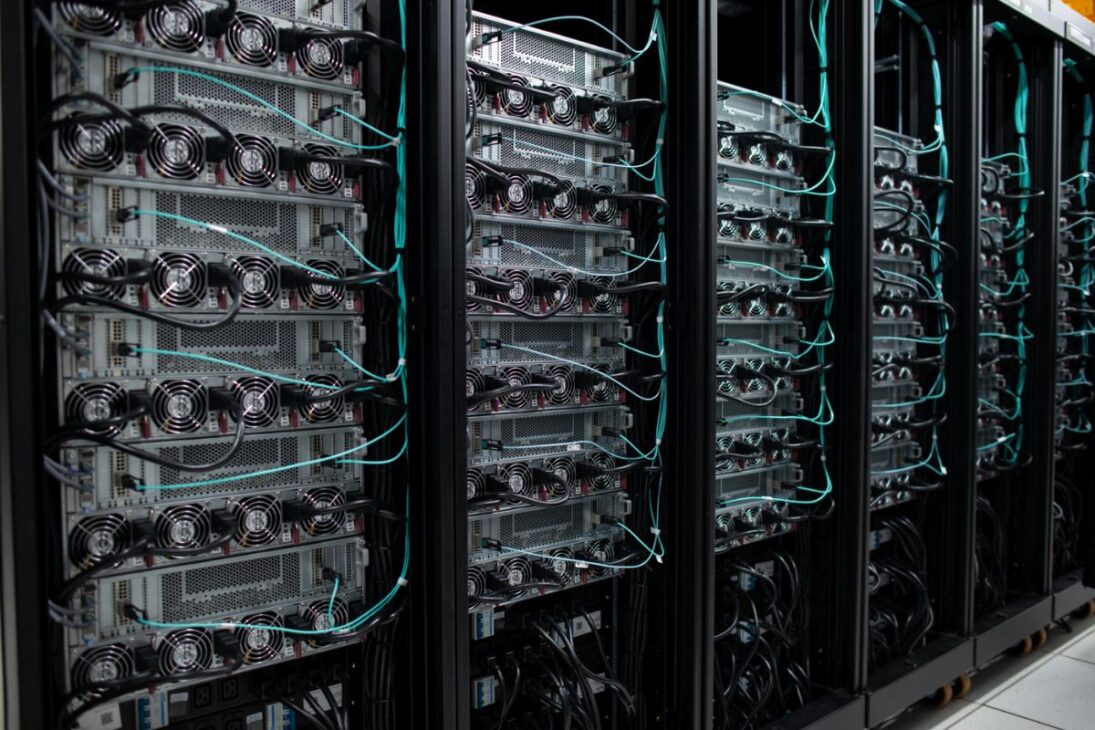
At its launch, Pégaso was recognized as the largest supercomputer in Latin America. On the global stage, it ranked as the 5th largest in the oil and gas industry and the 33rd overall in the supercomputer ranking (TOP500.Org).
Besides its power, Pégaso stands out for its eco-efficiency. It was ranked as the most eco-efficient supercomputer in Latin America by the Green500 ranking. This was made possible thanks to the use of GPUs and high-efficiency power sources, in addition to a customized cooling system that uses only clean energy.
How Seismic Processing Reduces Drilling Risk and Cost
The main function of the Petrobras Supercomputer is to process seismic data collected offshore. Sound waves are emitted toward the ocean floor, and their echoes are captured and analyzed to create a detailed map of the rock layers.
With the high-resolution 3D images generated by Pégaso, Petrobras geologists can identify with much greater accuracy where the oil reserves are located. This optimizes the number of wells to be drilled in a field and minimizes the chance of drilling a “dry well”, a mistake that can cost millions of dollars.
The Strategy of the “Three-Time Champion” of the Petrobras Supercomputer
The Petrobras supercomputer Pégaso is the pinnacle of a continuous investment strategy by Petrobras in high-performance computing. The arrival of Pégaso marked the “three-time championship” of the company in leading supercomputers in Latin America.
Before it, Petrobras had already achieved first place with three other machines: Fênix in 2019; Atlas in 2020; and Dragão in 2021. This sequence of investments shows how data processing capability is a strategic pillar for the company’s competitiveness.
The Future in 2025: The New 73 Petaflops Supercomputer That Will Surpass Pégaso
The leadership of Pégaso, however, will be transient. Petrobras has already announced an investment of R$ 500 million in the acquisition of five new supercomputers. One of them, expected to be operational in 2025, will have a capacity of 73 Petaflops, more than three times the capacity of Pégaso.
This new Petrobras Supercomputer will consolidate and replace older machines like Fênix, Atlas, and Dragão. With this, Petrobras will not only maintain its leadership in high-performance computing in Latin America but also ensure technological advancement to continue unraveling the secrets of the pre-salt.










-

Uma pessoa reagiu a isso.