





 Portuguese
  English
  Spanish
  4 min of reading
  20 comments


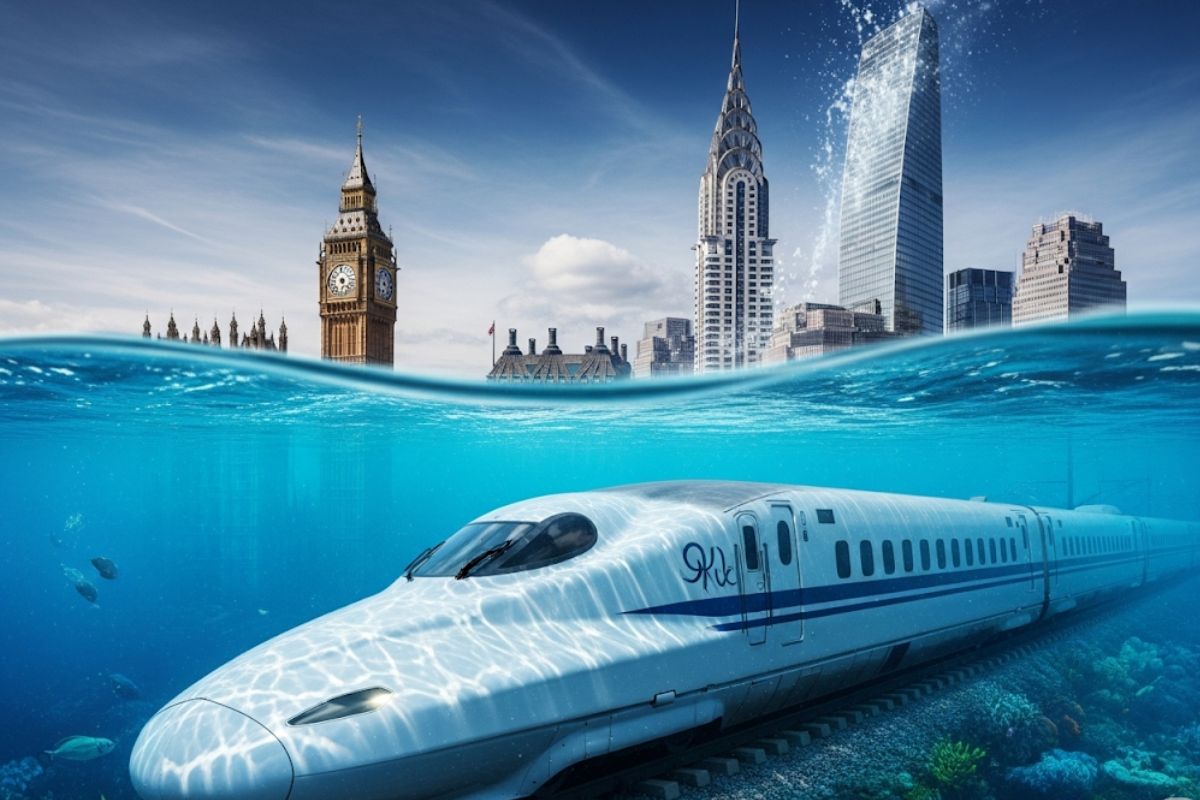


The Idea Of A Submarine High-Speed Train Connecting Continents At Speeds Of 800 Km/H Captivates The Imagination. We Analyze The Feasibility Of Such Ambitious Projects, With Special Focus On The Europe-Africa Link Through The Strait Of Gibraltar.
Connecting continents separated by oceans through a submarine high-speed train is one of the most audacious dreams of modern engineering. The prospect of traveling 1,000 km at speeds of 800 km/h under the sea promises to revolutionize global transport, trade, and integration between nations.
But to what extent is this vision a tangible reality or remains in the realm of science fiction? This article investigates the feasibility of these grand projects, analyzing the most advanced case of the Fixed Link of the Strait of Gibraltar, as well as other concepts, to separate the technically possible from the purely speculative in today’s scenario.
The Ambition To Unite Continents: The Fascination With The Submarine High-Speed Train
The human quest to overcome geographical barriers and connect civilizations has driven numerous engineering feats. In the 21st century, this aspiration turns toward high-speed railways crossing seas. The vision of an intercontinental submarine high-speed train, however, often contrasts futuristic concepts, such as a transatlantic Hyperloop operating at over 4,800 km/h with trillion-dollar costs, with more concrete and studied projects that possess considerably distinct scales and technologies. Analyzing this disparity is crucial for understanding the real feasibility of these enterprises.
-
Made from recycled plastic, plastic wood is gaining space in the construction industry because it does not rot, resists moisture, and reduces maintenance costs over the years.

-
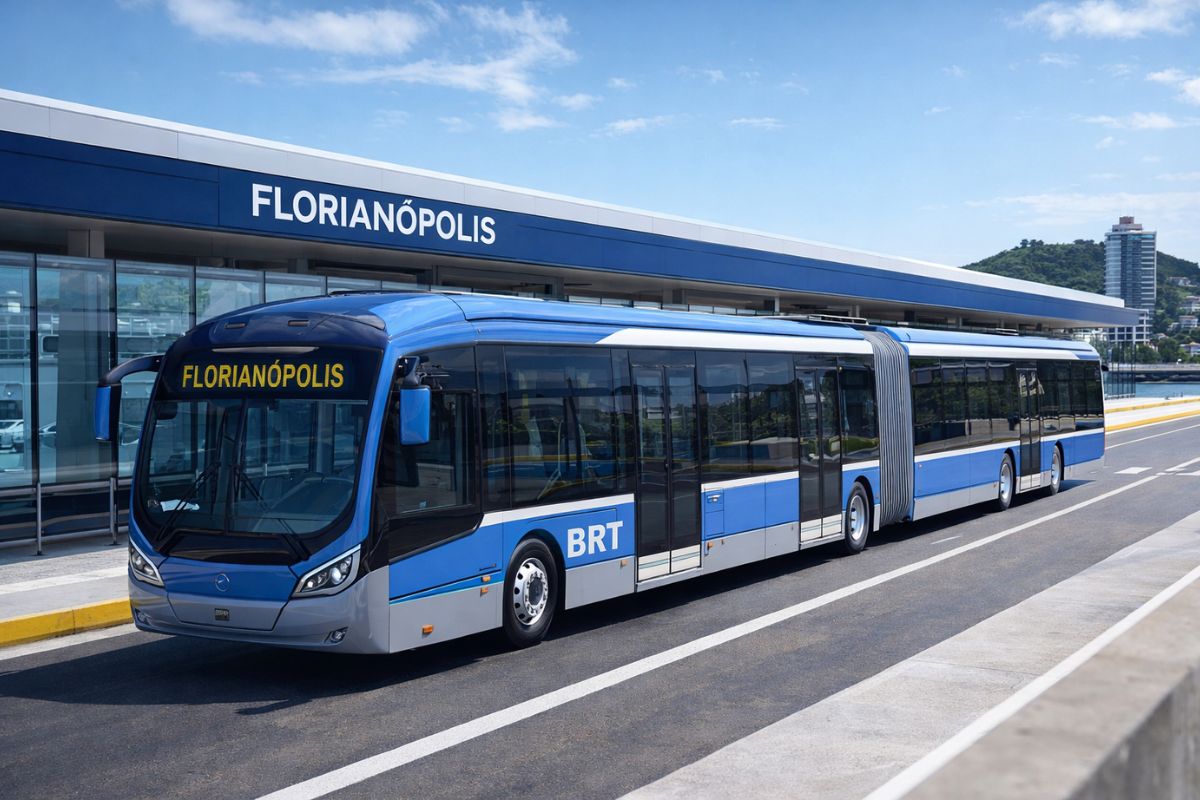
Florianópolis will receive a million-dollar BRT that will begin construction in 2026 with nearly 400 million in funding from the federal government and the Inter-American Development Bank, and the map already shows the routes for the exclusive bus corridors.
-
Without a blueprint, without an engineer, and using scrap from the dump, a father spends 15 years building an 18-room castle for his daughter, featuring tram tracks, 13 fireplaces, and over 700 m², which may now be demolished.

-
A megaproject worth R$ 89 billion is advancing in Iraq and promises to change the game in global trade by creating a new corridor between Asia and Europe, reducing traditional routes and repositioning the country as a logistics powerhouse.


Case Study: The Fixed Link Of The Strait Of Gibraltar – The Most Tangible Project

The idea of a permanent physical link between Europe and Africa through the Strait of Gibraltar is old, gaining formal momentum with a Hispano-Moroccan agreement in 1979. The aim is to connect the railway networks of both continents, boosting economic integration and the flow of people and goods. Currently, the project is in the feasibility study phase, conducted by SECEGSA (Spain) and SNED (Morocco), with a more realistic completion forecast for approximately 2040, no longer for the 2030 World Cup.
The proposed technology involves a high-speed train system (HST), operating between 200-250 km/h, in two main railway tunnels and a service tunnel. The link would have about 40 km of total length, with 28-30 km underwater, reaching depths of up to 475 meters. The main challenges are the complex geology in the Camarinal Sill region (unstable soils, tectonic activity) and high costs, estimated between 6 and 15 billion euros, potentially reaching 25 billion.
Beyond Gibraltar: Other Visions Of Intercontinental Submarine Tunnels
Other submarine high-speed train projects are even more ambitious. The Transatlantic Tunnel, often associated with the Hyperloop (e.g., London-New York), envisions about 5,500 km of length, speeds above 4,800 km/h, and astronomical costs of approximately 20 trillion dollars, being considered highly theoretical.
The Bering Strait Crossing, linking Asia and North America (Russia and Alaska), would be about 80-90 km but faces immense geopolitical, environmental, and infrastructure cost challenges in remote areas. There is a clear difference in feasibility between these concepts and the Gibraltar project.
Colossal Challenges: Why Building A Submarine High-Speed Train Is A Herculean Task?
Building an intercontinental submarine high-speed train is one of the most complex engineering tasks. The geology of the seabeds is a significant obstacle, requiring detailed and costly geotechnical investigations to map unstable soils, tectonic faults, and hard-to-drill rocks. Excavating tunnels with TBM machines at great depths, under immense hydrostatic pressure and in unpredictable soil conditions, tests the limits of current technology.
Safety is another primary concern. Robust ventilation systems for air and smoke quality control, efficient evacuation protocols, and structural integrity against earthquakes in long and deep tunnels are critical and elevate costs. Budgets for such megaprojects are astronomical, and securing long-term funding in the face of the risks involved is a considerable challenge.
Expert Opinion: What Does Engineering Say About These Supertrains?
Engineering and infrastructure specialists recognize the transformative potential of projects like the tunnel of the Strait of Gibraltar. However, there is significant caution regarding timelines and costs, mainly due to technical and geological obstacles. Many consider the 2040s a more realistic target for Gibraltar, if the challenges are overcome.
As for more extreme concepts, such as a Transatlantic tunnel via Hyperloop, skepticism among experts is even greater. The prohibitive costs and the immaturity of the technology for such complex and large-scale applications position them as “distant dreams” in the foreseeable future. The success of ventures like the Eurotunnel serves as a precedent, but each new submarine project presents unique and larger-scale challenges.
Submarine High-Speed Train: Between Viable Reality And Science Fiction


To recap, high-speed railway connection projects (HST, operating between 200-350 km/h) through relatively short maritime straits (dozens of kilometers), such as Gibraltar, although extremely challenging and costly, are within the theoretical scope of what current and near-future engineering could, in theory, achieve. Their realization depends on overcoming specific geological obstacles and mobilizing vast financial resources and political will.
However, the vision of a submarine high-speed train covering distances of hundreds or thousands of kilometers under the ocean, operating at speeds of 800 km/h or more, as proposed in the initial question, remains firmly in the realm of science fiction or very long-term theoretical speculation in the current technological and economic context. The technical challenges and costs are simply insurmountable with today’s capabilities. The dream of crossing oceans on tracks persists, but the path is long and complex.









Será o bem maior o transporte no trem bala, quando alguém do outro lado que se ama muito precisar de socorro. Que Deus os proteja e ilumine no projeto.
Já destruímos a vida dos animais na terra e agora….no mar!
A aí
Até lá eu já morri.
Cura para o câncer até agora nada.
Terceira guerra mundial aproximado.
Aí aí
🤣🤣🤣🤣🤣🤣🤣🤣