





 Portuguese
  English
  Spanish
  3 min of reading
  1 comment


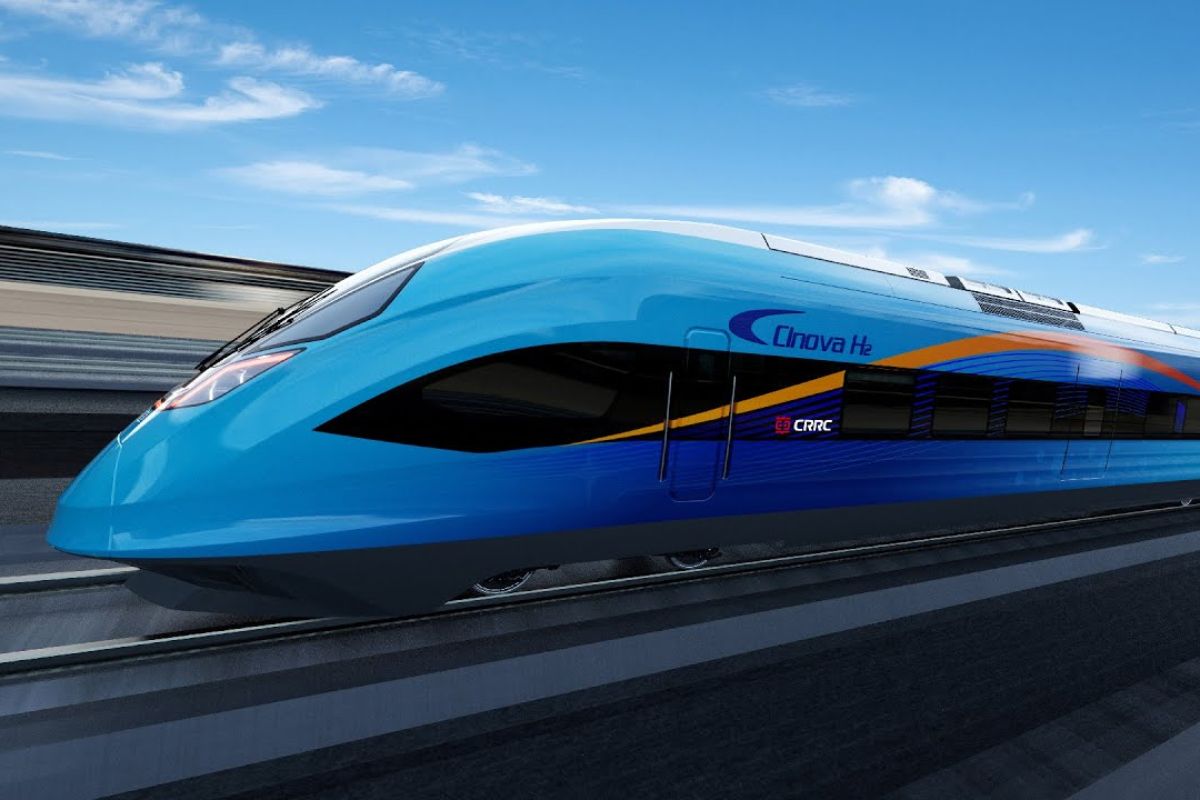


While China Launches The Fastest Hydrogen Train In The World, Germany Consolidates Its Leadership In Technology With Investments And The Pioneer Coradia iLint: A Comprehensive Analysis Of The Scenario.
The race for the title of fastest hydrogen train in the world has new protagonists. Germany’s leadership in the hydrogen revolution details the main train models, clarifies who holds the speed record, and explores the challenges and future of this transformative technology.
The quest for zero-emission rail transport drives global innovation. In this context, hydrogen-powered trains emerge as a promising alternative, especially for non-electrified lines. Germany, with the Alstom Coradia iLint, was a pioneer by putting this technology into commercial service in 2018.
Why Are Zero-Emission Trains The Future?
The transportation sector is a major emitter of greenhouse gases. The decarbonization of rail transport is urgent. Although more efficient than road transport, the rail modal still relies heavily on diesel in non-electrified lines.
-
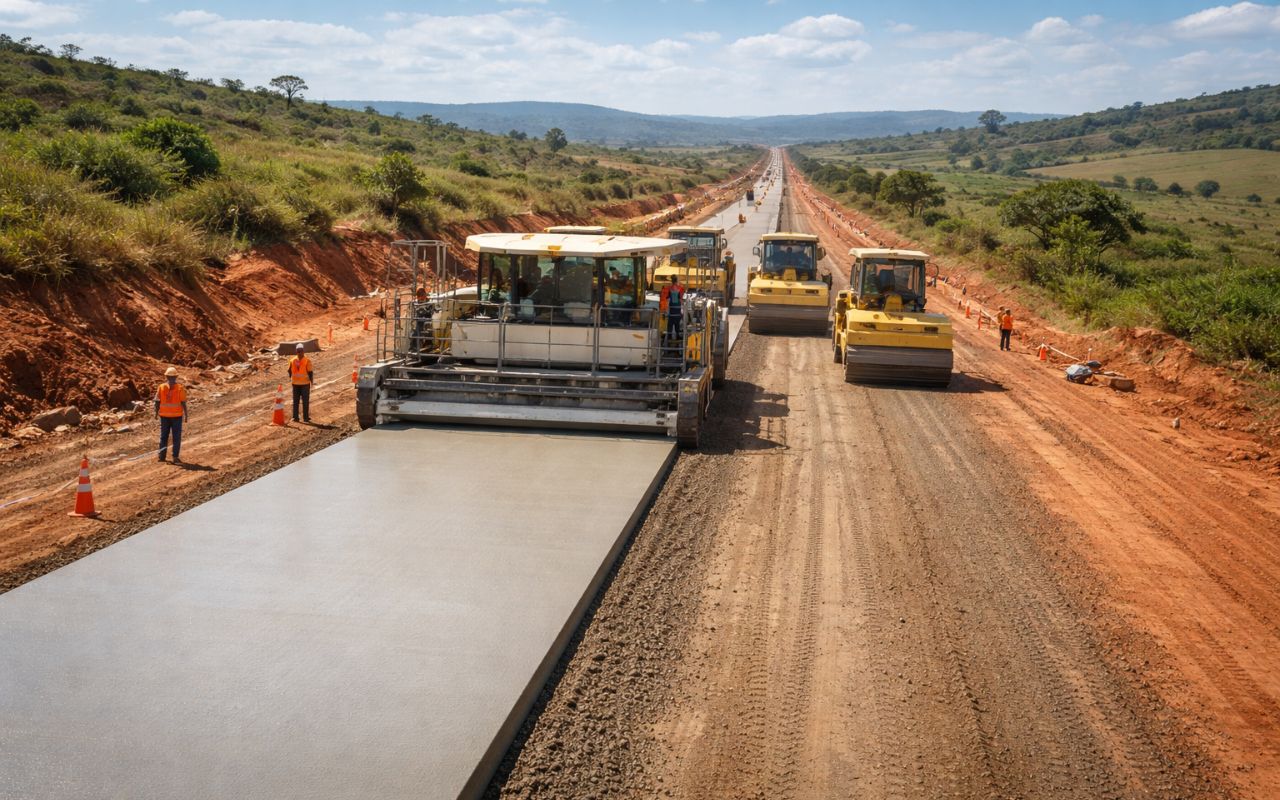
New CCR concrete paving technology promises roads up to 3x more durable, less maintenance, and cost reduction in Brazil.
-
Made from recycled plastic, plastic wood is gaining space in the construction industry because it does not rot, resists moisture, and reduces maintenance costs over the years.

-
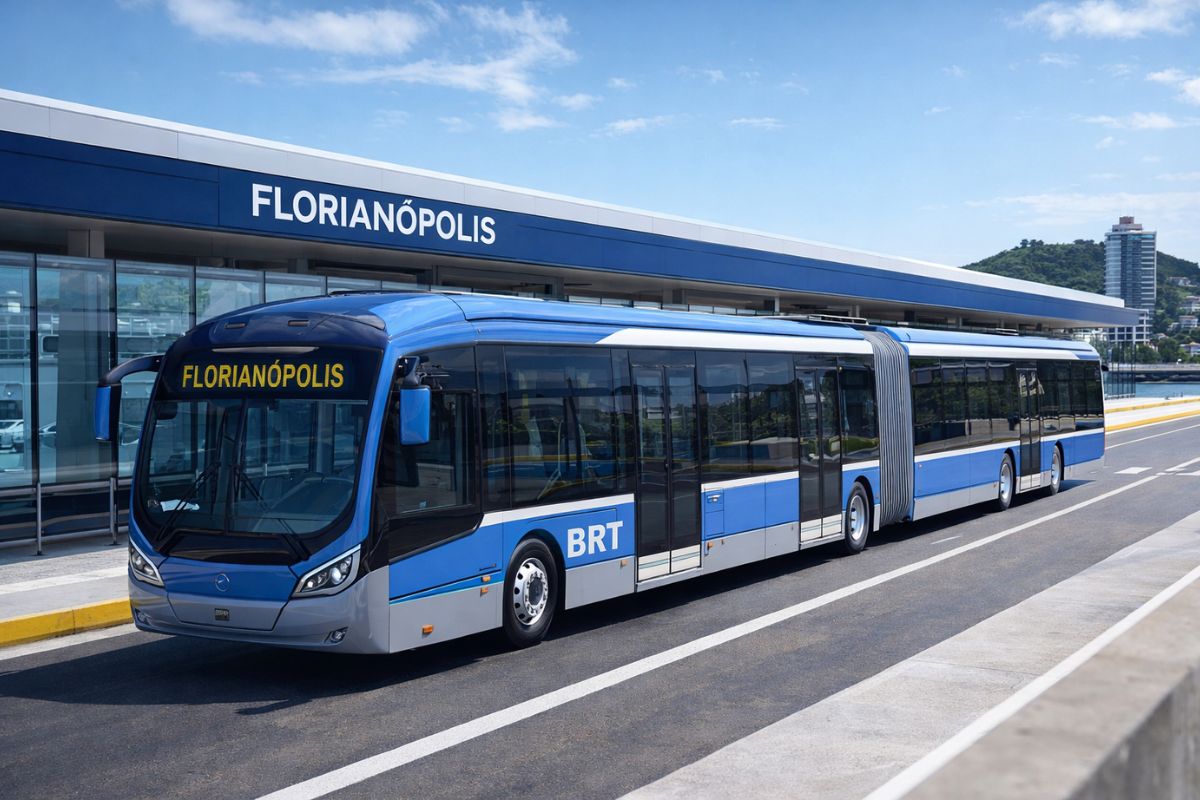
Florianópolis will receive a million-dollar BRT that will begin construction in 2026 with nearly 400 million in funding from the federal government and the Inter-American Development Bank, and the map already shows the routes for the exclusive bus corridors.
-
Without a blueprint, without an engineer, and using scrap from the dump, a father spends 15 years building an 18-room castle for his daughter, featuring tram tracks, 13 fireplaces, and over 700 m², which may now be demolished.


Hydrogen trains use fuel cells that combine hydrogen and oxygen. They produce only water vapor and heat as byproducts, eliminating direct CO2 emissions and reducing noise. Besides being the fastest hydrogen train in the world, they are ideal for regional lines where traditional electrification is unfeasible, complementing direct electrification on high-density routes.
Germany: The Engine Of Innovation In Hydrogen Trains In Europe
Germany is strongly committed to hydrogen technology. Its National Hydrogen Strategy aims for climate neutrality by 2045. The country wants to be a global leader in green hydrogen (produced with renewable energy). Goals include 10 GW of domestic electrolysis capacity by 2030 and a hydrogen network of 10,000 km by 2032.
A special fund of 500 billion euros for infrastructure and climate supports these plans. Deutsche Bahn (DB), Germany’s main railway operator, plans to invest 17 billion euros in 2024 for modernization. DB also aims to replace its 1,300 diesel locomotives with hydrogen trains by 2050. The world’s first hydrogen refueling station for trains was established in Bremervörde, Germany.
Alstom Coradia iLint: The German Pioneer That Paved The Way For Hydrogen Trains
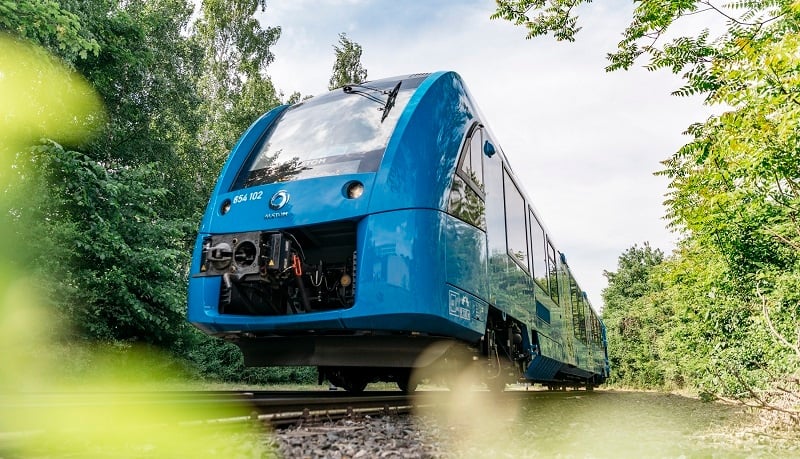
The Alstom Coradia iLint is a regional train powered exclusively by hydrogen fuel cells. It reaches a top speed of 140 km/h and has a range of 600-800 km. It was the world’s first mass-produced hydrogen passenger train, entering commercial service in Germany in 2018.
By 2022, the iLint had accumulated over 200,000 km in service across eight European countries. In September 2022, it made a record journey of 1,175 km without refueling. Currently, 14 iLints operate in Lower Saxony, on the world’s first 100% hydrogen regional route. Alstom continues to evolve its line, with new Coradia Stream H trains scheduled to start operating in Italy in 2025.
Who Has The Fastest Hydrogen Train In The World Today?
Although the Alstom Coradia iLint is a key pioneer, it no longer holds the title of fastest hydrogen train in the world. Global competition has advanced:
- Alstom Coradia iLint (France/Germany): Top speed of 140 km/h.
- Stadler FLIRT H2 (Switzerland): Top speed of 130 km/h.
- Siemens Mireo Plus H (Germany): Top speed of 160 km/h.
- CRRC CINOVA H2 (China): Set to launch in 2024, this train claims a top speed of 200 km/h, with a cruising speed of 160 km/h and a range of 1,200 km.
Based on these figures, the CRRC CINOVA H2 from China is currently the fastest hydrogen train in the world.









Uma boa alternativa para substituir as locomotivas diesel/elétricas. O trem ficaria mais econômico, se a locomotiva fosse movida com o sistema de motor hidrogênio/elétrico. Porém, o hidrogênio é muito explosivo, no caso de vazamentos, causados por colisões ou descarrilamentos.