





 Portuguese
  English
  Spanish
  4 min of reading
  0 comments


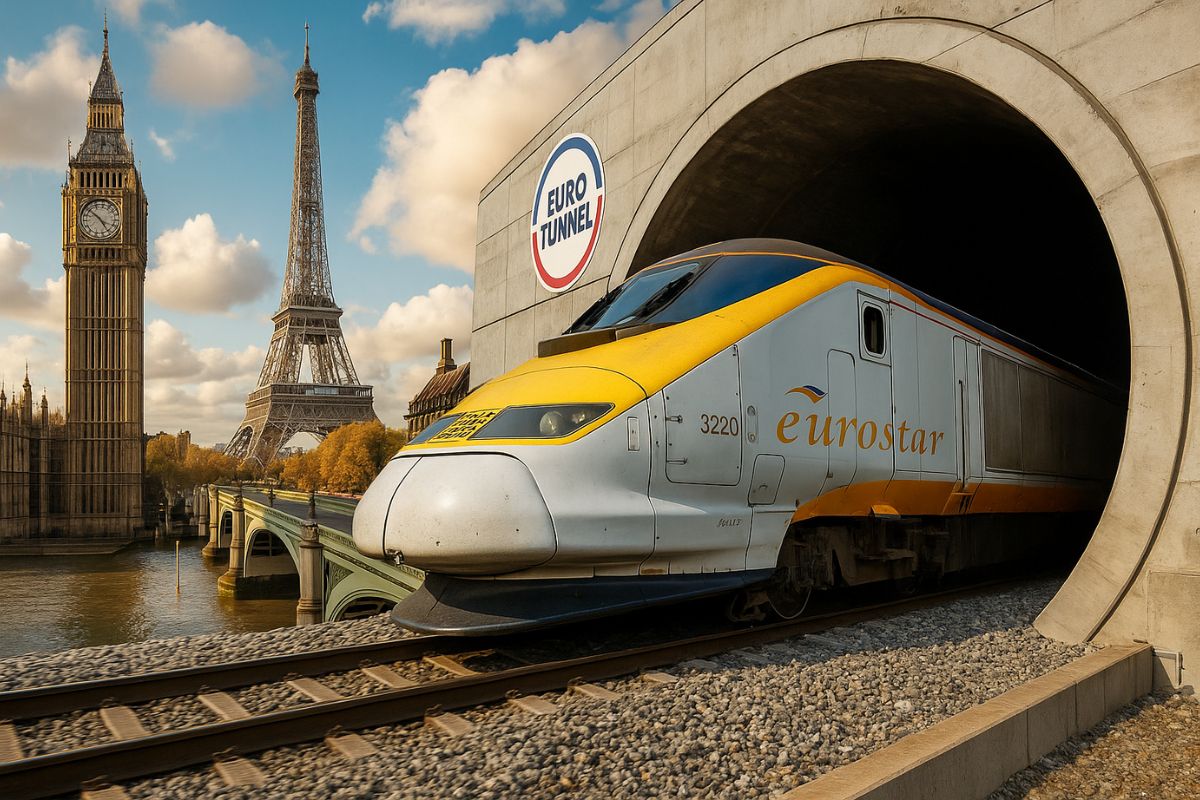
One of the Seven Wonders of the Modern World. Discover the Engineering, Operation, and Challenges of the Eurotunnel, the Longest Underwater Tunnel in the World in Its Category.
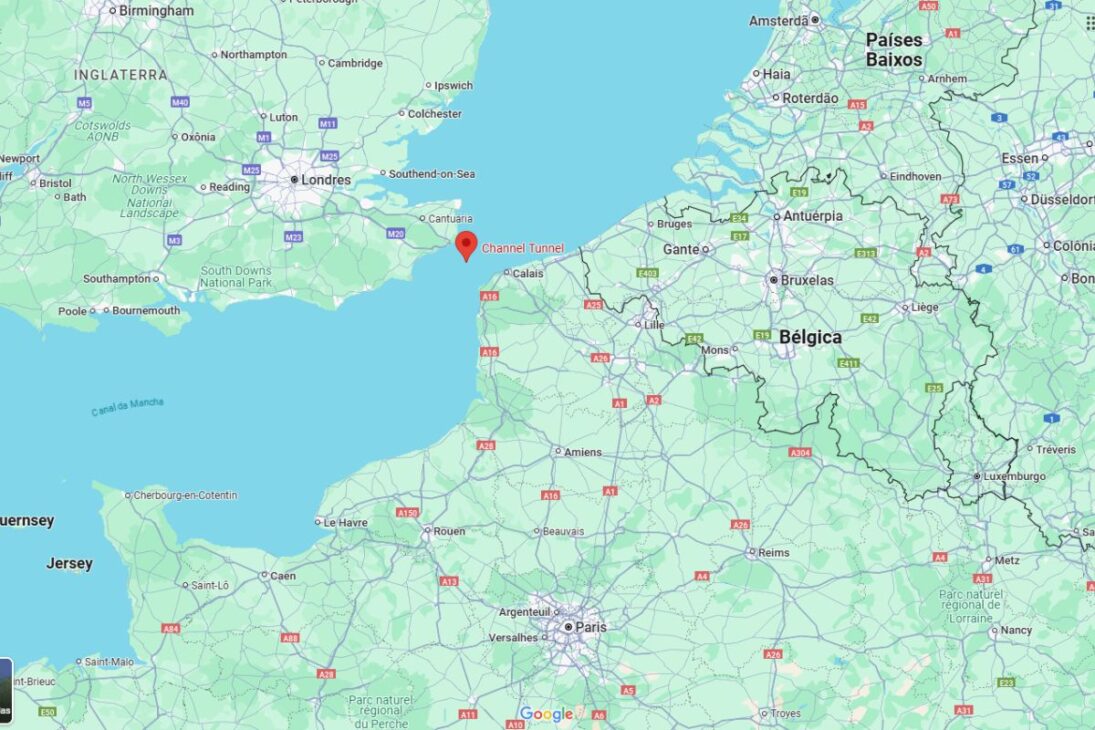
The Eurotunnel is one of the most remarkable feats of engineering in the 20th century. Inaugurated on May 6, 1994, this complex of tunnels beneath the English Channel links the United Kingdom to France, transforming transportation and trade in Europe. The longest underwater tunnel in the world serves as a vital artery, operating 24 hours a day, 365 days a year.
We will explore the challenges of its construction, how it became the longest underwater tunnel in the world in its category, and how its operation has forever changed the connection between the British island and the European continent.
What Is the Eurotunnel and Why Is It an Engineering Landmark?
The Eurotunnel is widely recognized as one of the seven wonders of the modern world. Its complex has a total length of 50.5 km, but its record lies in the length of its section effectively under the sea: 37.9 km, the longest in the world for a railway tunnel.
-
A megaproject worth R$ 89 billion is advancing in Iraq and promises to change the game in global trade by creating a new corridor between Asia and Europe, reducing traditional routes and repositioning the country as a logistics powerhouse.
-
Goodbye bedside table: floating shelves become a trend in 2026 by freeing up space in the bedroom, improving circulation, bringing visual lightness, and integrating technology without taking up floor space.

-
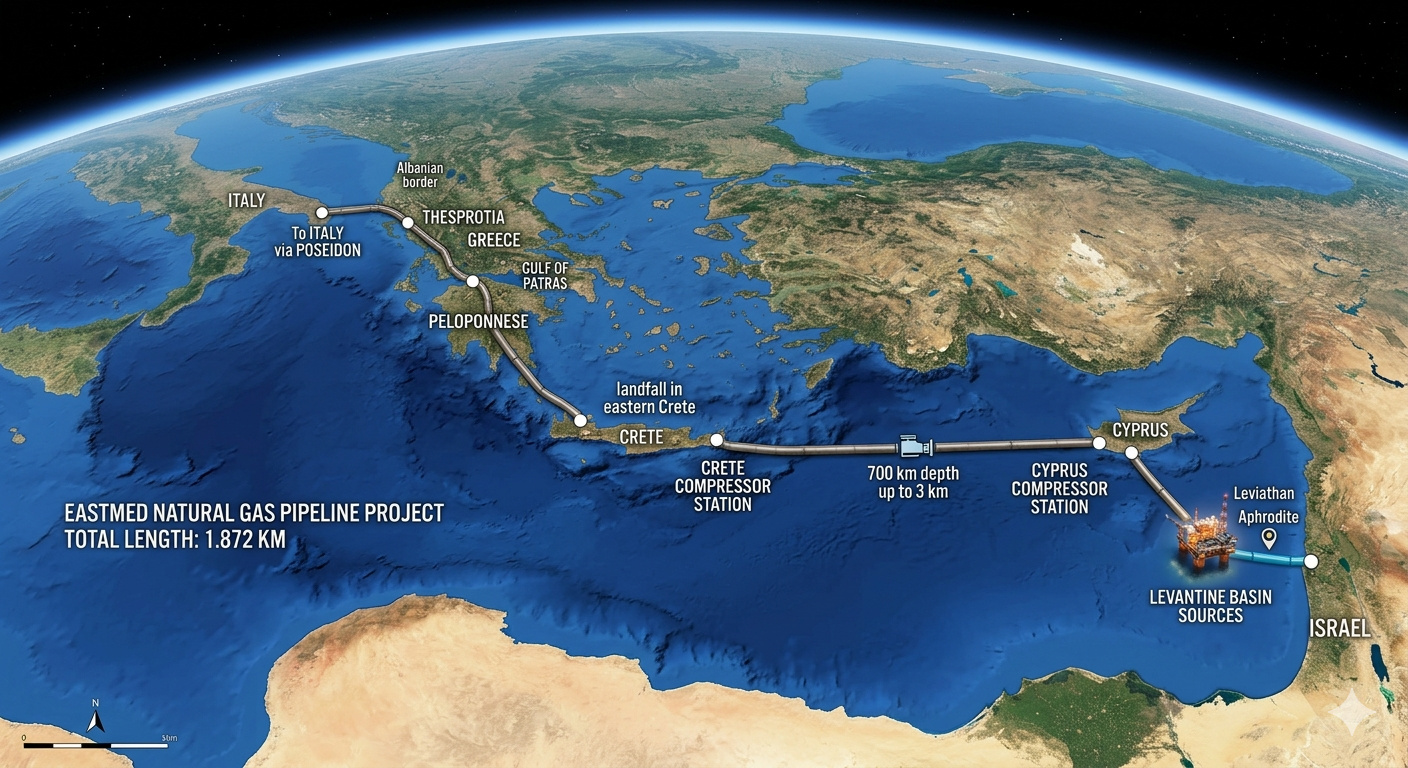
Israel, Greece, and Cyprus signed an agreement in 2020 to transport gas from the Mediterranean to Europe via a 1,872 km pipeline, but Turkey claimed sovereignty over part of the maritime route, and the project never materialized.
-
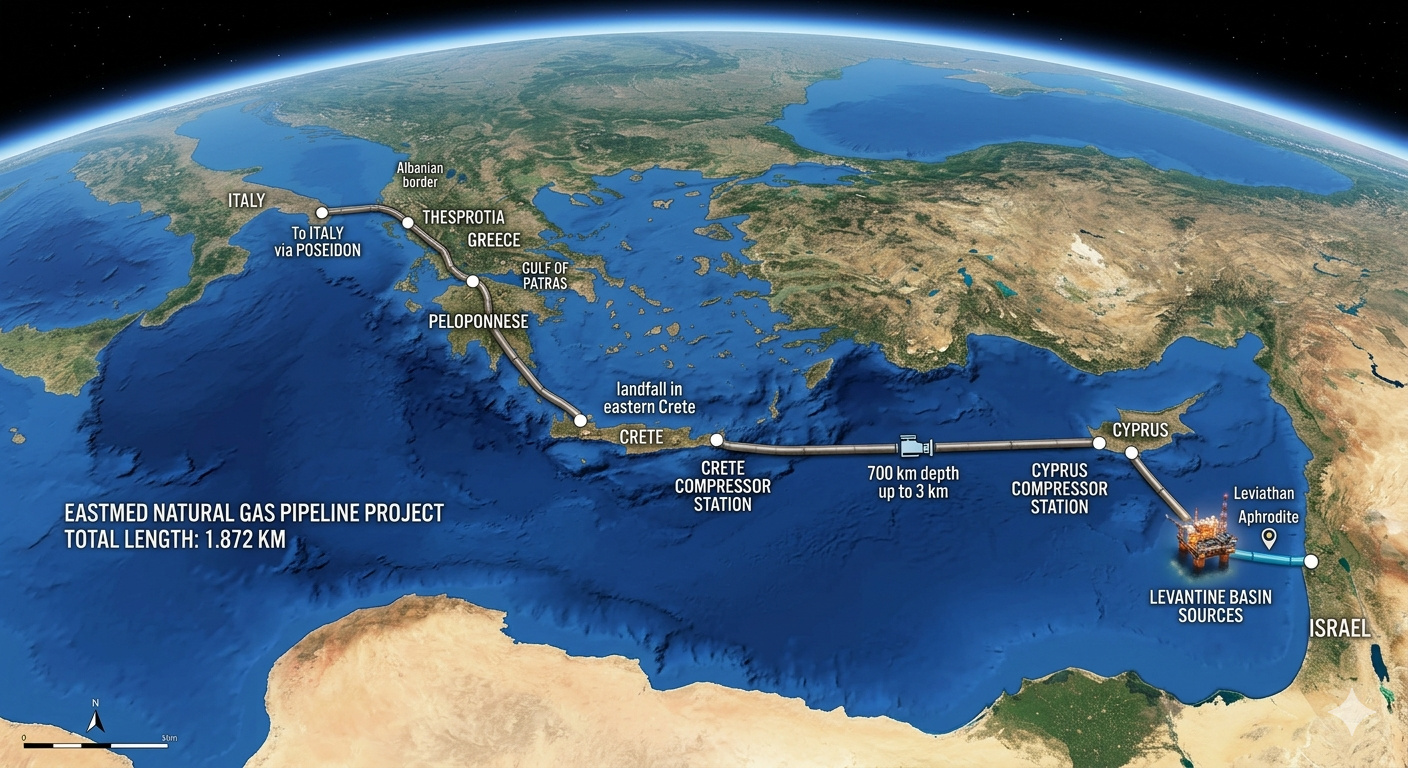
Israel, Greece, and Cyprus signed an agreement in 2020 to transport gas from the Mediterranean to Europe via a 1,872 km pipeline, but Turkey claimed sovereignty over part of the maritime route, and the project never materialized.
For comparison, the Seikan Tunnel in Japan is longer in total (53.85 km), but its underwater section is shorter (23.3 km). The Eurotunnel was also the most expensive infrastructure project in history to be financed entirely by private capital, a testament to its ambition.
The Long History of the Eurotunnel
The idea of a physical link between Great Britain and France is an old dream. The first concrete proposals emerged in 1802, with a plan by French engineer Albert Mathieu Favier for a carriage tunnel. Throughout the 19th century, several other ideas were explored.
The first excavation attempts occurred in the late 19th century but were halted due to political and safety issues. In 1973, a new project was initiated but was canceled in 1975 due to an economic crisis in the UK. The idea was relaunched in the 1980s, on the condition that the project would be financed by private capital. The Canterbury Treaty, signed in 1986, formalized the commitment, and construction began shortly thereafter.
The Feat of Construction: How the Longest Underwater Tunnel in the World Was Excavated
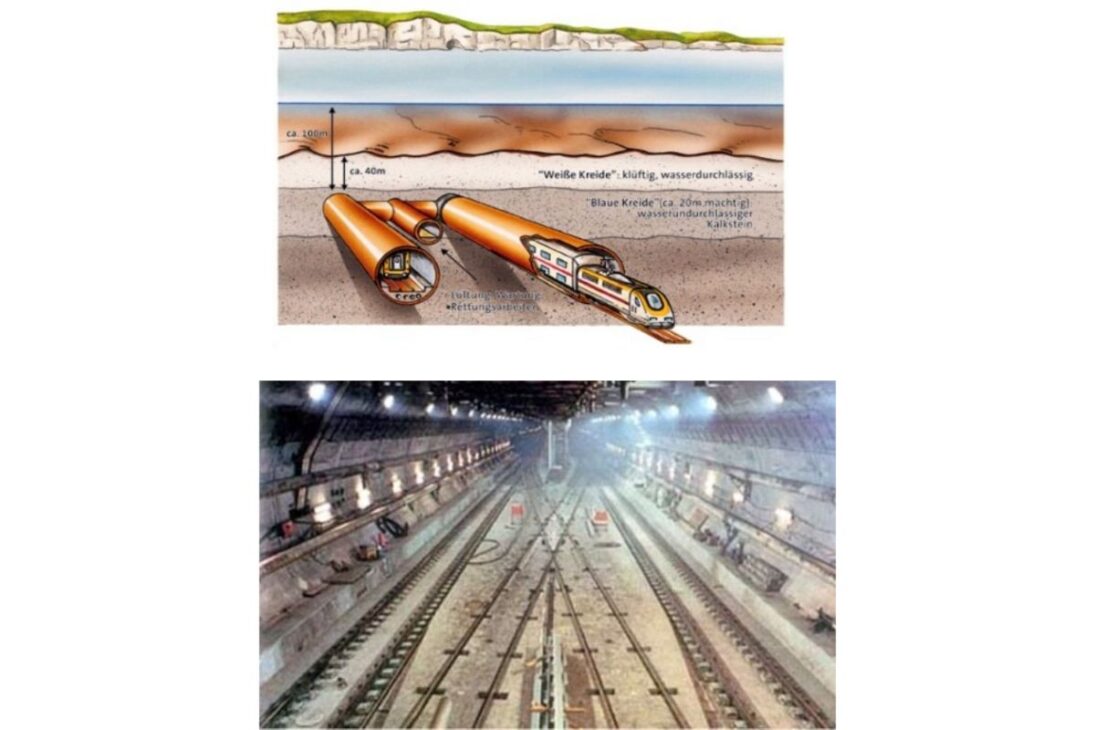
The construction of the Eurotunnel was a colossal undertaking that lasted six years (1988-1994). The structure consists of three parallel tunnels: two main railway tunnels, one for each direction, and a central service tunnel for maintenance and emergency evacuation.
The excavation was carried out by 11 gigantic tunnel boring machines (TBMs), popularly known as “mole machines.” Engineers excavated through a layer of marl limestone, a rock ideal for being relatively soft and stable. One of the most critical moments was the meeting of the two excavation fronts, one coming from England and the other from France, 40 meters below the seabed. The precision was remarkable, with a deviation of only a few centimeters.
The Challenges Overcome and Innovations of the Eurotunnel
Civil engineering experts consider the Eurotunnel a landmark, not only for being the longest underwater tunnel in the world but for the challenges it overcame. Construction in one of the most seismically active zones in Europe required an extremely robust engineering design.
The choice of entirely private financing is also analyzed as a case study. The final cost of the project, estimated at around £4.65 billion at the time (now over €12 billion), exceeded the original budget by 80%. According to experts, the technical complexity and the need to manage a binational project, with companies and regulations from two countries, added layers of difficulty that were skillfully overcome, consolidating its status as a wonder of modern engineering.
Life Under the Sea: How the LeShuttle and Eurostar Services Work
The Eurotunnel is a transportation artery with two main services:
LeShuttle: operated by Getlink, transports road vehicles (cars, buses, trucks) on special trains. The crossing takes about 35 minutes, and passengers remain in their vehicles. A significant innovation is that border controls are done before boarding, in the country of departure.
Eurostar: is the high-speed passenger train service that uses the tunnel to connect city centers like London, Paris, Brussels, and Amsterdam. Inside the tunnel, trains travel at 160 km/h, but on the high-speed lines on land, they can reach 300 km/h.
Since its inauguration, more than 500 million people and 102 million vehicles have passed through the Eurotunnel, which transports about 25% of the total value of goods traded between the United Kingdom and the European Union.









Seja o primeiro a reagir!