





 Portuguese
  English
  Spanish
  4 min of reading
  0 comments


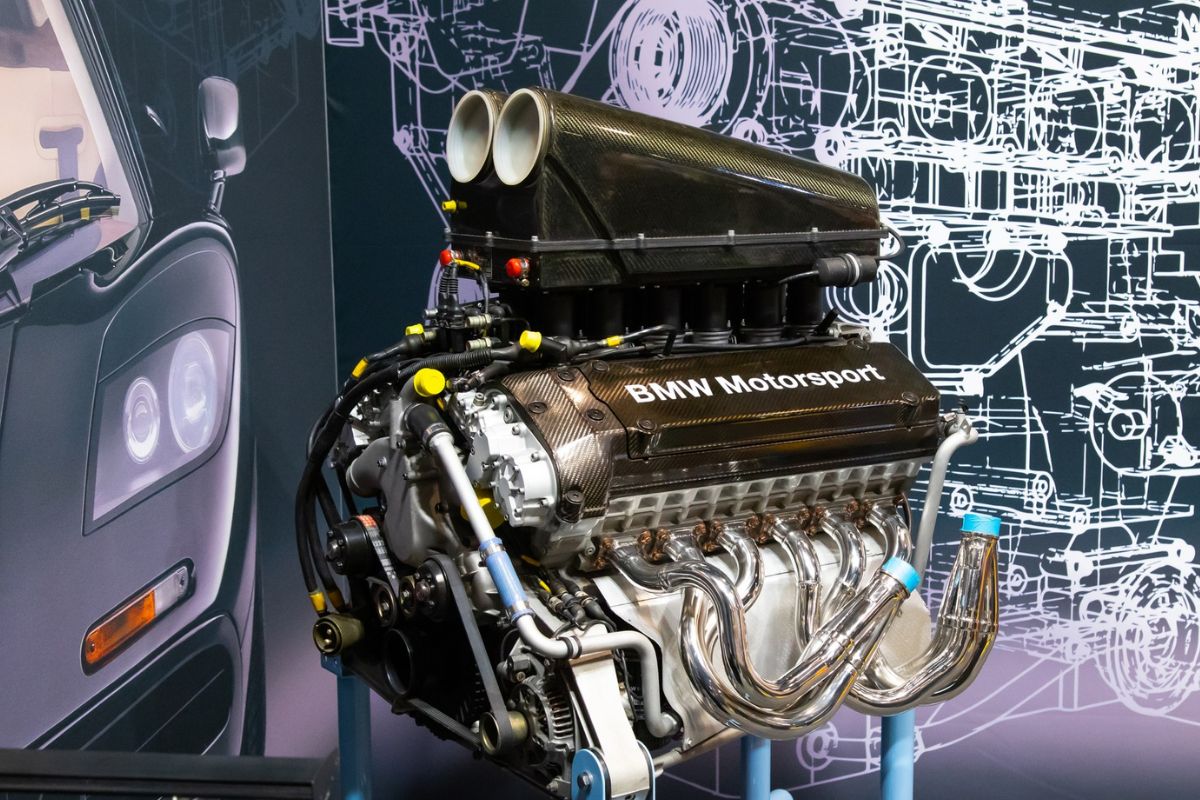
Born of a Partnership Between McLaren and BMW, the Naturally Aspirated V12 Engine of the 1992 Supercar Is Still Considered by Many a Masterpiece of Engineering
In the pantheon of supercars, few names are as revered as the McLaren F1. Launched in the early ’90s, it redefined the concept of performance. At the heart of this legend was an equally mythical piece of engineering: the God of Cars engine, the 6.1-liter naturally aspirated V12 of the McLaren F1, which had a gold-plated compartment to dissipate heat.
The BMW Motorsport division, under the leadership of engineer Paul Rosche, was responsible for bringing the S70/2 to life. More than just a component, it was the soul of the car. With 627 horsepower and a construction that used exotic materials, it was the result of an obsessive pursuit of mechanical perfection engineering. More than 30 years later, in a world dominated by turbos and hybrids, it remains a landmark.
The 1990 Alliance, How McLaren and BMW Joined Forces to Create a Legend
The story of the engine begins with the vision of McLaren F1 designer, Gordon Murray. He had a clear goal: to build the ultimate street car. For that, the engine needed to be naturally aspirated, lightweight, and with instant response, without the lag of the contemporary turbochargers. The search, however, was difficult.
-
Neither in the refrigerator nor in the fruit bowl: this is the correct way to store lemon.

-
It has only 11 thousand residents: Brazilian Tuscany impresses everyone with mountains of 1,900 meters and wide views of valleys.

-
Without experience and without giant machines, a young person builds a complete house made only of wood in 30 days, impressing with talent and a surprising final result.

-
12-year-old student builds gravity-powered solar tracker with recycled parts and under $25 that increases panel efficiency by 20% and will now present the invention in Washington as the national STEM champion.


After Honda, then a partner of McLaren in Formula 1, declined the project, fate intervened. During the German Grand Prix at Hockenheim in 1990, Murray met Paul Rosche, the legendary BMW M engineer. Murray presented his rigorous demands and Rosche, leveraging the development capacity his team had after the cancellation of another V12 project (the M8 prototype), made the promise that would change history: ‘We will make a new engine’. And BMW delivered in record time.
The Engineering Behind the BMW S70/2, 627 Horsepower of Pure Power
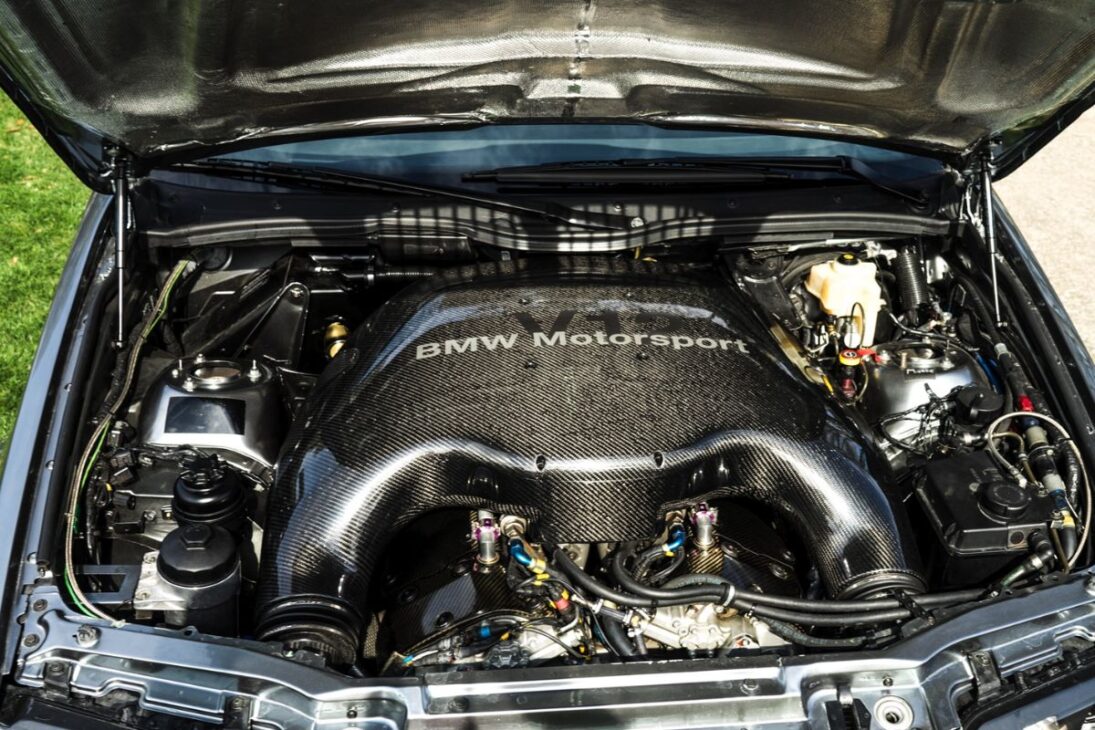
The result of the collaboration was a masterpiece of engineering. The BMW S70/2 was a V12 with a 60-degree angle, 6.1 liters of displacement, dual overhead camshafts (DOHC), and a total of 48 valves. It delivered an impressive 627 horsepower at 7,400 rpm and a torque of 651 Nm.
Every detail was optimized for performance. The engine used exotic materials for the time, such as titanium in the connecting rods and magnesium in various covers to reduce weight. It was also one of the first BMW M engines to use the Double VANOS system, which continuously adjusted valve timing to ensure smooth and strong power delivery at any RPM. The result was an engine that accelerated brutally, but was gentle enough to be used daily.
The Gold-Plated Compartment, Why 16 Grams of Gold Were Used in the Engine
The iconic engine compartment of the McLaren F1 shines with a golden coating, but the reason was not luxury; it was pure science. The application of 16 grams of 24-carat gold leaf was a pure and brilliant engineering solution.
The main purpose of gold was to reflect heat. The V12 engine generated immense amounts of heat, which could damage the car’s carbon fiber monocoque structure. At the time, gold leaf was simply the lightest and most efficient material to reflect infrared radiation. It was a choice based purely on function, a perfect symbol of Gordon Murray’s philosophy: to use the best possible engineering solution without compromise.
The Career of the Naturally Aspirated V12 Engine at Le Mans
The robustness of the S70/2 made it a perfect basis for motorsport. In 1995, McLaren adapted the F1 for competition, creating the F1 GTR. That same year, the car achieved a surprising victory at the 24 Hours of Le Mans.
Interestingly, the racing version of the engine was less powerful than the street version. To comply with the FIA GT1 category regulations, the engine of the GTR needed airflow restrictors. This limited its power to around 600 horsepower. This shows how extreme the original street engine was: it was so powerful that it needed to be “tamed” to compete on the tracks.
The Legacy in 2025, Why the S70/2 Is Still Regarded as the Greatest Engine of All Time
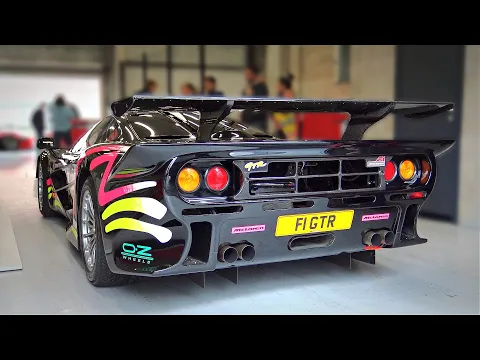

Even in 2025, the status of the S70/2 engine only grows. The McLaren F1, powered by it, still holds the record for the fastest production car with a naturally aspirated engine in the world, a mark of 386.4 km/h achieved in 1998.
The God of Cars engine, the 6.1-liter naturally aspirated V12 of the McLaren F1, which had a gold-plated compartment to dissipate heat, represents the pinnacle of an era. It is a monument to analog engineering, focused on the purity of the driving experience and the visceral connection between man and machine. In an era of silent, digital supercars, the mechanical sound and instant response of the S70/2 are a visceral reminder of what a great engine truly means.





-

-

2 pessoas reagiram a isso.