





 Portuguese
  English
  Spanish
  3 min of reading
  4 comments


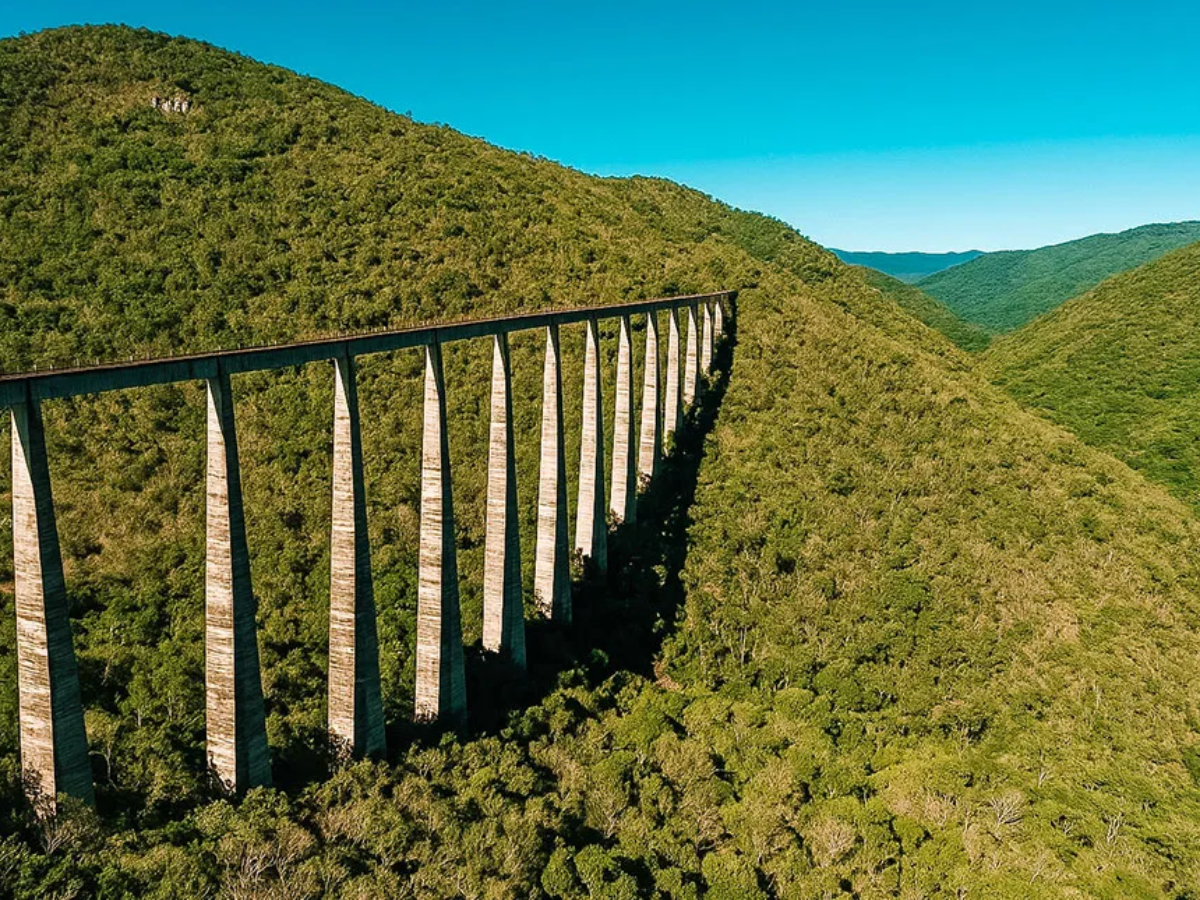


In Rio Grande do Sul, the Viaduct 11 (popularly V13) stands out at 143m height, being the tallest railway viaduct in Latin America. Discover its secrets, history, and current challenges
In the heart of the Taquari Valley, Rio Grande do Sul, rises a monumental work of Brazilian engineering: the Viaduct 11, popularly known as Viaduct 13 or V13. With its impressive 143 meters in height, it holds the title of the tallest railway viaduct in Latin America, a testament to national technical capability in the 1970s.
Built by the Brazilian Army on the Grain Railroad, this giant of concrete and steel has transcended its original function. Today, it is a tourist icon facing significant challenges for its preservation and operation.
The True Name and the Impressive Dimensions of the “Viaduct 13”
Although widely known as “Viaduct 13”, the imposing structure of 143 meters height is officially cataloged as Viaduct 11 in the records of the Grain Railroad (EF-491). The real Viaduct 13 is a distinct structure of the “hollow” type, located kilometers to the south. The confusion seems to arise from the sequential numbering of the works on the railroad.
-
A couple buys an old chalet, breaks the kitchen floor for renovation, and finds over a thousand coins of gold and silver hidden since the English Civil War over 4 centuries ago.
-
Rigid bags with their days numbered: new trend prioritizes comfort in 2026.

-
YouTuber creates an excavator equipped with a giant 4.5-meter sword to challenge his brother to a rematch, and the invention quickly goes viral on social media.

-
The U.S. Army surprises the world by presenting the UH-60MX Black Hawk helicopter capable of flying without pilots, controlled by a tablet, featuring the MATRIX system, smart sensors, and full autonomy in real combat and rescue missions.


Situated between Vespasiano Corrêa and Muçum, Viaduct 11 has 143 meters in height and 509 meters in length. These dimensions establish it as the tallest railway viaduct in Latin America and one of the tallest in the world. Its structure is supported by 15 pillars, with the main pillar reaching 140 meters.
The History and Construction of the Monumental Viaduct by the Army
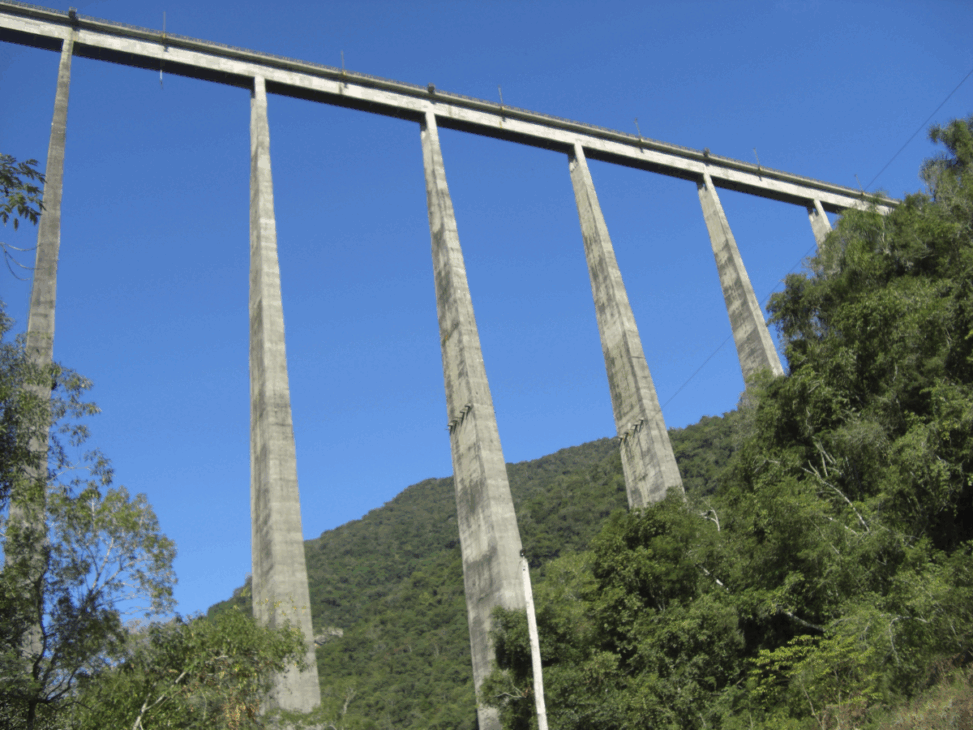
The original project of Viaduct 11 dates back to the post-World War II period, prepared by the company Serviços de Engenharia Emílio Baumgart (SEEBLA). The construction, however, took place between 1975 and 1978, carried out by the 1st Railway Battalion of the Brazilian Army.
The 15 reinforced concrete pillars are hollow and tapered, with internal slabs (“braces”) every 6 meters for stiffening. The foundations, of the continuous footing type, are buried about 21 meters deep. Near the viaduct, a tunnel of approximately 1 km has arched openings for natural lighting.
The Tallest Railway Viaduct in Latin America Today
Originally part of the strategic Grain Railroad, Viaduct 11 has seen its function evolve. Today, its main economic relevance lies in tourism. The pedestrian crossing over the tracks offers stunning views, and the 143-meter rappel is one of the main attractions, offered by operators such as V13 Adventure.
Train rides, such as the “Train of Valleys”, which crosses the viaduct, are also very popular. The tourist infrastructure in the surrounding area has grown, with campsites like Camping V13 and Camping Paraíso Tropical, and adventure parks like the Natural Sul Via 13 Park.
The Impact of the 2023 Floods, the Recovery, and the Future of the Grain Railroad
Recently, the tallest railway viaduct in Latin America and the Grain Railroad faced significant challenges. The 2023 floods in Rio Grande do Sul caused substantial damage to about 23 km of the railroad section, leading to the cancellation of the 2024 train ride season.
The concessionaire Rumo Logística estimates a cost of R$300 million for the recovery of the original 46 km section. There’s discussion for a quicker resumption in a smaller section (13 km) that would still include Viaduct 11. The situation is complex, as Rumo has also proposed to reformulate its concession contract for the South Network, possibly returning sections like that of the Grain Railroad.
An Enduring Symbol of Engineering and a Constantly Evolving Asset
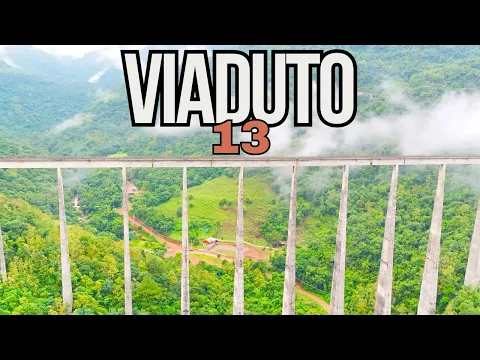

Viaduct 11, immortalized as Viaduct 13, is a pinnacle of Brazilian engineering and a landmark in the development of Rio Grande do Sul. Its transition from a logistical asset to a tourist icon demonstrates the capacity for reinvention of large works.
The future of the tallest railway viaduct in Latin America depends on decisions regarding infrastructure investments, adaptation to climate change, and balancing its preservation with its utility. It remains a symbol that demands vision and collaboration for its legacy to endure.








Eita que fazem confusão com o número do viaduto.
No projeto original construído pelo Exército é o número 13.
Apesar de ser um número questionável, mas é V13.
O viaduto da primeira imagem e do vídeo é o “13”. O viaduto 11 não tem corrimão como tem o viaduto 12 e 13, sendo o do meio, bem menos extenso.
É MUITO IMPORTANTE SABER DA HISTÓRIA DE VIADUTO MAIS ALTO DA AMÉRICA LATINA