





 Portuguese
  English
  Spanish
  4 min of reading
  21 comments


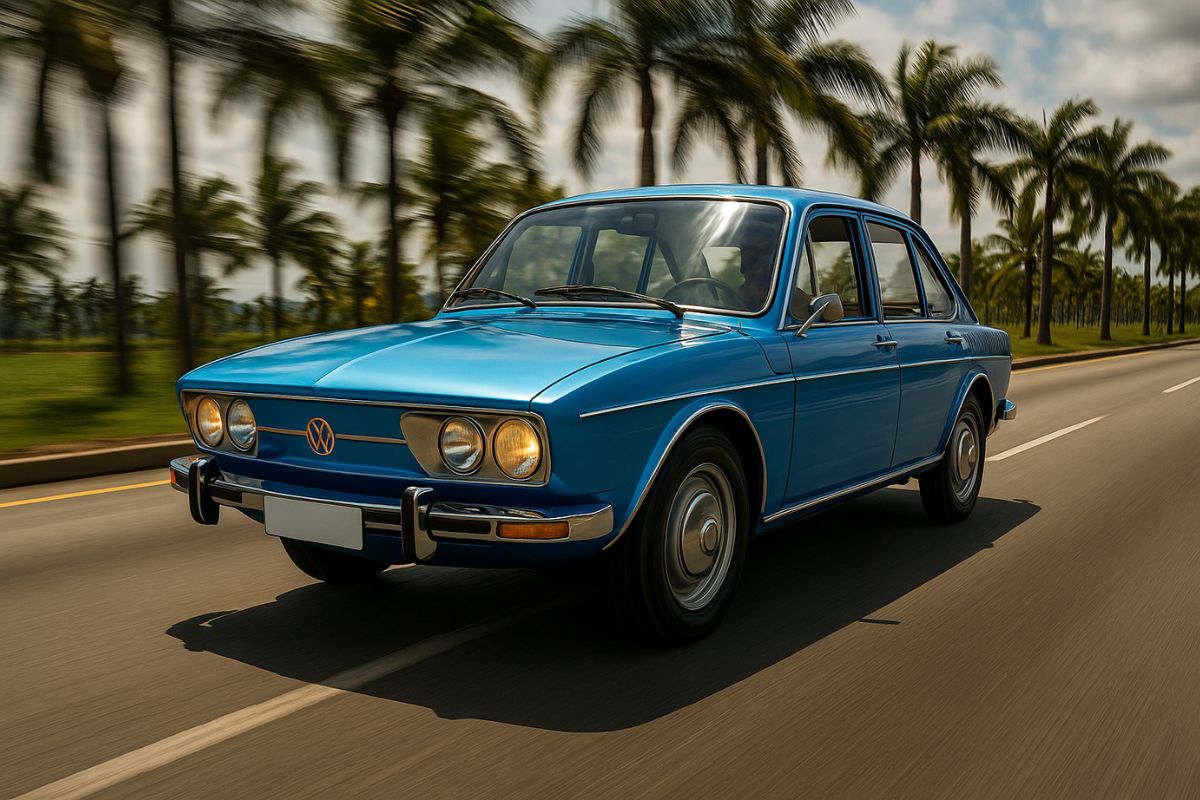

The History Of The Volkswagen 1600: Its Attempt To Modernize The Beetle, The Controversial Design, Problems, And The Impact Of A Nickname That Marked Its Trajectory In Brazil.
At the end of the 1960s, Volkswagen do Brasil sought to modernize its lineup. The idea was to offer a more spacious and powerful option to the popular Beetle. Thus was born the Volkswagen 1600, a four-door sedan launched in 1968. It promised more comfort without abandoning the brand’s reliability.
However, the Volkswagen 1600 faced a lukewarm reception and had limited commercial success. This article analyzes the factors behind this outcome, from its controversial design and the unfortunate nickname “Zé do Caixão” to the technical challenges and strong competition, using detailed information about the model as a basis.
The Ambition Behind The Volkswagen 1600: Modernizing The Beetle For The Brazilian Family
Volkswagen dominated the Brazilian market with the Beetle. But, it felt the need to diversify its portfolio. The goal was clear: to create a Volkswagen with more space and performance. The solution came from Germany, with the revival of the EA 97 prototype.
-
Son of a seamstress from the rural area of Ceará who did not speak English wins a scholarship of over 2 million reais at Williams College, one of the top 10 universities in the United States, covering everything including dormitory, meals, and annual trips to Brazil.

-
Bill Gates revealed that the true secret behind every great achievement is not a brilliant leap but rather small improvements repeated over the years, and the data from his own career and the fight against climate change prove that he is right.

-
With 22 thousand tons of steel, a height nearly three times greater than the Eiffel Tower, and a cost of R$ 1.6 billion, China is building the highest bridge on the planet over a colossal canyon, reducing a crossing time of over 2 hours to just over 2 minutes.

-
With more than 635,000 doctors, Brazil sees competition increasing in large cities, and recent graduates are competing for shifts at an accelerated pace while the countryside still faces shortages.


The EA 97, developed between 1957 and 1960, had been shelved in Europe. For Brazil, it was adapted and transformed into a four-door sedan. This configuration was considered more suitable for the Brazilian family. The original round headlights were replaced with rectangular ones, aiming for a more modern look. The official launch took place at the São Paulo Motor Show in 1968.
Controversial Design And “Zé do Caixão”
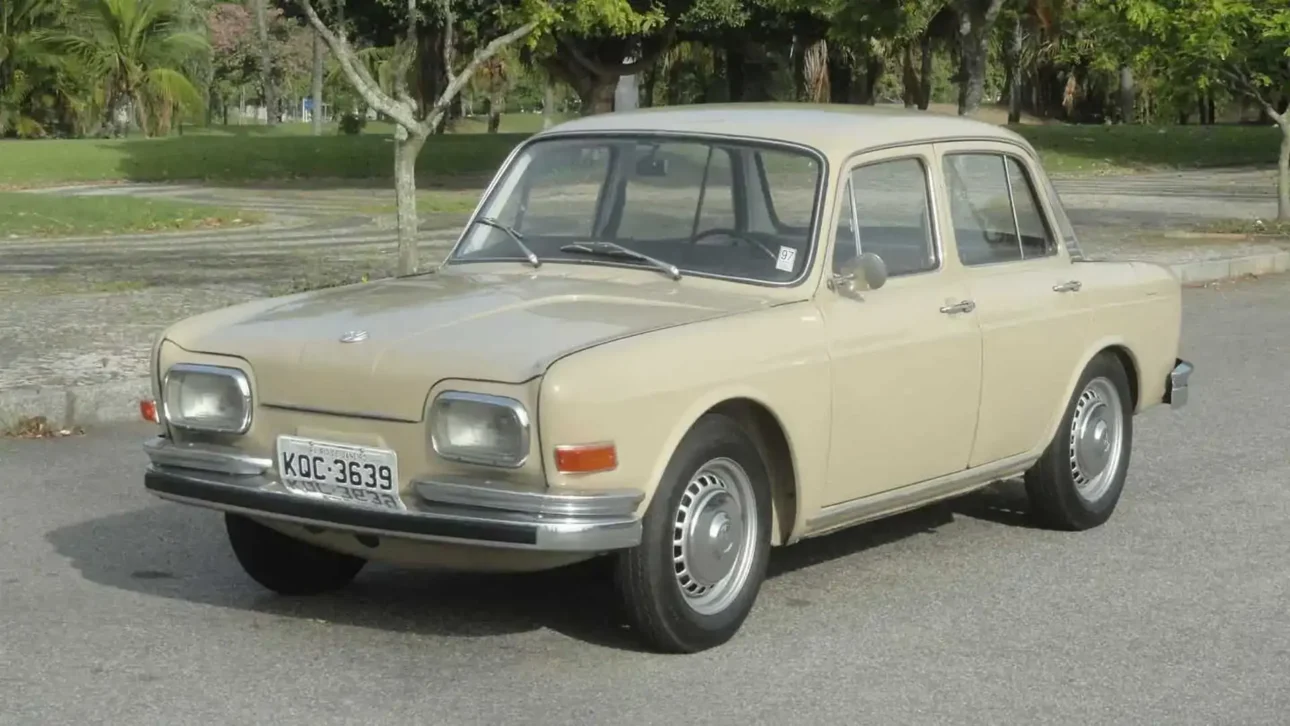
The design was one of the biggest obstacles to the success of the Volkswagen 1600. Its predominantly straight lines did not please. The front with rectangular headlights (until 1970) contributed to the perception of a “boxy” appearance. The public struggled to see the beauty touted by the factory.
This aesthetic already seemed outdated compared to competitors with more fluid lines. The nickname “Zé do Caixão” emerged quickly. The nickname referred to the protruding door handles, reminiscent of handles on a coffin. The association with the horror character of José Mojica Marins was fatal. The nickname buried VW’s expectations and became the car’s identity.
More Obstacles
Technical problems also marked the beginning of the Volkswagen 1600. Prototypes faced cooling difficulties, which delayed its launch. Although the mechanics inherited from the Beetle were robust, these initial rumors may have generated distrust.
By the end of the 1960s, the Brazilian market was heated. The Volkswagen 1600 faced formidable rivals. The Ford Corcel, launched around the same time, boasted a modern design, a front-mounted water-cooled engine, and front-wheel drive. The Corcel surged in sales, while the Volkswagen 1600 stalled. The Chevrolet Opala, although in a higher segment, also raised the standard of modernity, overshadowing VW’s model.
Expert Opinion: The Market Did Not Forgive The Volkswagen 1600
Analysts of the time and the specialized press pointed out the misalignment of the Volkswagen 1600 with consumer expectations. The “boxy” design simply did not win over Brazilians. Volkswagen seemed to bet that its mechanical reputation would outweigh a less attractive design, which did not happen.
The market was also changing. There was a growing preference for two-door cars, even for families. Four-door models, like the Volkswagen 1600, began to be associated with taxis. And it was precisely among taxi drivers that the “Zé do Caixão” found its niche. For them, the four doors, larger trunk, and reliable mechanics were advantages. This adoption, however, reinforced its image as a service vehicle for the general public.
Legacy Of The Volkswagen 1600: From Rejected To Collector’s Item
The career of the Volkswagen 1600 sedan was short. Production began at the end of 1968 and ended between 1970 and early 1971. Approximately 24,475 units were manufactured. The poor sales performance was the main reason for its discontinuation.
A fire at Volkswagen’s factory in December 1970 also contributed to the end of production. Some analysts suggest that the company used the incident as a “convenient excuse”. Today, the Volkswagen 1600 experiences a redemption. Its rarity has made it a point of interest for collectors. The once-rejected car gained fans and is valued for its unique style and peculiar history in the national automotive industry.







VW TL tinha a tampa do porta malas em curva que ia do Para choque ao teto, eu dirigia um TL de um amigo que não podia dirigir.
É nitidamente um TL 4 portas, tive um desta cor mesmo …a segunda foto que é o famoso Zé do caixão ou VW 1600
A primeira foto é de um TL 1600. O Zé do Caixão era outro. O Zé do Caixão era “quadrado, na frente e na traseira.