





 Português
  Inglês
  Espanhol
  4 min de leitura
  21 comentários


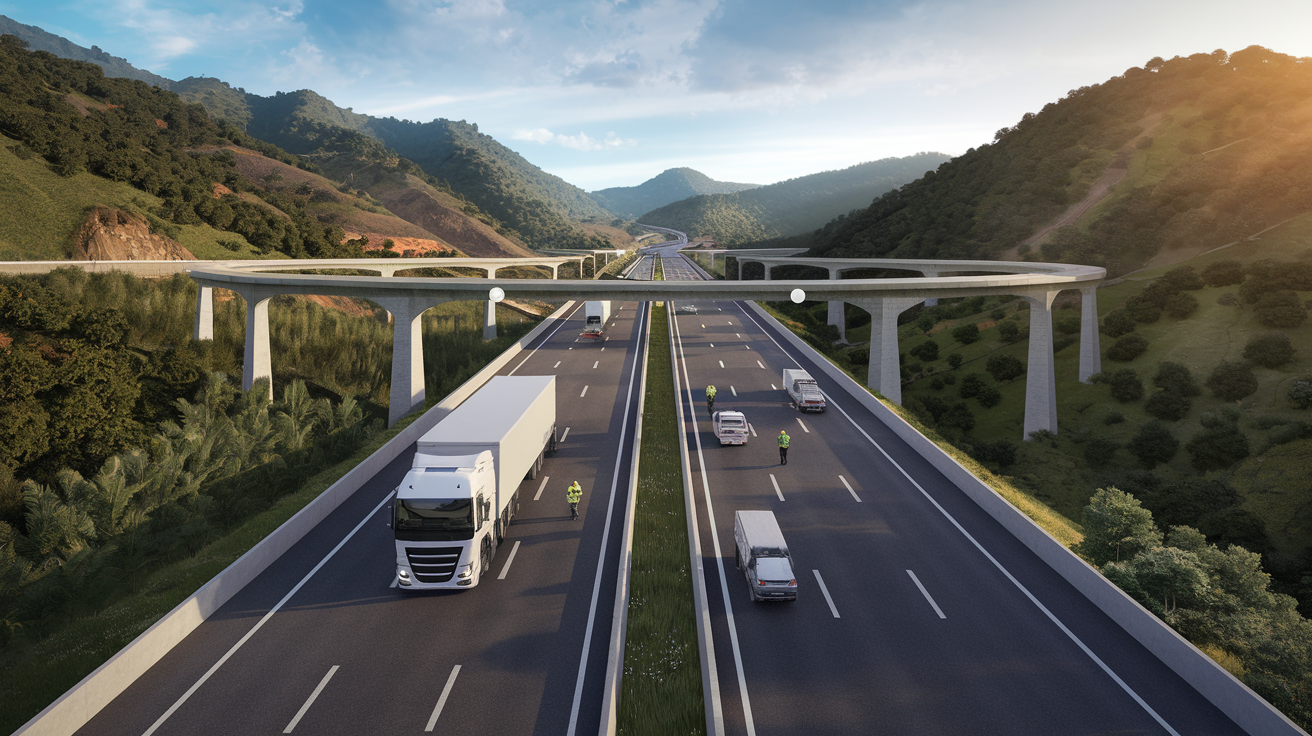


The Duplication of the Highway Is a Milestone in Brazilian Infrastructure. The Project Promises to Reduce Accidents, Double Traffic Capacity, and Generate Thousands of Jobs, Strengthening the Economy and Connectivity Between São Paulo and Rio de Janeiro.
The Serra das Araras, the main road connection between São Paulo and Rio de Janeiro, is about to undergo a historic transformation.
A monumental project promises to redesign traffic in one of Brazil’s most critical regions, alleviating bottlenecks and raising road infrastructure standards.
But is this ambitious undertaking up to the challenge that nature and logistics impose?
-
A megaproject worth R$ 89 billion is advancing in Iraq and promises to change the game in global trade by creating a new corridor between Asia and Europe, reducing traditional routes and repositioning the country as a logistics powerhouse.
-
Goodbye bedside table: floating shelves become a trend in 2026 by freeing up space in the bedroom, improving circulation, bringing visual lightness, and integrating technology without taking up floor space.

-
Brazilian city gains industrial hub for 85 companies that is equivalent to 55 football fields.

-
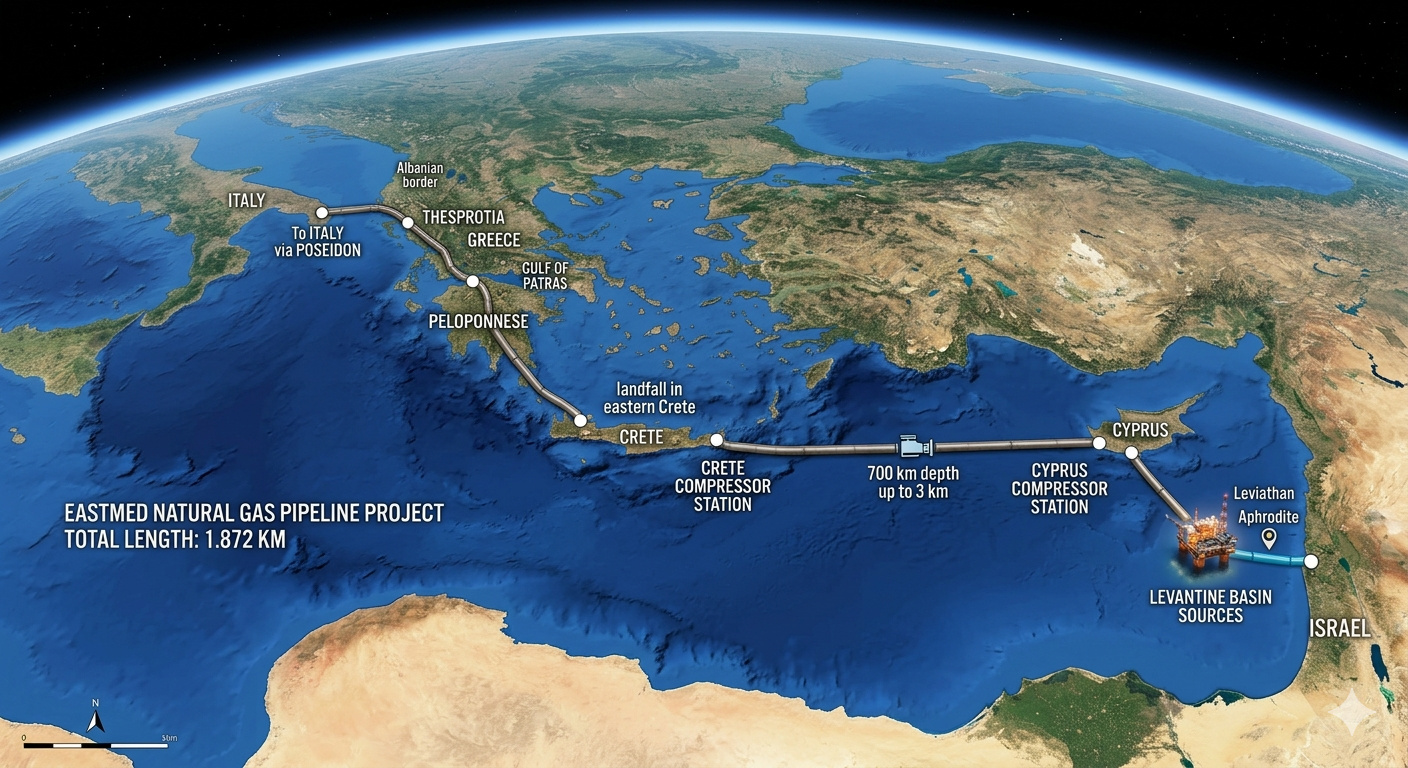
Israel, Greece, and Cyprus signed an agreement in 2020 to transport gas from the Mediterranean to Europe via a 1,872 km pipeline, but Turkey claimed sovereignty over part of the maritime route, and the project never materialized.

The Serra das Araras expansion project, part of Via Dutra, involves a billion-dollar investment of R$ 1.5 billion.
With an estimated completion between 2028 and 2029, it aims to double the capacity of the stretch and reduce accident risks.
According to the channel Construction Time, the changes include the construction of 24 viaducts, safety lanes, and structural improvements that promise to deeply impact the transport of goods and passengers.
A Historical Bottleneck in Brazilian Logistics
Located on the busiest axis in the country, Serra das Araras connects São Paulo and Rio de Janeiro via the BR-116 highway.
The section, originally designed in the 1950s, has always challenged drivers and engineers due to its rugged geography.
There are only two lanes in each direction, which causes slow traffic and frequent accidents.
It is estimated that 390,000 vehicles travel monthly through the area, of which 36% are trucks responsible for transporting a significant portion of Brazil’s GDP.
According to the Construction Time channel, Serra das Araras is responsible for overcoming a height equivalent to that of Sugarloaf Mountain, with winding curves and steep descents.
In 2023 alone, 295 accidents were recorded on the descent, mostly on weekdays. For many, modernizing the stretch is essential not only to improve traffic flow but also to save lives.
What Will the Transformation Look Like?
The project plans to duplicate 16 km between kilometers 225 and 233 of Via Dutra.
The new layout will feature four lanes in each direction, shoulders, and escape ramps, allowing the average speed to increase from 40 km/h to 80 km/h.
This will reduce travel time by up to 50% on the descent to Rio de Janeiro and 25% on the ascent to São Paulo.
Among the interventions, the following stand out:
- Construction of 24 viaducts to preserve watercourses and local fauna;
- Installation of 93 retaining walls to stabilize slopes;
- Escape ramps on the descent lane for out-of-control vehicles;
- A lighting and monitoring system, including cameras with automatic incident detection.
According to Construction Time, the project is an example of advanced engineering in Brazil. Controlled detonations will be used to remove 2.5 million cubic meters of material, including rocks.
All material will be recycled for paving and leveling, reinforcing the commitment to sustainability.
Sustainability as a Central Pillar
The project is also notable for incorporating sustainable measures. The construction of the viaducts will preserve ecological corridors, allowing safe movement for animals.
Additionally, 1.8 million cubic meters of excavated soil will be reused to stabilize the new track, minimizing the need for new landfills.
The concessionaire CCR RioSP, responsible for the project, will also implement large-scale reuse technologies, such as crushing plants for material recycling.
This helps to reduce the carbon footprint, aligning the project with the environmental demands of the 21st century.
Economic and Social Impact
In addition to alleviating one of the biggest logistical bottlenecks in the country, the expansion of Serra das Araras will bring direct benefits to surrounding communities.
More than 5,000 jobs will be generated during the 52 months of construction, boosting local economies in municipalities such as Piraí and Paracambi, in Rio de Janeiro.
According to Construction Time, the municipalities are working with CCR to train workers through professional qualification programs.
The estimated tax revenue of R$ 46 million throughout the project will allow investments in infrastructure, health, and education in neighboring cities.
An Inevitable Comparison: Serra das Araras and the Immigrant Highway
The Serra das Araras project evokes another iconic work: the duplication of the Immigrant Highway in São Paulo.
Completed in 2002, this modernization cost R$ 1.1 billion (adjusted for inflation), involving similar geographical and engineering challenges.
Both projects demonstrate how quality infrastructure can transform transportation realities in Brazil.
The Future of Mobility in Brazil
The expansion of Serra das Araras promises to transform the main route connecting São Paulo and Rio de Janeiro, reducing logistical costs and saving lives.
The lingering question is: will this project truly meet all expectations? Comment below your thoughts on this historic transformation.









Subo e desço a Serra das Araras toda semana e sofro constantemente com as interrupções que se que semanais na descida no sentido Rio, e certamente depois da obra concluída vai melhorar os transtornos mas, convenhamos tanto em cima quanto na parte de baixo a estrada continuará tendo 2 pista em casa sentido e se o acidente acontecer fora da Serra o problema continuará o mesmo.
Convenhamos, a rodovia que liga as duas maiores cidades do país, ter somente estas duas pistas e uma vergonha.
E para concluir meu comentário, acho que é falácia demais vender está obra como solução para a infraestrutura dos estados do Rio e de São Paulo e muito menos do país.
Absurdo! É inconcebível que a estrada que liga as duas maiores cidades do país tenha apenas duas pistas. Isso não é infraestrutura, é um perigo constante. E chamar isso de solução para o Rio e São Paulo? Vergonha!
Poderia sim, cumprir o objetivo do projeto viário que é a melhoria de trânsito entre os dois estados. Todavia, a sistemática corrupção deste atual governo federal e seus consórcios, vão arrastar esta obra para décadas e consumir bilhões de reais.
Acho válido, mais tem que manter a velocidade mínima de 40 km porque na minha opinião 80km é muito para uma descida de serra como a serra das araras, no máximo 60 para veículos de passeio, na serra Curitiba, Joinville é 60 e não é perigosa como a serra das araras, e quanto as áreas de escape tem que ser no mínimo 4 que ainda é pouco para o trajeto