





 Português
  Inglês
  Espanhol
  3 min de leitura
  0 comentários


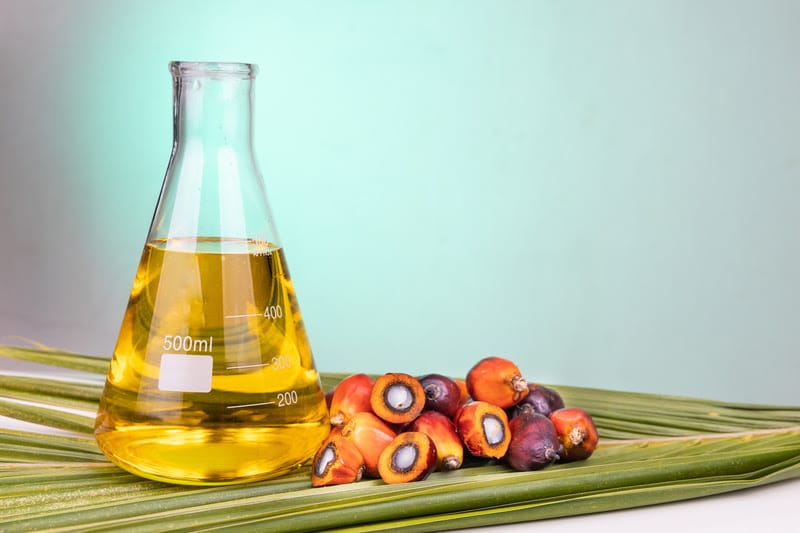
Brazil Has Growing Potential to Lead in SAF and Green Diesel
Palma oil, often identified as dendê oil, is recognized for its unparalleled power in creating next-generation biofuels. The BBF Group (Brazil BioFuels), led by Milton Steagall, highlights that, even as Brazil improves its global ranking in the production of this oil, there is a vast possibility for leadership in the segment, specifically for the production of Sustainable Aviation Fuel (SAF) and Green Diesel.
The Socioeconomic Impact of Palm
Milton Steagall, emphasizing the virtues of palm cultivation, comments on the impossibility of its mechanization. This translates into a source of job generation, with the BBF Group responsible for over 6,000 direct positions and 18,000 indirect ones spread across five northern states. Not only an economic driving force, palm represents a broad productive chain, ranging from simple planting to complex industrial operations.
The Green Revolution Without Deforestation
A significant nuance of this cultivation is environmental preservation. It is not necessary to fell forests for its implementation. The Amazon region, with potential nicknamed “Green Pre-Salt”, has over 31 million hectares suitable for sustainable palm cultivation. Steagall reinforces that Brazil, under strict environmental laws, has ample space to expand its production while keeping ecological integrity intact.
-
Renewable energy advances over protected areas in Brazil, and a survey by the Energy Transition Observatory reveals silent impacts that challenge environmental conservation and pressure sensitive traditional territories.

-
The Economist states that Brazil has a “secret weapon” against expensive oil and highlights how the country can reduce economic impacts even in international scenarios of high volatility.
-
Rio Grande do Sul accelerates energy transition: State invests in renewable technologies and consolidates decarbonization strategies and pathways to attract billions in new industrial investments.

-
With 160,000 m² of collectors, an area larger than 20 football fields, Silkeborg, in Denmark, hosts a solar thermal plant that heats 19,500 homes and could become the largest solar heating plant in the world.

Efficiency and Sustainability in Focus
Compared to other sources, such as soy, palm is superior in terms of oil production per hectare. Its chemical profile makes it a strategic choice for SAF and Green Diesel, presenting characteristics almost identical to fossil fuels, but with the bonus of being sustainable.
The global quest for clean energy places Brazilian palm on a pedestal, with the CEO of the BBF Group seeing its contribution as vital for the decarbonization of the aviation sector. By 2030, global demand for SAF is expected to reach 20 billion liters annually.
Partnerships and Innovations on the Horizon
Starting in 2026, a robust partnership will materialize between the BBF Group and Vibra Energia (formerly BR Distribuidora). With palm oil from the Amazon region as the raw material, the first Brazilian biorefinery will have the capacity to supply about 500 million liters of innovative biofuels annually, representing a massive investment of over R$ 2.2 billion.
The hydroprocessing technology (HEFA) will be employed, transforming vegetable oil into a compatible biofuel, virtually identical to traditional fuels but eco-friendly.
BBF Group: Leadership in Innovation
Since its founding in 2008, the BBF Group has solidified itself as a leader in Latin America in palm oil production. The organization not only emphasizes sustainable production but also the rehabilitation of previously degraded areas. With total assets nearing R$ 2.2 billion and generating thousands of jobs, BBF is an icon in renewable energy and innovation in the North region.
The expansion of biofuels is inevitable, and with the future Biorefinery in the Manaus Free Trade Zone, the BBF Group reaffirms its commitment to a greener and more sustainable future.
Source: Fernanda Domiciano – BBF Press Office.










Seja o primeiro a reagir!