





 Portuguese
  English
  Spanish
  4 min of reading
  0 comments


Extreme Heat Drives Energy Consumption Records in Brazil!
The National Electric System Operator (ONS) announced, in February 2025, a new projection for electric energy consumption in Brazil. According to the updated report, demand is expected to grow 6.5% this month, marking one of the largest increases in recent years.
This trend had already been observed previously. In the summer of 2024, Brazil recorded record temperatures, especially between December and January, when cities in the Southeast and Midwest faced heatwaves above 40°C.
As a consequence, electricity consumption surged. According to data from the National Electric Energy Agency (ANEEL), peak demand reached 91,200 megawatts on January 18, 2024, a record high at that time.
-
A new Brazilian shopping center worth R$ 400 million will be built in an area equivalent to more than 4 football fields, featuring 90 stores, 5 cinemas, a supermarket, a college, and parking for 1,700 cars, potentially generating 3,000 jobs.

-
Larger than entire cities in Brazil: BYD is building a 4.6 km² complex in Bahia with a capacity for 600,000 vehicles per year, but the discovery of 163 workers in conditions analogous to slavery has shaken the entire project.

-
With an investment of R$ 612 million, a capacity to process 1.2 million liters of milk per day, Piracanjuba inaugurates a mega cheese factory that increases national production, reduces dependence on imports, and repositions Brazil on the global dairy map.

-
Brazilian city gains industrial hub for 85 companies that is equivalent to 55 football fields.


ONS Raises Energy Consumption Projection in Brazil for February 2025
The ONS announced, on February 21, 2025, a revision of its projections, highlighting that the electric energy load is expected to reach 88,670 megawatts (MW) average. This update came after a preliminary report released at the beginning of the month, which forecasted a more modest growth of 5.8%.
Additionally, the Southeast/Midwest recorded an average consumption of 54,599 MW in the first half of the month, according to the Electric Energy Commercialization Chamber (CCEE). This volume already exceeded the figures recorded in the same period of February 2024 by 7.2%.
This reinforces the upward trend in energy consumption. The combination of high temperatures and increased demand raises concerns among electric sector specialists.
Impact of Climatic Conditions on Energy Demand
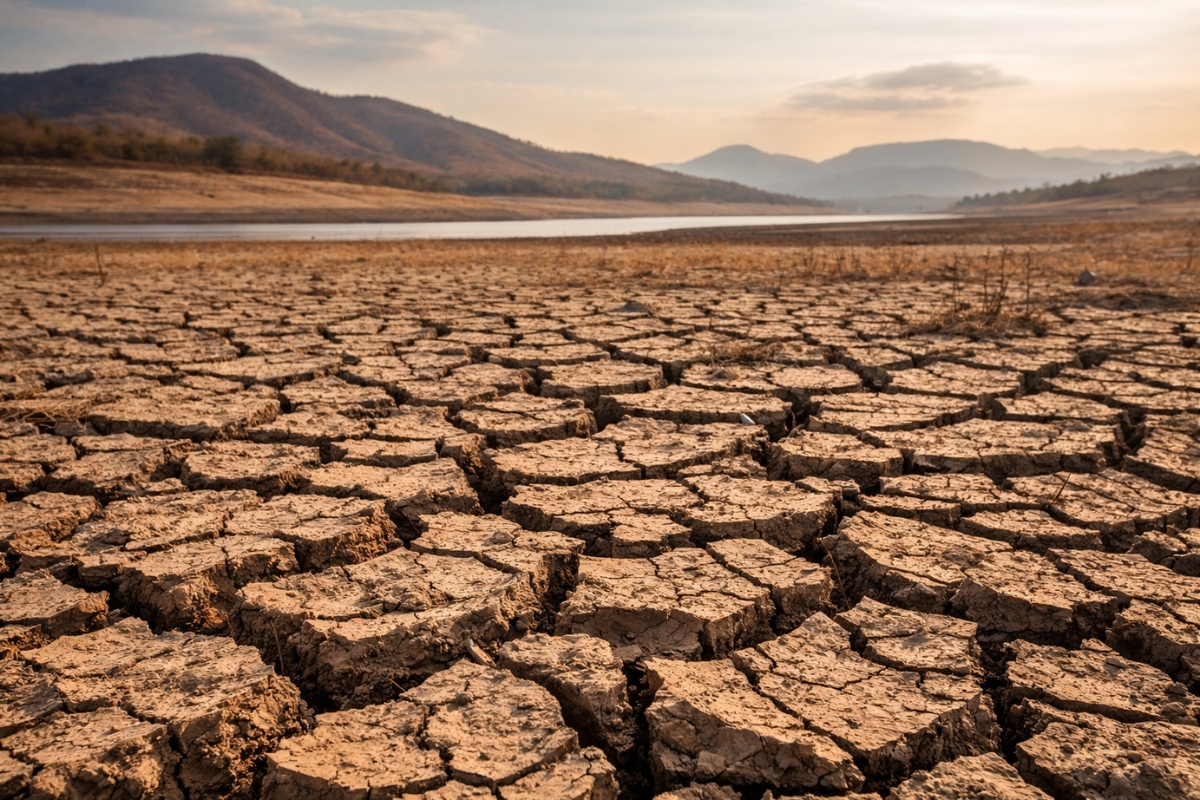
Since December 2024, meteorologists from the National Institute of Meteorology (INMET) have warned that Brazil would face one of the hottest summers in history.
Moreover, the climatic phenomenon El Niño, which intensified between November 2023 and March 2024, directly contributed to the increase in temperatures. This phenomenon alters climate patterns and can influence rainfall distribution in the country.
At the same time, rain forecasts indicate a recovery in hydroelectric reservoirs in the country’s main basins. The ONS adjusted the projections for rainfall in the Southeast/Midwest (85% of historical average), South (86%) and North (112%).
However, in the Northeast, the estimate dropped to 87%, according to the Hydroelectric Company of São Francisco (CHESF). As a result, hydroelectric energy generation may continue to be pressured in some areas.
Demand Records: Risks to the Electric Sector
In the past five years, Brazil has faced constant increases in energy load, especially during periods of extreme heat.
According to the Energy Research Company (EPE), between 2019 and 2024, demand rose about 15%, driven by population and economic growth. This increase poses a challenge to the stability of the electrical grid.
To avoid the risk of overloading the electrical grid, the ONS is already studying the activation of thermal plants as early as the second half of February 2025.
However, this measure increases the cost of energy, directly impacting tariffs for residential and industrial consumers, as warned by the Brazilian Association of Electric Energy Distributors (ABRADEE).
How to Reduce the Impact of Energy Consumption?
In recent years, awareness campaigns about efficient energy use have become increasingly frequent.
In October 2024, the Ministry of Mines and Energy (MME) launched a plan to incentivize energy savings, offering bounties for consumers who reduced consumption by at least 10% during the hottest months.
Moreover, experts suggest effective measures to reduce electricity bills. Some recommended practices include:
- Replace incandescent bulbs with LED, which consume up to 80% less energy;
- Use appliances with Procel A label, which ensure higher energy efficiency.
- Completely turn off electronic devices, avoiding waste in standby mode.
- Keep air conditioning and fans clean, reducing excessive consumption.
- Prioritize natural lighting, minimizing the use of lamps during the day.
If everyone adopts these practices, it will be possible to significantly reduce the impact of the increase in electricity demand.
Future Prospects for the Electric Sector in Brazil
Given this scenario, experts in the electric sector point out that Brazil needs to accelerate investments in renewable energy.
In June 2024, the federal government announced a package of incentives for solar and wind generation, with an expected expansion of 15% in installed capacity by 2026.
If this trend holds, the country could reduce dependency on thermal plants, which generate high costs and environmental impact.
However, without an expansion of the electrical infrastructure, the risk of blackouts and instability in supply will continue to be a concern, especially in the hottest months.








Seja o primeiro a reagir!