





 Portuguese
  English
  Spanish
  3 min of reading
  0 comments


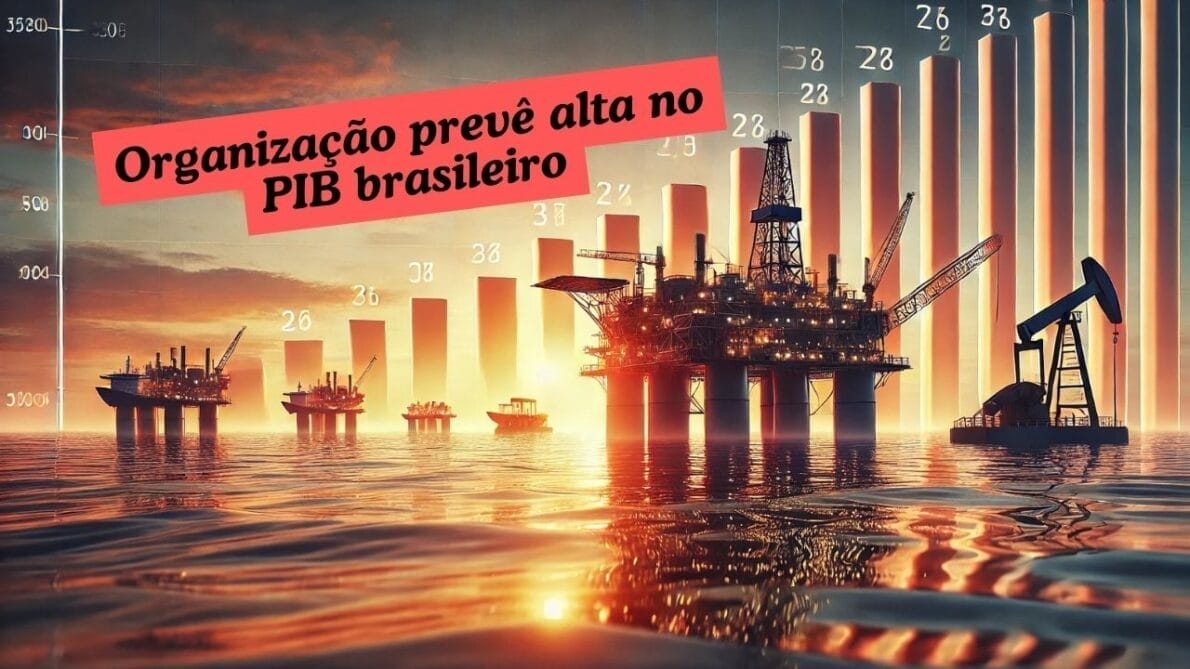
Organization Predicts Growth in Brazilian GDP, but Signals Uncertainties About Oil Production in Brazil with Rising Costs and Inflation on the Horizon.
OPEC (Organization of the Petroleum Exporting Countries) released an optimistic report on Brazil’s economic growth, but also brought important warnings about oil production in Brazil. According to the document published this Monday (14), the country is expected to maintain a key role in the global supply of fuels; however, challenges such as inflation and rising offshore production costs may impact the sector’s performance.
Even with reduced expectations for liquid fuel supply, OPEC sees Brazil as one of the main drivers of global production, trailing only behind the United States, Canada, and China. This keeps Brazil in the spotlight of the world energy scene, even as it faces obstacles.
Brazilian GDP Projection on the Rise
In the economic field, OPEC adjusted its forecasts for the GDP of Brazil, raising the growth projection for 2024 from 2.2% to 2.5%. According to the report, the “continued strength of the Brazilian domestic economy” and solid consumer demand are some of the main drivers of this optimistic outlook. However, the organization points out that industrial sector volatility and inflationary pressures could slow this growth.
-
Offshore industrial demand in Macaé skyrockets with the recovery of oil and gas and could grow by up to 396% by 2026 in the Campos Basin.
-
Offshore industrial demand in Macaé surges with the recovery of oil and gas and could grow by up to 396% by 2026 in the Campos Basin.
-
Brazilian giant expands borders in the Southeast: Petrobras confirms new oil discovery in ultra-deep waters in the pre-salt of the Campos Basin.

-
Alert in the global energy market: Severe tropical cyclone hits the coast and disrupts gas production at major plants in Australia, threatening global supply.


Despite challenges in oil production in Brazil, such as inflation and uncertainties regarding monetary policy, OPEC maintained the 1.5% GDP projection for 2025, unchanged from the previous report.
Impacts on Oil Production in Brazil
Regarding oil production in Brazil, OPEC has reduced its expectations. The country, which had delivered lower-than-expected production in recent months, now has a projection of an increase of 60,000 barrels per day (bpd) in 2023, resulting in an average of 4.2 million bpd. This revision stems from technical and operational challenges, along with rising offshore production costs.
For 2024, the cartel expects that new oil fields, such as Búzios, Tupi, and Itapu, will contribute to increased production, but warns that “technical and operational problems may delay the production schedule of the platforms.” OPEC projects an increase of 200,000 bpd in 2025, bringing Brazilian production to 4.4 million bpd, a cut from the previously estimated 4.5 million.
Global Demand for Oil Declining
In addition to issues related to oil production in Brazil, OPEC also revised global demand for the commodity. The projected growth for global oil demand has been reduced by 106,000 bpd for this year, totaling 1.9 million bpd. The same downward trend is projected for 2025, with a reduction of 102,000 bpd, reaching 1.6 million bpd.
Within the OECD (Organization for Economic Cooperation and Development), demand is expected to continue rising, while outside the group, expectations are for a more modest increase. It is worth noting that Brazil is not a member of the OECD.
Given this scenario, how can Brazil balance economic growth with challenges in oil production? Leave your opinion in the comments!










Seja o primeiro a reagir!