





 Portuguese
  English
  Spanish
  3 min of reading
  0 comments


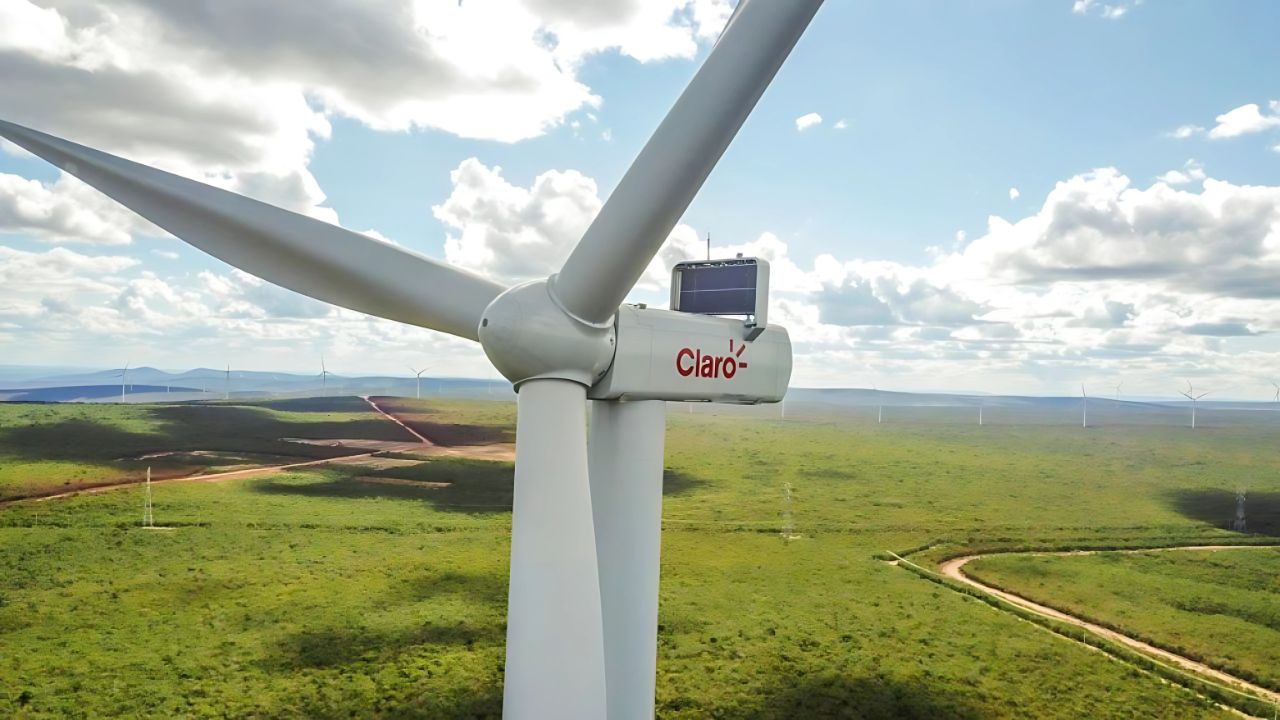
Mobile Operators TIM and Claro Advance in Renewable Energy Projects with Their Own Plants and Green Certifications, While Expanding Energy Savings and Positive Impact on the Environment.
The main mobile operators in the country are intensifying investments in renewable energy as a strategy to reduce costs and greenhouse gas emissions in their operations. TIM and Claro are leading this movement by significantly increasing the use of clean sources to power antennas, offices, and other structures in their networks.
With hundreds of solar plants and partnerships spread across various states, these operators not only reduce their environmental impact but also reinforce their commitment to the energy transition, cementing their position as active agents of sustainability in the telecommunications sector.
TIM Operates 100% on Clean Energy and Projects Savings of R$ 40 Million
Since 2021, TIM has been operating with 100% renewable energy throughout Brazil, through its own production and purchases in the free market, along with I-REC certificates.
-
Renewable energy advances over protected areas in Brazil, and a survey by the Energy Transition Observatory reveals silent impacts that challenge environmental conservation and pressure sensitive traditional territories.

-
Rio Grande do Sul accelerates energy transition: State invests in renewable technologies and consolidates decarbonization strategies and pathways to attract billions in new industrial investments.

-
With 160,000 m² of collectors, an area larger than 20 football fields, Silkeborg, in Denmark, hosts a solar thermal plant that heats 19,500 homes and could become the largest solar heating plant in the world.

-
A study reveals the expansion of renewable energy procurement in Brazil and shows how companies are taking advantage of opportunities to reduce expenses, ensure energy efficiency, and strengthen strategic environmental commitments.


Today, the company has 130 plants powered by solar, hydropower, and biogas spread across 23 states and the Federal District.
In 2024 alone, the expectation is to save R$ 40 million on energy bills.
The project started in 2017 with just five plants in Minas Gerais, supplying about 1,200 antennas.
Currently, production reaches 427 Gigawatt-hours per year, a volume sufficient to supply the equivalent of 237,000 low-income households or over 700,000 people.
The operator also focuses on innovation, using artificial intelligence to detect anomalies in consumption and improve energy management.
Additionally, it maintains the Energy Club, an internal program that offers discounts of up to 20% on electricity bills for employees who choose to use clean energy.
About 1,500 employees are already participating in the initiative.
Claro Surpasses 100 Plants and Brings Solar Energy to 80% of Customers in RS
Claro, for its part, continues to expand its Claro Energy program, which also started in 2017.
With the recent inauguration of its 109th solar plant, the company further enhances its presence in the renewable energy sector.
Only in Rio Grande do Sul, there are already seven plants in operation, benefiting over 80% of Gaúcho customers with a more sustainable mobile connection.
Municipalities such as Uruguaiana, Guaíba, Alegrete, São Sepé, Santa Vitória do Palmar, and Itaqui already have operational infrastructures, many of which have been enabled through local partnerships.
The distance between the most extreme plants in the program is 4,400 km, from Iranduba (AM) to Santa Vitória do Palmar (RS), demonstrating the national reach of the project.
Thanks to its own energy generation initiatives, Claro has managed to avoid the emission of more than 450,000 tons of CO₂ by 2024, without needing to offset through carbon credits — a significant achievement for a large operator.
Mobile Operators Accelerate Energy Transition in Brazil
The use of renewable energy by large mobile operators such as TIM and Claro demonstrates that sustainability can go hand in hand with technological innovation and operational efficiency.
With dozens of plants in operation and concrete results in emission reductions, these companies are taking a leadership role in the decarbonization process of the telecommunications sector in Brazil.









Seja o primeiro a reagir!