





 Portuguese
  English
  Spanish
  4 min of reading
  0 comments


On August 6, 1945, the world witnessed the devastating impact of nuclear energy with the atomic bombs dropped on Hiroshima and Nagasaki. Beyond the human tragedy, it became clear the demonstration of power that this technology represented. The United States and the Soviet Union quickly mobilized to dominate the new nuclear era, beginning the Cold War.
The fear of mass destruction contrasted with the enthusiasm of techno-optimists, who saw nuclear energy as a solution to future energy challenges. This mindset fueled ambitious projects, from space exploration to the first commercial computers, and, of course, the idea of atom-powered cars.
The Dream of Nuclear Cars and the Promise of Infinite Energy
In the 1950s and 1960s, nuclear energy gained traction as the great solution to energy resource scarcity. The International Atomic Energy Agency (IAEA) reinforced the idea that nuclear fission could provide cheap and unlimited energy, heralding the so-called “atomic age.”
This raised a logical question: if we can build submarines and ships powered by nuclear energy, why not do the same with cars? The answer seemed simple: miniaturize reactors and create vehicles that would never need refueling. In theory, a single uranium reactor could drive a car thousands of kilometers without needing to refuel. In practice, the technical difficulties were enormous.
-
For R$ 32,000, a brand new Hyundai car is a rival to the Kwid with a 1.2 engine producing 82 hp, 6 airbags as standard, multimedia with wireless Android Auto, up to 391 liters in the trunk, and a refreshed look for 2026 in India.
-
He bought a new car in 1983, locked it in the barn in 1988, and no one opened the door for 38 years until the family discovered what was stored inside and realized it looked like something out of a movie.
-
A 250cc motorcycle that can reach 560 km with a 14-liter tank, features disc brakes on both wheels and is among the most well-known in Brazil.
-
Man finds over 200 rare cars abandoned on a lot and tries to do the impossible in 8 hours with a surprise at the end.

Ford Nucleon: The Atomic Car That Never Got Off the Ground
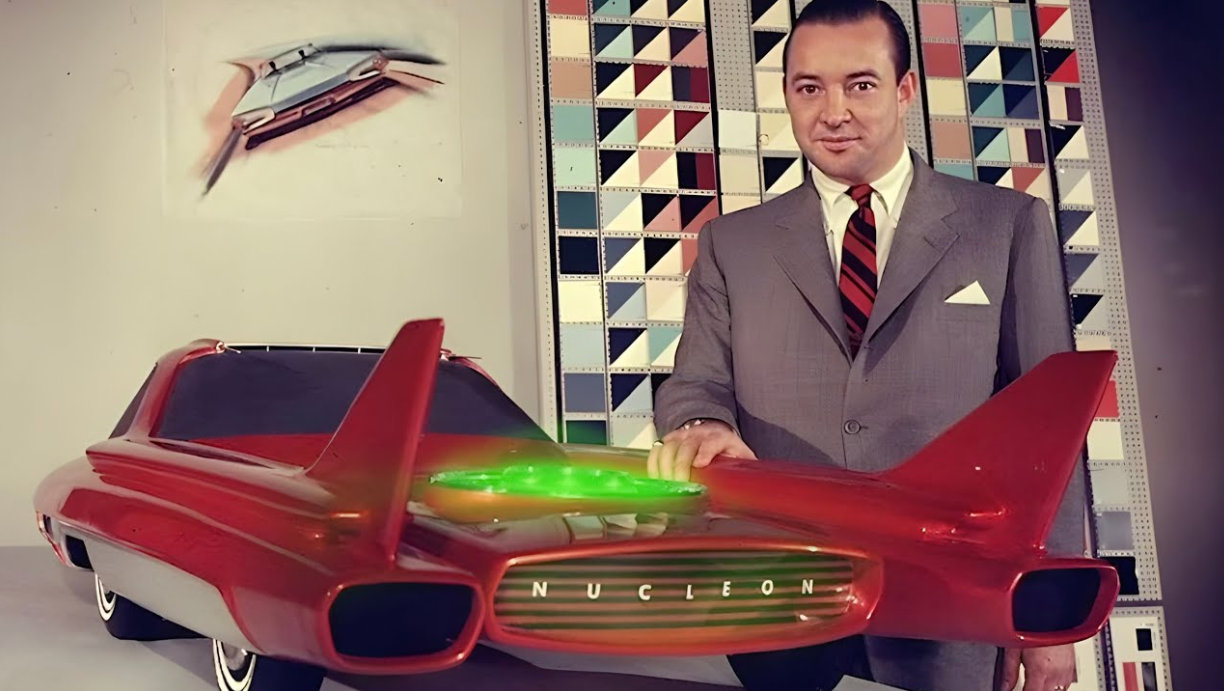
Among nuclear energy enthusiasts, Ford was the company most interested in the idea of a uranium-powered car. In 1958, the automaker unveiled the Ford Nucleon, a revolutionary concept that promised to transform the automotive industry.
The car’s design was ambitious: a small nuclear reactor in the rear would generate steam to drive two turbines. One would move the wheels, while the other would power the vehicle’s electrical systems. Ford believed that a single uranium cartridge would allow it to travel up to 8,000 kilometers without needing to “refuel.”
However, the project never progressed beyond conceptual models. Safety and miniaturization challenges made the construction of a practical nuclear car unfeasible. The shielding necessary to contain radiation would make the vehicle absurdly heavy, and changing the uranium cartridge would require complex infrastructure.
Ford Seattle-ite XXI and the Peak of Nuclear Insanity
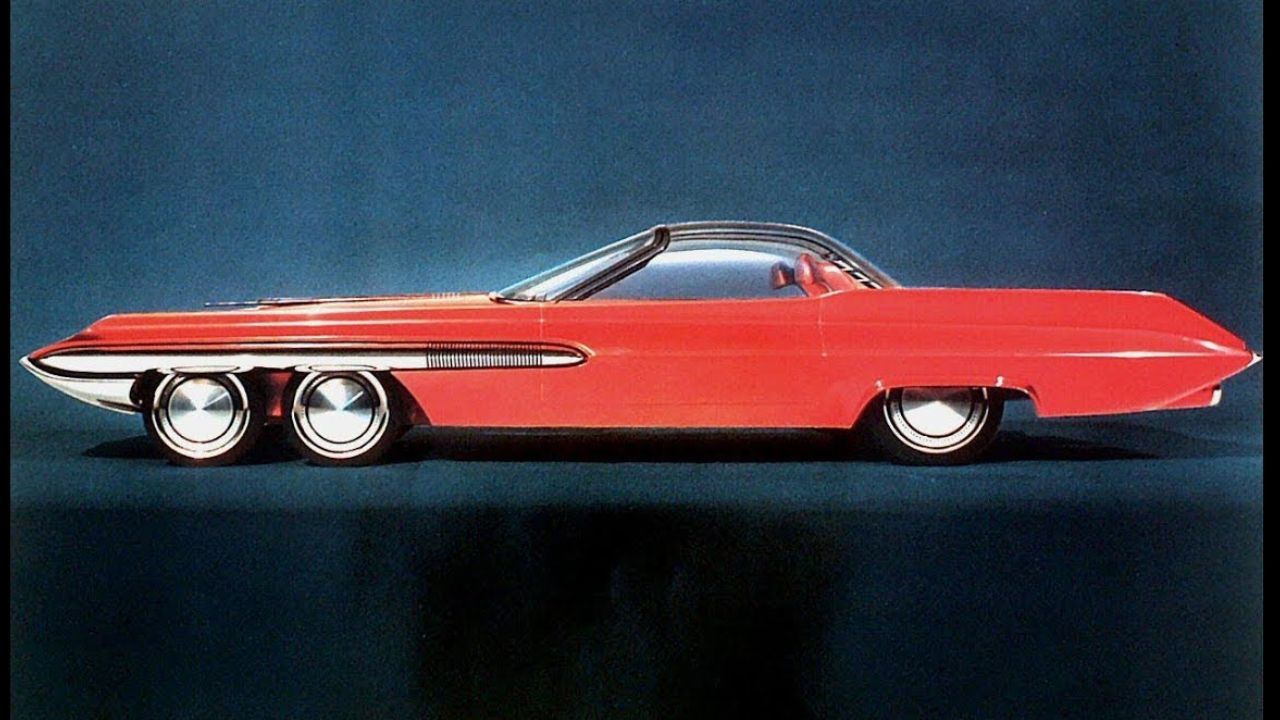
Even with the failure of the Nucleon, Ford did not give up. In 1962, the automaker revealed the Ford Seattle-ite XXI, an even bolder concept. The vehicle had six wheels and featured the possibility of swapping the body and engine as needed, ranging between 60 HP and 400 HP.
In addition to nuclear propulsion, the car incorporated futuristic innovations, such as a vehicle tracking system similar to today’s GPS. However, the exaggerated design and the idea of a portable nuclear reactor condemned the project to oblivion.
Studebaker-Packard Astral: The Nuclear Car with One Tire
Another equally bizarre project was the Studebaker-Packard Astral, presented at the Geneva Motor Show in 1958. This concept took absurdity to a new level: the car had only one wheel and relied on gyroscopes to maintain balance.
The proposal included an internal mini-nuclear reactor and a functioning system based on hydrogen fusion, making it even more impractical. The Astral was never taken seriously and ended up being just an extravagant design exercise. Today, the model can be seen at the Studebaker Museum in the United States.
The Barriers That Prevented Nuclear Cars from Becoming Reality
Nuclear car projects never got off the ground for several reasons, with the main ones being:
- High Cost: The development of a nuclear vehicle would require absurdly high investments, with no guarantee of commercial viability.
- Safety: Transporting a small nuclear reactor in a regular car was an unthinkable risk. In the event of an accident, the consequences would be catastrophic.
- Nonexistent Infrastructure: The idea of “refueling” uranium stations was impractical and dangerous.
- Impossible Miniaturization: Even the smallest nuclear reactors were still too large to be adapted to vehicles.
The Final Verdict: Why We Never Had Nuclear Cars?
In the end, nuclear technology failed to compete with conventional options. A modern diesel car can travel about 1,000 km on a full tank, while today’s electric cars offer viable and safe alternatives.
The dream of a nuclear car has died over time, and the legacy of these bizarre projects serves as a reminder of how far technological optimism can lead us. In the end, playing God doesn’t always result in good ideas.









-

3 pessoas reagiram a isso.