





 Portuguese
  English
  Spanish
  3 min of reading
  2 comments


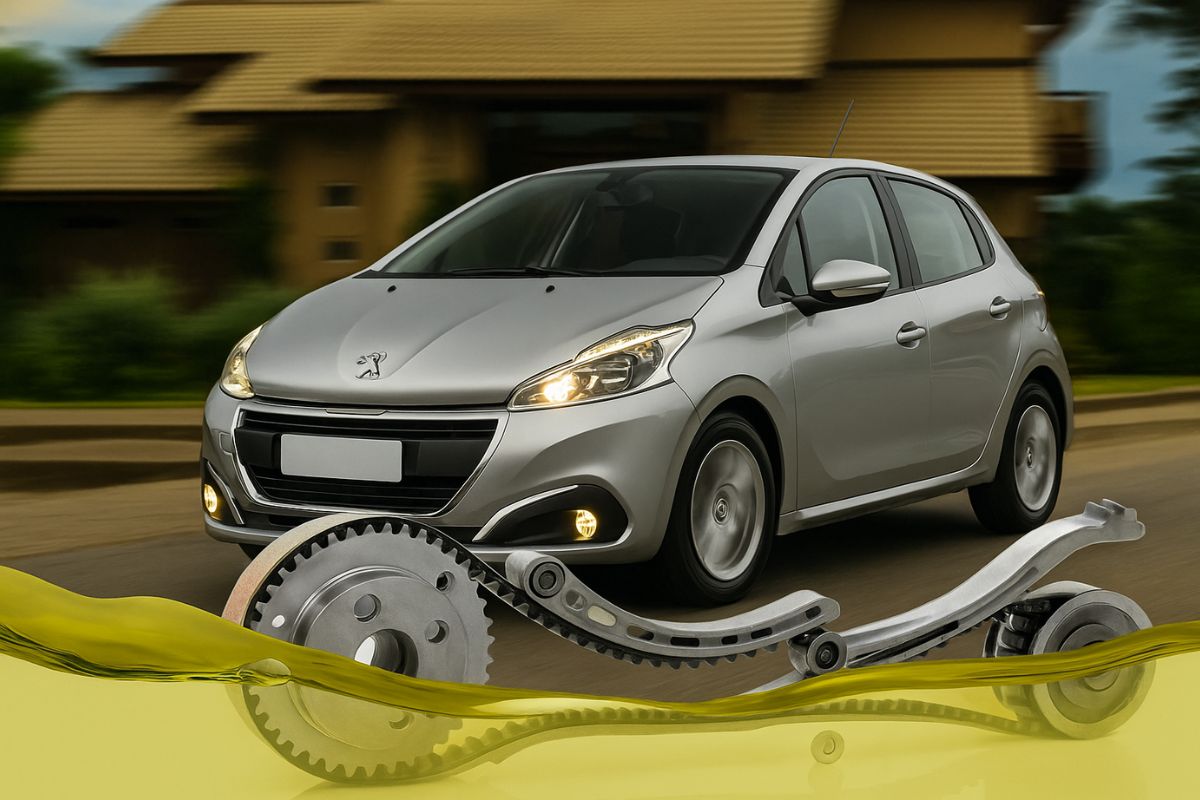

Ford Ka 1.0 and Peugeot 208 1.2 Puretech Introduced The Oil-Bathed Timing Belt In Volume Cars In Brazil. Learn About The Technology, Challenges, And Legacy.
The automotive industry constantly seeks innovations for more efficient and durable engines. In this scenario, the oil-bathed timing belt emerged as a promise. In Brazil, the first volume cars to adopt this technology were the Ford Ka 1.0 (starting in 2014) and the Peugeot 208 1.2 Puretech (around 2016).
Understand the journey of the oil-bathed timing belt in these pioneering models. We will analyze their characteristics, the problems faced, and the perception of this technology in the national market, based on technical information and reports.
What Is The Oil-Bathed Timing Belt And What Are Its Theoretical Advantages?
The oil-bathed timing belt, or “wet belt”, operates immersed in the engine’s lubricating oil. This differentiates it from traditional dry belts and metallic timing chains. Constant lubrication aims to reduce friction and wear.
-
OMODA & JAECOO grows in Europe in 2026 with an integrated strategy of sales, innovation, local production, and technological advancement in the United Kingdom, Italy, and Spain.
-
OMODA & JAECOO expands after-sales service in Brazil with competitive maintenance, a 7-year warranty, and high availability of parts for technological SUVs.
-
OMODA & JAECOO appoints Alessandra Souza as executive marketing director in Brazil and accelerates brand expansion with a focus on innovation, networking, and hybrid portfolio.

-
Jaecoo 7 with super hybrid SHS system exceeds 1,200 km of combined range with a 1.5 turbo engine, high-density battery, and intelligent energy management.

The theoretical advantages motivated its adoption. Manufacturers designed durability exceeding 200,000 km. A quieter engine operation was expected. Reduced internal friction could lead to greater efficiency and lower fuel consumption. However, these benefits depend on stringent maintenance. The need for specific oil is crucial, and deviations can compromise the system. Replacing the belt is also more complex and costly.
Ford Ka 1.0: The Pioneer Of The Oil-Bathed Timing Belt In Popular Cars In Brazil
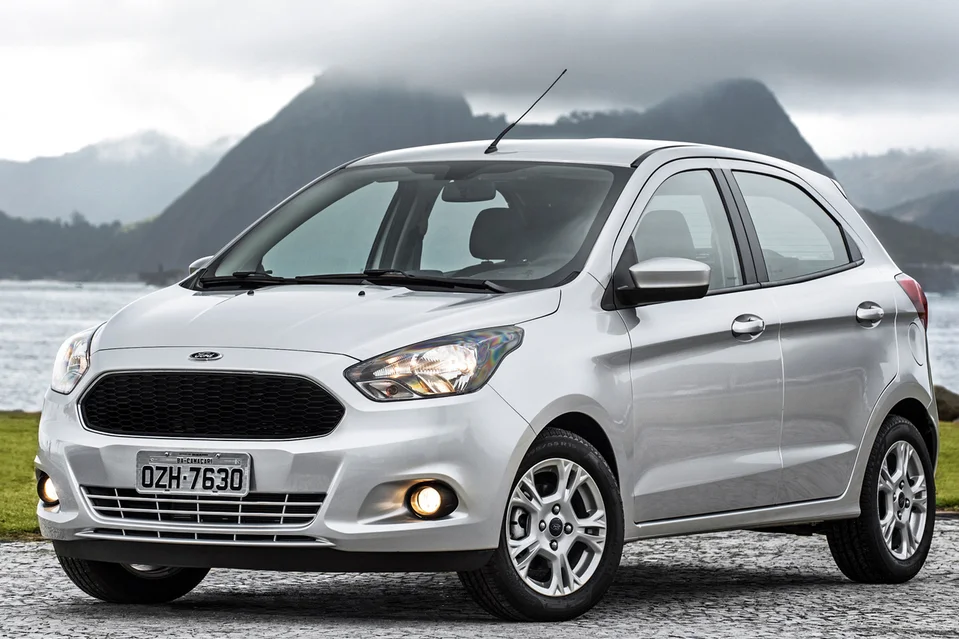
The Ford Ka 1.0, with a TiVCT three-cylinder engine, was launched in August 2014 (2015 model). It is the first volume car in Brazil with an oil-bathed timing belt. Ford positioned itself as a pioneer of this technology in the segment.
The declared durability of the belt was 240,000 km or 10 years. The use of specific Ford oil (e.g., SAE 5W-20 WSS-M2C948-B) was mandatory. Although the engine was praised, problems emerged. Reports indicate premature wear of the belt and clogging of the oil pump’s pick-up. Many cases were attributed to the use of incorrect oil, resulting in severe engine damage.
Peugeot 208 1.2 Puretech: The Arrival Of Technology At The PSA Group In Brazil
The PSA Group (Peugeot-Citroën) introduced the oil-bathed timing belt in Brazil around 2016. The models were the Peugeot 208 and the Citroën C3, with a 1.2 Puretech engine. This three-cylinder engine also required specific care.
PSA established a shorter replacement interval for the belt: 80,000 km or 6 years. The recommended oil was Total Quartz Ineo First 0W-30 (PSA B71 2302). Maintaining the Puretech system is complex, requiring special tools. As with the Fords, premature belt failures were associated with the use of inappropriate oil or neglected maintenance.
Expert Opinion: Challenges Of The Oil-Bathed Timing Belt In The Brazilian Context
Experts and technical analyses point to significant challenges of the oil-bathed timing belt in Brazil. The most common cause of problems is the use of oil outside specifications. The lack of knowledge about the criticality of specific additives, not just viscosity, has been fatal for many engines.
Inadequate maintenance practices, such as neglecting replacement intervals, also contributed. Oil contamination and the use of counterfeit products worsened the scenario. The perception of the technology has become controversial. Consumers and repairers have developed skepticism due to the high incidence of costly failures. The industry has learned that the introduction of advanced technologies requires consumer education and preparation of the service network.
Beyond The Pioneers
After the Ka 1.0, Ford expanded the use of the oil-bathed timing belt. The Ford Fiesta 1.0 EcoBoost (2016) and the EcoSport 1.5 Dragon adopted the system. The Ranger 2.0 Turbodiesel pickup and the Transit 2.0 EcoBlue also utilized the technology.
Other brands followed, such as Chevrolet with the Onix in 2019. However, the reputation of the “wet belt” in Brazil has been tarnished by initial problems. Phrases like “fear of this timing belt” illustrate the negative sentiment. The legacy is a warning: technological complexity needs to align with market and local maintenance realities.








Passando pano para “tecnologia” que não funciona
Kkkkk tentando coloca a culpa na Ford e Peugeot.🫢🫢🫢🫢🫢