





 Portuguese
  English
  Spanish
  4 min of reading
  15 comments


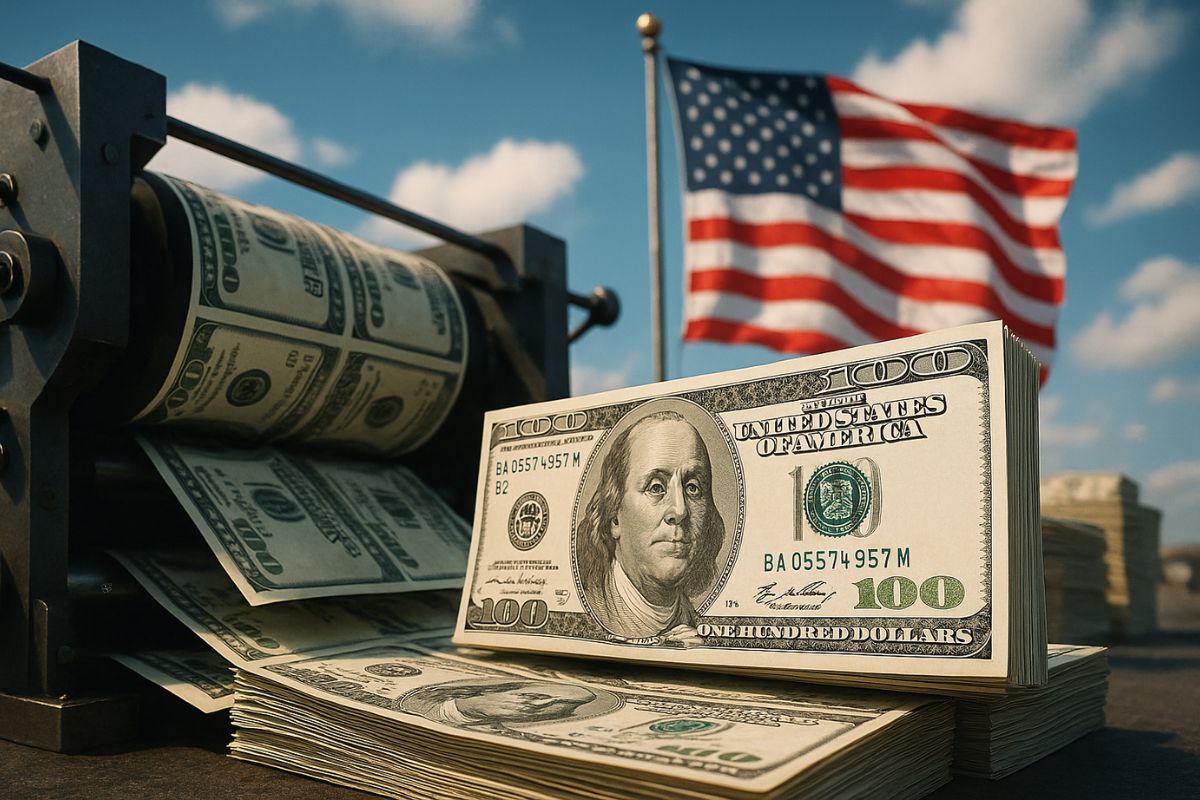


The United States Print Their Own Debt in Dollars That They Issue Themselves, Something Impossible for Any Other Country, Since the Dollar Is the Global Reserve Currency, Sustaining Historical Advantages, Current Challenges and Direct Impacts on the Global Economy
The United States Has a Rare Privilege in the International Scene: They Print Their Own Debt in Dollars, a Currency That They Control and That Also Serves as the Main Global Reserve. This Mechanism Guarantees the Country Access to Cheap and Continuous Financing, Expanding Its Capacity to Spend More Than It Produces and to Sustain Trade and Fiscal Deficits in an Unprecedented Manner.
This Arrangement Did Not Arise by Chance. It Is the Result of a Historical Construction Started After World War II and Consolidated In Times of Crisis, When the U.S. Managed to Keep the Dollar at the Center of the Financial System Even After the End of the Gold Standard. Today, This “Exorbitant Privilege” Generates Both Immediate Benefits for Washington and Growing Tensions in Other Parts of the World.
The Birth of the Dollar Privilege
The Genesis of This Power Dates Back to the Bretton Woods Agreement in 1944, When Representatives of 44 Countries Established That Their Currencies Would Be Pegged to the Dollar, and This, in Turn, to Gold.
-
50 viaducts, 4 tunnels, 28 bridges, and 40 kilometers of bike paths: BR-262 in Espírito Santo will receive 8.6 billion reais for the largest engineering project in the state’s history, inspired by the Immigrant Highway in São Paulo.

-
Brazil produces too much clean energy and doesn’t know what to do with it: over 20% of solar and wind capacity was wasted in 2025 while investors flee and 509 renewable generation projects were abandoned in the last year.

-
Piauí will produce a new fuel that replaces diesel without needing to change anything in the truck’s engine and reduces pollutant gas emissions by half: truck drivers from all over the Northeast are already celebrating the news that will arrive later this decade.

-
A new Brazilian shopping center worth R$ 400 million will be built in an area equivalent to more than 4 football fields, featuring 90 stores, 5 cinemas, a supermarket, a college, and parking for 1,700 cars, potentially generating 3,000 jobs.


This Guarantee of Convertibility into Gold at US$ 35 per Ounce Offered the World Confidence in the Dollar, Creating a Solid International Demand.
In the Post-War Period, The Dollar Became Indispensable for Global Trade and for the Financial Operations of International Organizations Such as the IMF and the World Bank.
This Centrality Allowed the U.S. to Finance Its Deficits Without Facing the Same Type of Pressure That Other Countries Experienced.
From the Gold Standard to Floating Exchange
The Pressure on the System Grew as the U.S. Increased Its Spending on Wars and Social Programs in the 1960s.
In 1971, President Richard Nixon Ended the Convertibility of the Dollar into Gold, Unilaterally Ending the Basis of the Bretton Woods Arrangement.
Despite This, the Dollar Did Not Lose Its Strength. Starting in the 1970s, the U.S. Entered into Agreements with Saudi Arabia to Price Oil in Dollars, Consolidating the So-Called Petrodollar.
This Move Forced Countries Around the World to Accumulate Dollar Reserves to Purchase Energy, Further Reinforcing the Currency’s Hegemony.
How the U.S. Finances Its Debt Today
Currently, When the U.S. Government Needs Resources, It Issues Treasury Securities – Assets Considered the Safest in the World.
These Securities Are Bought by Private Investors, Banks, and Foreign Governments, Who See Treasuries as a Stable Store of Value.
The Federal Reserve, the U.S. Central Bank, Plays a Strategic Role in This Process. By Buying Securities on the Open Market, the Fed Injects Liquidity, Influences Interest Rates, and Stabilizes the Financial System.
Although It Does Not Directly Provide Money to the Government, This Mechanism Ensures That the U.S. Always Has Buyers for Its Debt.
The Exorbitant Privilege and Its Global Effects
This System Generates Unique Advantages for the U.S. The Country Can Consume More Than It Produces and Finance Deficits Easily, as It Will Always Find Demand for Its Securities.
Additionally, Interest Rates in the U.S. Tend to Be Lower Than in Economies That Do Not Control a Reserve Currency.
But There Is a Less Visible Side: American Monetary Policy Directly Impacts the Entire World. When the Fed Raises Interest Rates, the Cost of Borrowing Increases in Emerging Countries, Triggers Capital Flight, and Pressures Local Currencies.
On the Other Hand, Decisions to Expand Monetary Policy Increase Global Liquidity, Fueling Cycles of Credit and Indebtedness Across Various Continents.
Dilemmas and Risks of the System
The So-Called Triffin Dilemma Helps Explain the Structural Contradiction of the Dollar: To Meet Global Demand for the Currency, the U.S. Must Generate Deficits; But Excessive Deficits Erode Confidence in the Currency.
Today, With a Debt Exceeding US$ 36 Trillion, There Is Growing Concern About How Long This Model Can Sustain Itself.
Moreover, the Dollar Has Become a Geopolitical Weapon.
Control Over the International Financial System Allows Washington to Impose Sanctions and Isolate Countries from Global Transactions, Reinforcing Its Position of Power While Also Stimulating Rivals Like China and Russia to Seek Alternatives Such as Using the Yuan in Bilateral Transactions or Discussing Common Currencies in Regional Blocs.
The Future of Dollar Hegemony
Although the Dollar Remains Dominant, Its Position Faces Challenges.
The Gradual Diversification of Reserves into Alternative Currencies, the Growth of Emerging Economies, and Political Disputes Within the U.S. Over the Debt Ceiling Fuel Doubts About the Sustainability of Its Supremacy.
What Is at Stake Is Not Just the Fate of the American Economy but the Global Financial Balance.
The Possible Loss of the Dollar’s Monopoly as an International Reserve Would Transform the Global Monetary System, Redistributing Costs, Risks, and Powers Among Nations.
The Fact That the U.S. Prints Its Own Debt in Dollars Remains the Basis of Its Economic and Political Power.
But the More Its Debt Grows and the More the Dollar Is Used as an External Pressure Tool, the Greater the Debate About the Future of This Privilege.
Do You Believe That This U.S. Privilege Unfairly Strengthens Its Position in the World, or Do You Think Dollar Hegemony Still Guarantees Stability for the Global Economy? Share Your Opinion in the Comments — We Want to Hear from Those Who Experience This Impact Firsthand.









Vocês chamam isso de ‘hegemonia’, quando ‘imprimir a própria dívida’ na prática é um mecanismo de dominação global, vocês dão a entender que os EUA emitem títulos e imprimem em dólar como ‘qualquer outra país poderia fazer’, mas omitem o essencial: que nenhum outro país pode! Quando os EUA emitem dívida, o mundo compra, se qualquer outro país tenta, o mercado pune (inflação, fuga de capital, colapso da moeda). O Federal Reserve na realidade é o motor da Matrix financeira. Vocês descrevem o FED como ‘banco central estabilizador’, e ignoram o caráter privado de origem e interligação com os grandes bancos de Wall Street (JP Morgan, Citigroup, Goldman Sachs e etc) que lucram com ciclos econômicos artificiais criados pelo FED de expansão e contração, imprimindo dinheiro para inflar ativos que enriquecem bancos e essas grandes instituições, e depois elevando juros para provocar crises que permitem a eles recomprar tudo mais barato. Quando o FED aumenta os juros, países endividados em dólar (como Brasil, Argentina, Turquia, etc) veem suas dívidas explodirem, o capital foge, as moedas locais despencam, e os governos precisam pedir socorro ao FMI, que adivinha… Impõe políticas de austeridade que abrem ainda mais espaço para corporações americanas entrarem. Vocês citam ‘impactos globais’, mas não mostram que isso se trata de um mecanismo de dependência institucionalizado. O texto de vocês é ‘bonitinho’ e ‘equilibrado’, mas ignora a engrenagem oculta que transforma o privilégio exorbitante em ferramenta de dominação monetária global
A liderança do Dollar e teu lastro esta atrelada a confiança e solides do mercado americanos. Suas indústrias, ciência, tecnologia e inovações. O dollar só poderá perder espaço para uma possível utilização mundial de moedas digitais como o Bitcoin ou a total superação das indústrias americanas ou a quebra total do mercado Americano. Fora isto é utopia dizer que o Brics ira se consolidar com uma moeda criada por eles! Em algum momento a conta não vai bater, alguém vai sobrar com papel podre e nao vai conseguir fazer troca por dollar.
Você não consegue simplesmente tentar impor a confiança do teu valor ao mercado, sem lastro do que você representa. Ninguém te empresta dinheiro pelo que simplesmente voce diz ser, e sim pelo que apresenta. Confiança não se compra, assim como imprimir dinheiro sem latro, vai ocasionar em perda de valor.
Acredito que esse sistema financeiro foi necessário para nossa evolução como sociedade capitalista uma vez que história mostra que acumulação de capital que fez nossos saltos de bem estar social , e com as novas tecnologias chegando IA e robótica e difícil prever, acredito mais que antes do fim deste ciclo piramidal dominado pelo EUA deve ocorrer a redistribuição digital de renda digital d excedente de produção tecnológica ,só assim após este cenário e possível a evolução do sistema atual.
Bem estar social para qual parcela da população? Porquê a maioria não consegue pagar nem as contas básicas de sobrevivência…
Ué só olha a história o bloco econômico da URSS virou uma decadência, os aliados dos EUA no pós guerra prosperaram , Japão, Coreia do sul , Europa . Ouve sim uma evolução social .. tem falcatrua , corrupção, tem sabemos que tem ,.mas ainda foi o melhor cenário..