





 Portuguese
  English
  Spanish
  3 min of reading
  0 comments


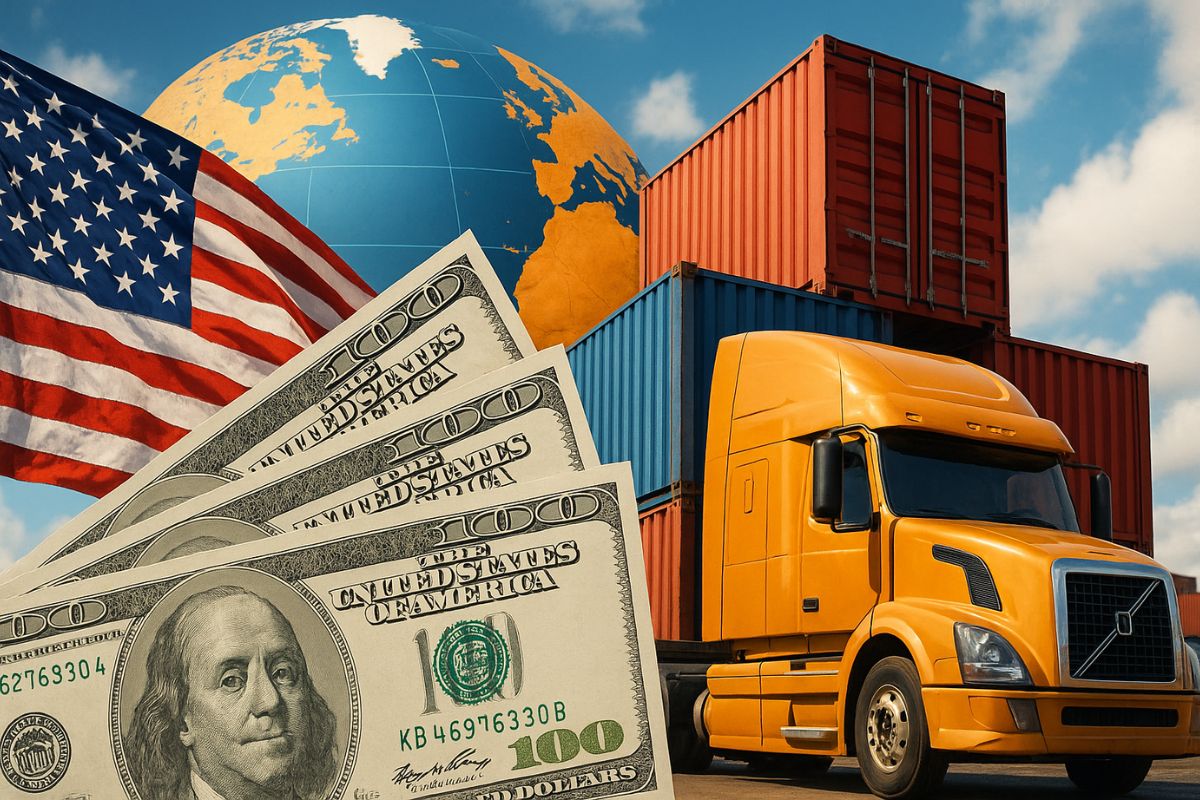
The Persistence of The U.S. Maintains the World’s Largest Trade Deficit Is Linked to the Dollar’s Role as a Global Currency and the Privilege of Issuing the Currency Used in International Transactions, Allowing the Country to Buy More Than It Sells Without Compromising Its Immediate Economic Position
The United States continues to have the largest trade deficit on the planet, importing more goods and services than it exports. In July 2025, the negative balance of the American trade balance reached US$ 78.3 billion, driven by rising imports and strengthened domestic demand.
This imbalance, which for other countries would represent a sign of fragility, is sustained because the U.S. dollar remains the primary reserve and global trade currency. The dominant position of the currency allows the U.S. to finance recurring deficits by issuing the very currency that the whole world needs to do business.
How the U.S. Trade Deficit Works
The trade deficit occurs when a country’s imports exceed its exports.
-
50 viaducts, 4 tunnels, 28 bridges, and 40 kilometers of bike paths: BR-262 in Espírito Santo will receive 8.6 billion reais for the largest engineering project in the state’s history, inspired by the Immigrant Highway in São Paulo.

-
Brazil produces too much clean energy and doesn’t know what to do with it: over 20% of solar and wind capacity was wasted in 2025 while investors flee and 509 renewable generation projects were abandoned in the last year.

-
Piauí will produce a new fuel that replaces diesel without needing to change anything in the truck’s engine and reduces pollutant gas emissions by half: truck drivers from all over the Northeast are already celebrating the news that will arrive later this decade.

-
A new Brazilian shopping center worth R$ 400 million will be built in an area equivalent to more than 4 football fields, featuring 90 stores, 5 cinemas, a supermarket, a college, and parking for 1,700 cars, potentially generating 3,000 jobs.


In the case of the U.S., external purchases consistently exceed sales, generating a negative balance that, in 2025, remains between US$ 60 and US$ 80 billion per month.
In March of that year, the record reached US$ 136 billion, according to the Department of Commerce.
The difference is covered by the issuance of bonds and by international confidence in the dollar.
Other countries accept to finance the U.S. by buying these securities because they need dollars for their own business operations.
This cycle keeps the global engine running, even as the American deficit grows.
The Role of the Dollar as a Global Reserve Currency
The dominance of the dollar arose after World War II, with the Bretton Woods agreements, and was consolidated in the following decades.
Currently, about 46% of global international reserves are held in dollars, according to IMF data for the first half of 2025, although this share has declined from 60% recorded in 2015.
Even in decline, the dollar remains the primary reference in international transactions, especially in strategic commodities like oil, gas, and grains.
To import these products, countries must first acquire dollars, which maintains a permanent demand for the American currency.
The “Exorbitant Privilege” of the United States
This mechanism is known as the “exorbitant privilege”, a term coined by French economist Valéry Giscard d’Estaing in the 1960s.
It describes the ability of the U.S. to issue its own currency to pay for imports and finance external debts.
While other countries need to balance their external accounts, the United States can buy more than it produces without immediate risk of insolvency, as the world accepts the dollar as payment.
This sustains a high level of consumption, but also increases global dependence on American economic stability.
Long-Term Risks and Changes in the Global Landscape
Despite the apparent comfort, the model presents risks.
The U.S. public debt surpassed US$ 36 trillion in 2025, raising concerns about the sustainability of this system.
The gradual decline of the dollar’s share in international reserves and the search for alternatives, such as the Chinese yuan and gold, indicate a slow movement toward monetary diversification.
Some countries, including Brazil, have advocated for bilateral trade agreements that reduce dependence on the dollar, especially within blocs such as BRICS.
The gradual loss of currency hegemony could, in the long term, limit the ability of the U.S. to sustain such large deficits without inflationary or fiscal consequences.









-

-

-

-

-

-

78 pessoas reagiram a isso.