





 Portuguese
  English
  Spanish
  4 min of reading
  0 comments



A U.S. Startup Aims to Tackle This Challenge with Satellites Equipped with Mirrors Up to 55 Meters to Reflect Sunlight onto Ground Power Plants.
Solar energy has a significant obstacle: when the sun sets, the panels stop generating electricity. But an American startup called Reflect Orbital wants to change that by placing mirrors in space. The plan? Reflect sunlight to Earth at night and extend the energy production of photovoltaic panels during critical times, such as dawn and dusk.
A Bold Idea with Million-Dollar Financial Support
Reflect Orbital, based in California, has just received a $20 million investment to turn the concept into reality. The proposal is to create a constellation of satellites equipped with enormous mirrors that can redirect sunlight to specific points on the planet on demand.
The first step in this journey begins in 2026, with the launch of a test satellite. It will carry an 18 x 18 meter mirror made of mylar plastic — a lightweight, durable material with good reflective capacity. The goal is to test the technical viability of the idea and measure its practical effects on the ground.
-
A “silent skill” is allowing Brazilians to earn up to R$ 22,000 per month without a degree and become indispensable for companies that rely on millions of data to survive.

-
Researchers at the Toyota Research Institute found that if a human uses robotic arms to flip a pancake 300 times in an afternoon, the robot learns to do it on its own the next morning, and this is currently the most promising method to solve the biggest bottleneck in modern robotics.

-
Goodbye iron: a common item in households is starting to lose space to technology that smooths clothes in minutes without an ironing board and with less energy consumption.

-
Antarctica reveals an unusual clue high in the Hudson Mountains, and what appeared to be just an isolated rock began to expose a secret hidden under the ice for ages.


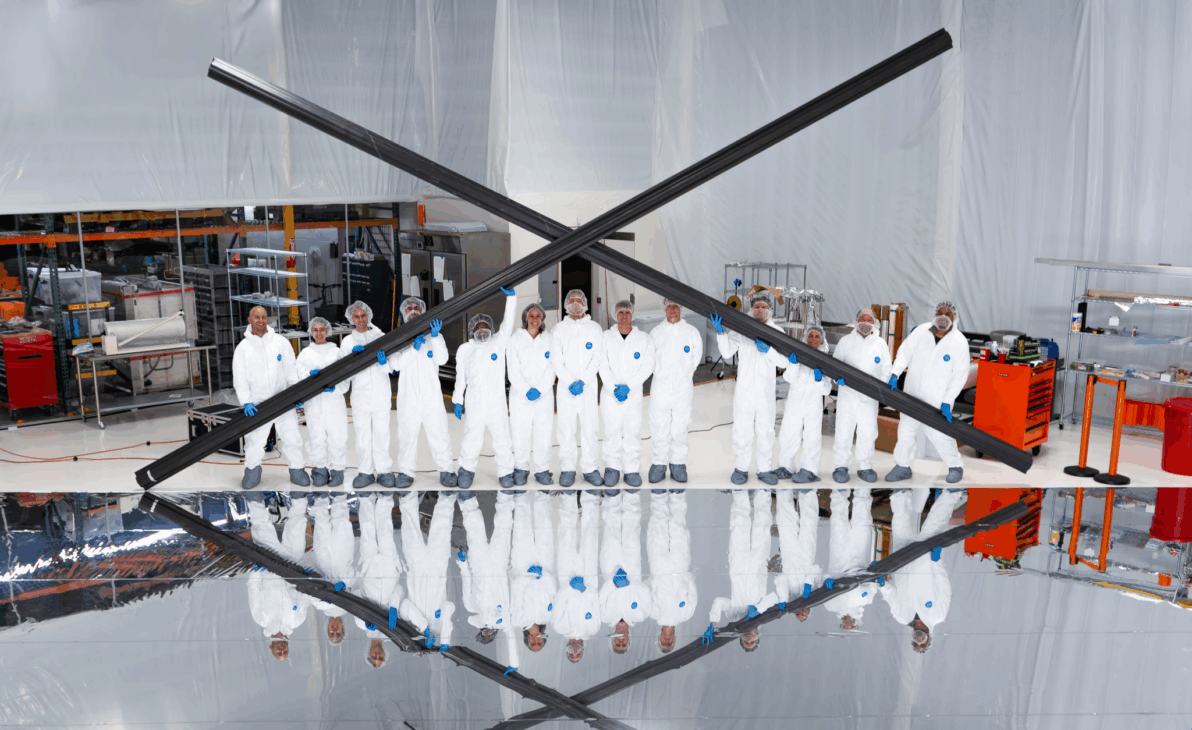
How the “Orbital Mirrors” Work
The technology is based on a relatively simple concept: extending the useful time of sunlight that photovoltaic panels receive each day, without resorting to risky methods like lasers or microwaves. By positioning mirrors in space, in sync orbit with the sun, the satellites can reflect sunlight to power plants here on Earth, even outside conventional sunshine hours.
During initial tests, Reflect Orbital used a mirror attached to a high-altitude balloon at 240 meters above a solar farm. The experiment generated 500 watts of energy per square meter, even with only half the light intensity of a normal day.
If the concept is validated in orbit, the startup plans to launch an initial network of 57 satellites operating at about 600 km altitude. This configuration would allow an additional 30 minutes of sunlight per day for specific solar plants — a gain that may seem small, but represents a significant impact on energy production and profits for companies in the sector.
A Soft But Strategic Glow
The expected brightness from the first satellite will not be enough to illuminate a city, but it is considerable from a technical standpoint. With brightness close to 0.1 lux — equivalent to that of a full moon night — the light will be discreet yet sufficient to activate photovoltaic panels in specific situations.
The inaugural mission will also have a symbolic role: illuminating ten famous landmarks at night to generate media coverage and public interest. The startup wants people to get used to the idea of requesting sunlight as if they were placing a delivery order.
Ambitious Plans for the Future
The long-term goal of Reflect Orbital is bold. The company plans to launch thousands of satellites with even larger mirrors — up to 55 x 55 meters. If successful, the combined brightness of these reflectors could reach levels comparable to that of the sun at noon.
This constellation would allow solar energy production to remain active even after sunset, especially in regions where electricity costs rise during peak hours. Additionally, it would help mitigate the intermittency of solar energy, one of the main barriers to its large-scale expansion.
More Than Energy: Diverse Uses for Orbital Light
Although the main focus is to boost the generation of clean energy, the startup is also eyeing other practical — and profitable — applications. Since its founding in 2021, the company has already received over 260,000 requests for solar light from space, coming from 157 countries.
Possible uses include lighting for nighttime construction sites, public events, disaster relief efforts in affected areas, and even military operations. The CEO of the company, Ben Nowack, explained in an interview that the service will be simple: “You go to our website, enter your GPS coordinates, and choose when you want the sunlight. We send it.”
The proposal may sound like science fiction, but it is already in advanced stages of development with robust financial backing. If successful, Reflect Orbital could be responsible for a silent revolution — starting with a soft beam of light reflected hundreds of kilometers above the surface.







Seja o primeiro a reagir!