





 Portuguese
  English
  Spanish
  4 min of reading
  0 comments


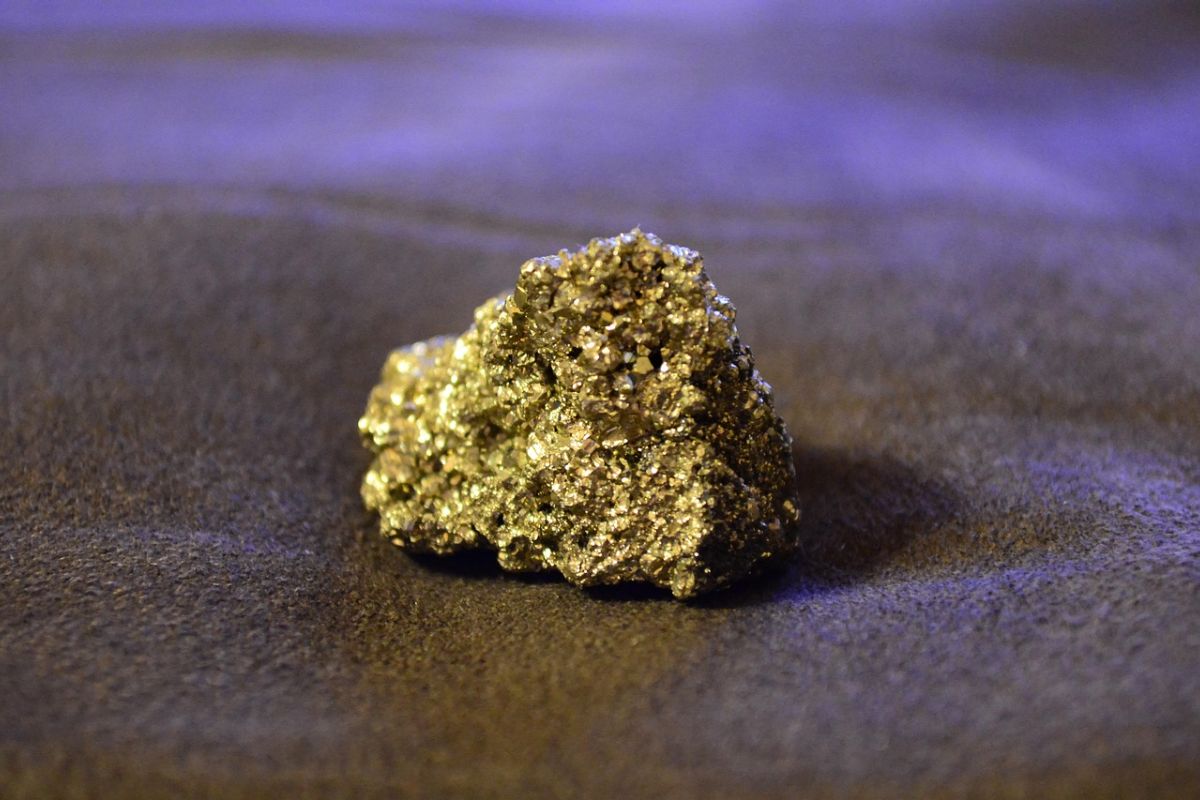
In The Midst Of The Gold Rush In Minas Gerais, Especially In The Historic Brazilian City Of Ouro Preto, A Mineral With Deceptive Luster, Pyrite, Tested The Luck And Knowledge Of Generations. Discover The “Geological Trick”.
Nowhere in Brazil is this story more emblematic than in Minas Gerais, especially in cities like the former Vila Rica, now Ouro Preto. During the colonial period, this Brazilian city was one of the largest gold-producing centers in the world, and pyrite, with its metallic luster, was a constant trap for miners.
Since ancient times, gold has exerted a magnetic fascination on humanity, symbolizing wealth and power. This greed has driven numerous “gold rushes,” but it has also led to great disappointments, especially with what’s called “fool’s gold.” This popular term refers to minerals that mimic gold, with pyrite, an iron sulfide, being the most notorious protagonist of this illusion.
The Fascination With Gold And The Trap Of Pyrite In An Emblematic Brazilian City
Gold, with its brilliant color and rarity, has always been coveted. This relentless pursuit, however, frequently stumbled upon “fool’s gold.” Pyrite, with its metallic sheen and yellowish tone, can easily deceive a careless eye. Its resemblance to gold is not superficial; the geological conditions that favor the formation of gold often also promote the crystallization of pyrite, leading to its association in mineral deposits.
-
A couple buys an old chalet, breaks the kitchen floor for renovation, and finds over a thousand coins of gold and silver hidden since the English Civil War over 4 centuries ago.

-
Rigid bags with their days numbered: new trend prioritizes comfort in 2026.

-
YouTuber creates an excavator equipped with a giant 4.5-meter sword to challenge his brother to a rematch, and the invention quickly goes viral on social media.
-
The U.S. Army surprises the world by presenting the UH-60MX Black Hawk helicopter capable of flying without pilots, controlled by a tablet, featuring the MATRIX system, smart sensors, and full autonomy in real combat and rescue missions.


Minas Gerais, and in particular the Brazilian city of Ouro Preto, was the epicenter of gold production in colonial Brazil, accounting for half of the world’s production between the 16th and 18th centuries. In this “gold fever,” pyrite was always lurking. The intense greed and pressure from the Portuguese Crown for the “fifth” (tax on gold) made miners more susceptible to deception, especially the less experienced ones.
Pyrite Versus Real Gold
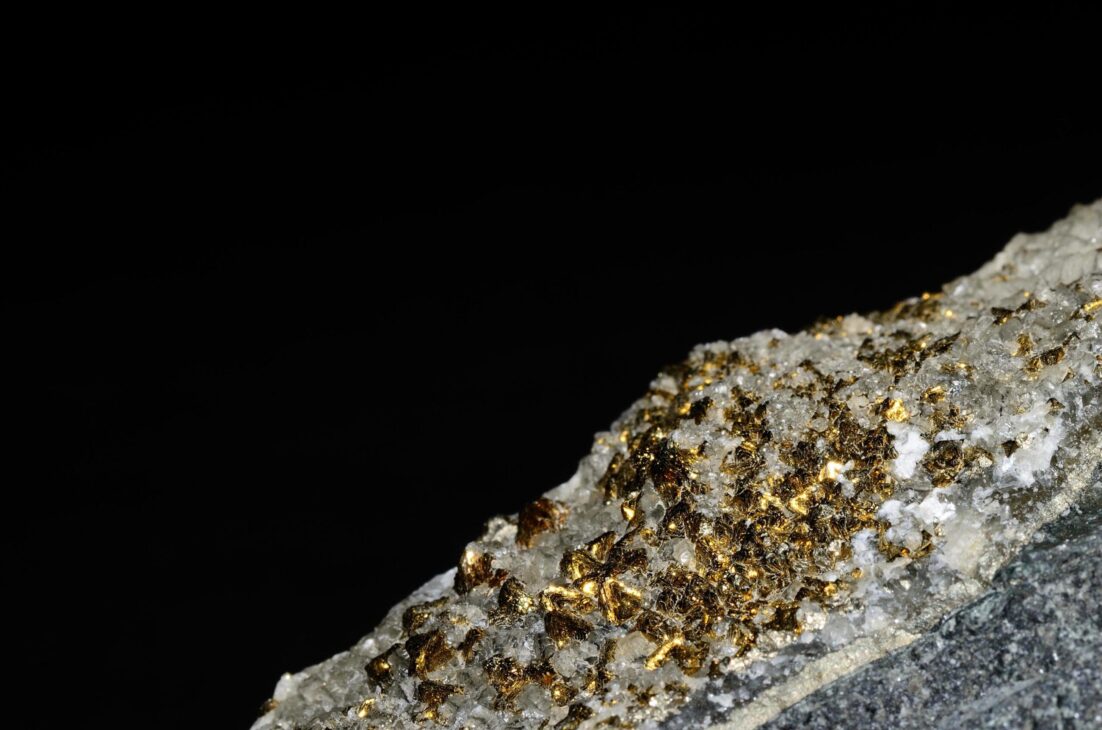
The confusion between pyrite and gold can be resolved by analyzing their properties. Real gold has a deep and consistent golden-yellow color, while pyrite is brass-yellow and can have greenish shades or iridescent patina. A crucial test is the streak: when scratched on unglazed porcelain, gold leaves a yellow-golden streak; pyrite leaves a black-green or black-brown streak, tests that were not carried out at the beginning of mining in the Brazilian city.
As for hardness (Mohs scale), gold is soft (2.5-3), and can be scratched by a knife. Pyrite is hard (6-6.5), not being scratched by a knife and able to scratch glass. In terms of density, gold (approx. 19.3 g/cm³) is nearly four times heavier than pyrite (4.8-5.1 g/cm³). Pyrite forms well-defined cubic crystals; gold rarely forms visible crystals, appearing as nuggets or irregular grains. Fundamentally, gold is malleable (can be flattened with a hammer), while pyrite is brittle (shatters).
The “Trick” Of Geology: Why Gold And Pyrite Frequently Appear Together?
Gold and pyrite are often found in the same geological environments, such as hydrothermal quartz veins and alluvial deposits (placers). Hot hydrothermal fluids can precipitate both gold and pyrite (the most common sulfide in the Earth’s crust) when encountering favorable conditions. In alluvial deposits, formed by erosion and river transport, both minerals can concentrate. Mining in the Brazilian city of Ouro Preto, in its early days, focused intensely on these deposits.
There is also gold-bearing pyrite, where gold occurs as microscopic inclusions within pyrite crystals. In these cases, pyrite is technically an ore of gold, but the metal cannot be recovered by traditional mining methods. Weathering also influences: pyrite oxidizes easily, forming iron oxides (limonite, goethite), which can be confused with fine gold. Gold, being resistant, usually maintains its luster, though it may have thin films of oxides, as in the case of the “black gold” found in the Ouro Preto region.
The Gold Fever In The Brazilian City Of Minas Gerais And The Ubiquity Of “Fool’s Gold” In The Lives Of Miners
The history of the Brazilian city of Ouro Preto and Minas Gerais is linked to the exploration of gold in the 17th and 18th centuries. This rush attracted a massive influx of people. Although there are not many nominal accounts of miners deceived by pyrite, the persistence of the term “fool’s gold” highlights the frequency of these deceptions. The visual similarity led to constant confusions, especially in a rudimentary mining environment.
For the miner, confusing pyrite with gold meant wasting time, exhausting effort, and scarce resources. The disillusionment was a harsh blow. On the other hand, the repetition of these deceptions drove the development of valuable empirical knowledge on how to distinguish the minerals, a crucial skill for survival in mining.
The Legacy Of Pyrite: From Deception To Scientific Knowledge And Its Real Utility

The experience with “fool’s gold” marked the popular imagination in Brazilian cities, present in legends like that of the Mother of Gold, a mythical entity that protects deposits and whose deceptive shine can lead to disaster, echoing the disillusionment with pyrite. The need to distinguish false gold spurred practical mineralogical knowledge. Over time, scientific studies consolidated the differences.
Despite its bad reputation, pyrite has economic value. Its main use is as a sulfur source for the production of sulfuric acid, a vital industrial input. It can also be explored as a gold ore (gold-bearing pyrite) through specific metallurgical processes or used as an ornamental stone and by collectors. Institutions like the Geological Service of Brazil (SGB/CPRM) are crucial for disseminating knowledge about mineral resources, helping to avoid deceptions and promoting more efficient mining.






Seja o primeiro a reagir!