





 Portuguese
  English
  Spanish
  3 min of reading
  0 comments


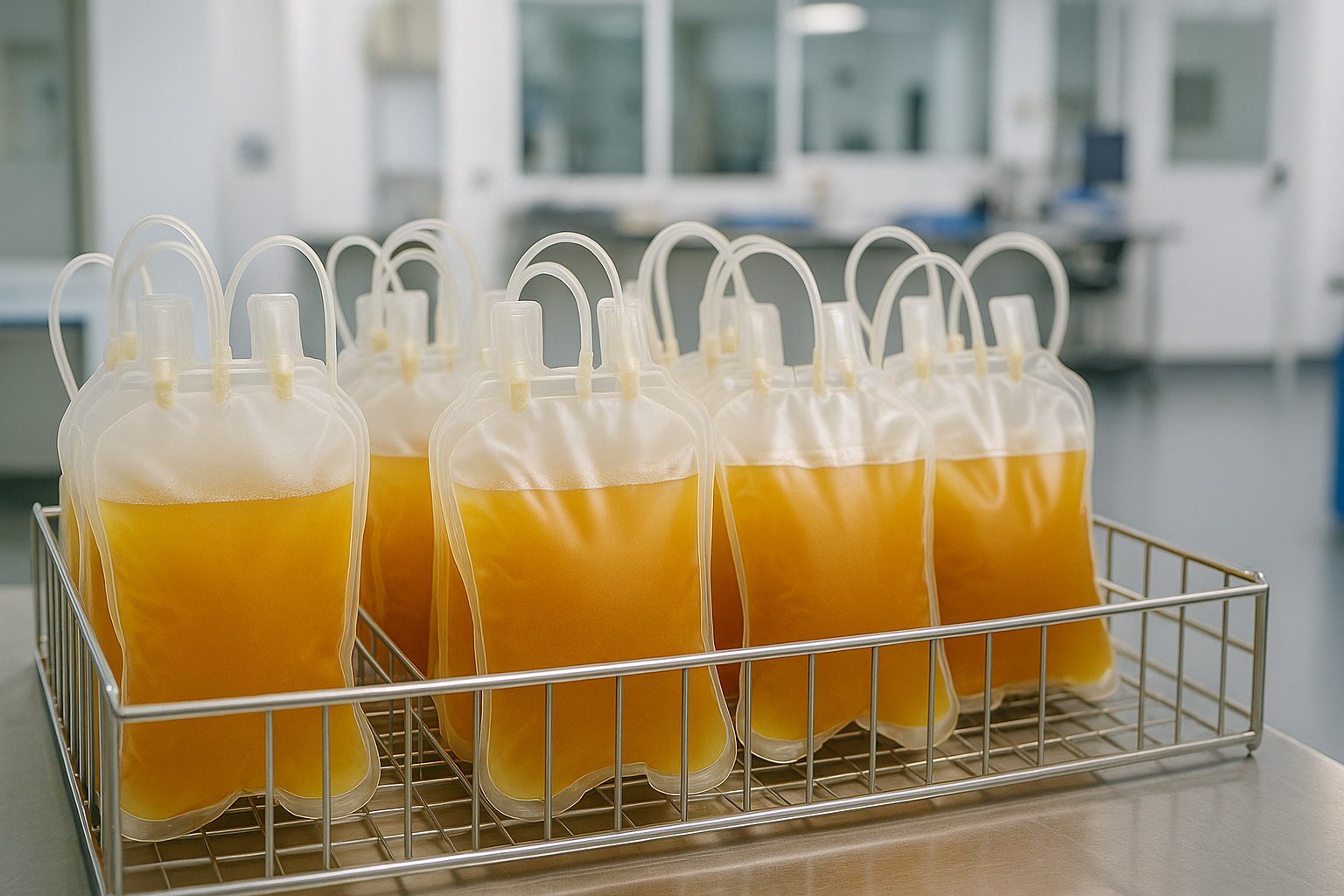
PAC Invests R$ 116 Million in Plasma Storage and Accelerates the Future of Science in Brazil. See How Brazil Wants to Change Health.
PAC Accelerates Historic Investment and Transforms Plasma Storage in Brazil
The Brazilian Government decided to urgently modernize the plasma storage across the country. The plan injects R$ 116 million through the PAC, enhancing the structure of 125 blood centers and reaching 22 states.
The measure comes into effect immediately, as the demand for hemoderivatives is growing and the country still depends on imports. Thus, the government wants to ensure more efficiency, more autonomy, and a future sustained by science.
The investment makes it possible to increase the projected plasma volume for 2025 by more than 27%. The goal is to reach over 300 thousand liters, a number essential to strengthen the production of medications such as immunoglobulin and albumin. This way, the country strengthens Hemobrás and reduces vulnerabilities.
-
Millions of people have been eating yam for centuries without knowing that this humble tuber contains a compound called diosgenin, which scientists have now discovered can improve memory and help control blood sugar levels.

-
Scientists from an international project drill 1,800 meters of ice in Antarctica using hot water and discover details about one of the most intriguing places on planet Earth.

-
Seen from space, a colossal volcano nearly 5,000 meters high in Russia has released 1,600 km of smoke over the Pacific, forming “devil’s horns” of lava and revealing the brutal force of the Ring of Fire.

-
Expedition 501: Scientists drill into the ocean floor and discover a giant reserve of fresh water hidden beneath the sea, extracting nearly 50,000 liters and revealing an invisible system that could reshape the map of water scarcity.


PAC and the Brazilian Government Propel Science
The PAC has begun delivering 604 modern pieces of equipment. These include freezers, ultrafreezers, and blast freezers installed to qualify the process. They prevent losses, increase the utilization of donations, and expand the network’s capacity.
The advancement is strategic. The plasma storage defined by the government breaks old limitations and raises the quality standard of the collected material. This way, the units begin to operate with a structure equivalent to that used by major international centers.
“The investment represents a strategic advancement in qualifying the technological park of the Blood Network,” stated Luciana Carlos, general coordinator of Blood and Hemoderivatives. She emphasized that the initiative reduces external dependency and strengthens the country’s self-sufficiency.
Plasma Storage Receives High-Tech Equipment
Plasma is the liquid part of the blood. It transports proteins and essential cells for various treatments. Therefore, it requires rapid freezing and strict control.
The new equipment guarantees this standard. Additionally, it ensures that each liter collected returns to the SUS as an essential medication. The country can thus make the most of the donations and meet patients with different clinical needs.
Accelerated Deliveries and Ongoing Installations
The deliveries began in October. The first blood centers have already received the devices. By the end of November, 93 new units will arrive at facilities in ten states, including São Paulo, Bahia, and Minas Gerais.
The supplying company installs everything and conducts technical tests. Moreover, local teams undergo training to operate the system safely and efficiently.
For Henrique Chaves, director of the New PAC in Health, modernization changes the reality of the SUS.
“The New PAC has a structural role,” he said. According to Chaves, the new equipment makes the network more efficient and better prepared for current demands.
Science and Future Guiding Health Sovereignty
The expansion of plasma storage strengthens the entire blood supply chain. Each step, from collection to final medication, now operates with higher quality. This improves access to treatments and reduces the risk of shortages.
The deputy secretary of the PAC, Fernanda Naves, reinforces this vision.
“With the expansion of plasma supply, Brazil reduces import dependency and strengthens health sovereignty,” she stated.
With this, the Brazilian Government transforms investment into sanitary security. Moreover, it envisions a future in which science supports a more modern, stronger, and more autonomous health system.









Seja o primeiro a reagir!