





 Portuguese
  English
  Spanish
  4 min of reading
  0 comments


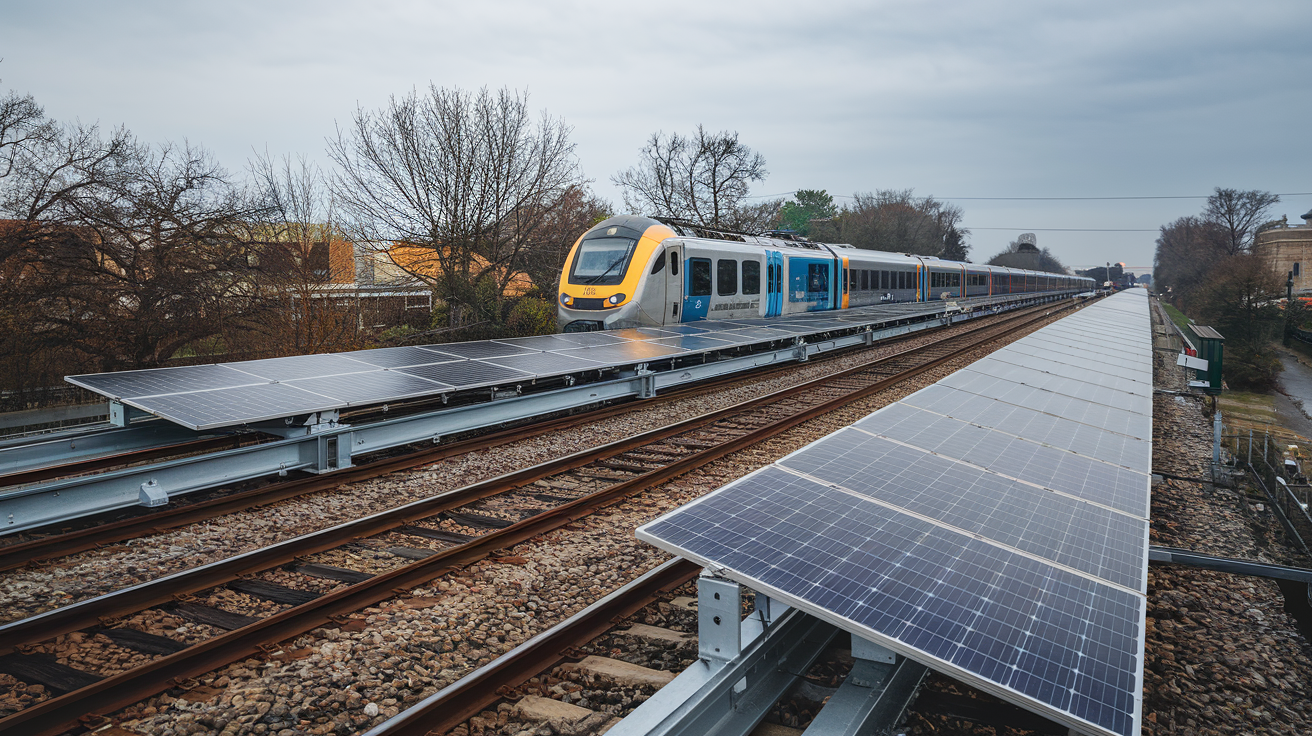
Solveig Project Can Transform 32,000 Kilometers of Railways into Clean Electricity Corridors, Uniting Sustainable Mobility and Environmental Preservation.
France has taken a bold step in integrating railway infrastructure with solar energy. Through the national operator SNCF and its subsidiary AREP, the Solveig Project has been launched, proposing the use of train tracks as a basis for solar panel installation, aiming to increase clean electricity production without compromising landscapes or agricultural areas.
Inspired by an initiative from Switzerland, the French proposal can transform over 32,000 kilometers of railway lines into true corridors for solar energy generation. With the growing demand for sustainable alternatives and the search for low visual impact solutions, the project represents a promising innovation for the future of mobility and the environment.
Solar Panels on Tracks: Clean Energy with Low Aesthetic Impact
The installation of large solar plants in rural or urban areas has always sparked debates about environmental and visual impact. To circumvent these limitations, engineers and scientists have sought solutions such as solar panels on windows, on highway walls, or now, over railway tracks.
-
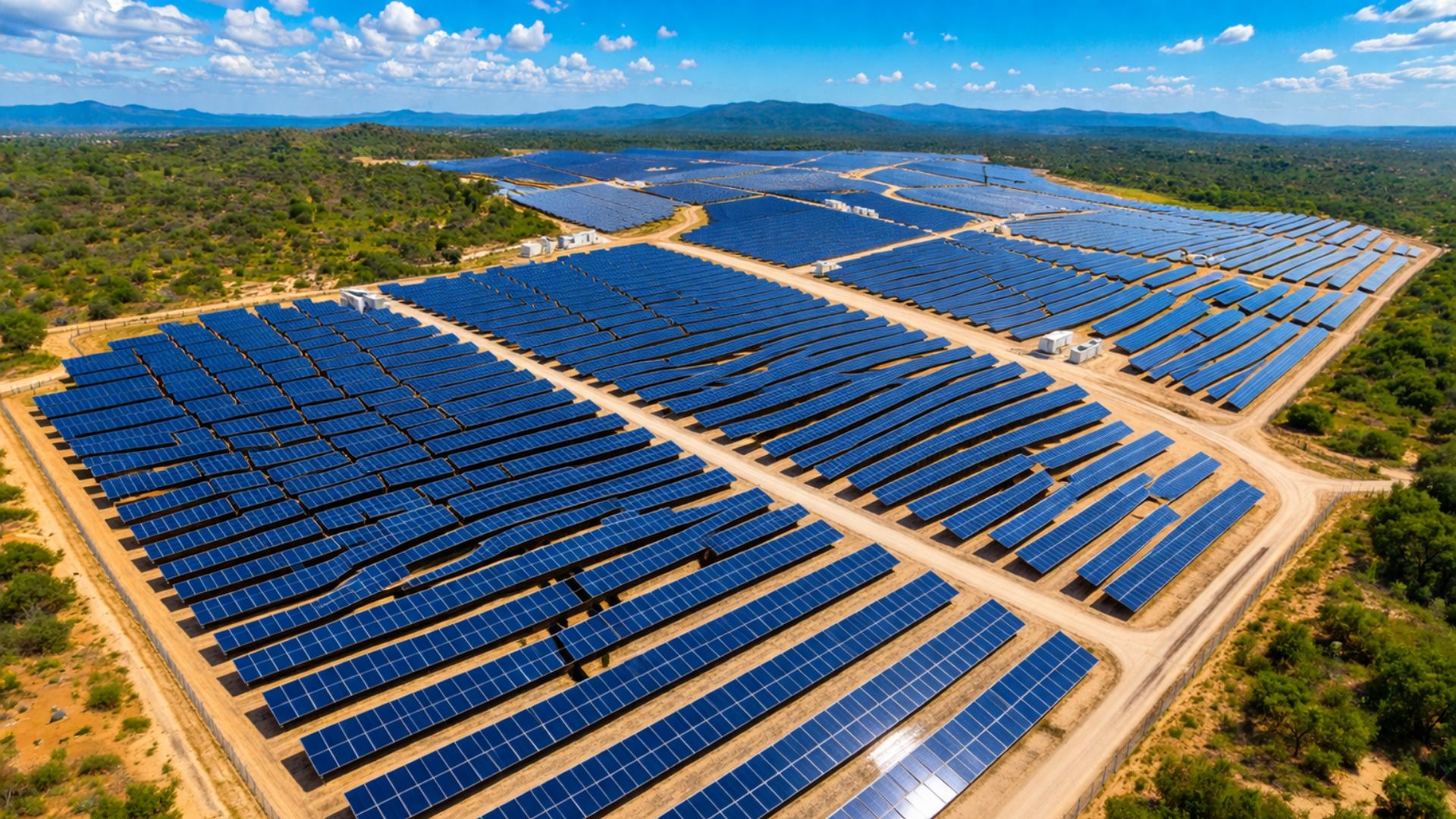
The Sol do Agreste Photovoltaic Complex begins operations in Pernambuco and accelerates the expansion of solar energy in Brazil, directly impacting the reduction of emissions and strengthening the sustainable energy matrix.
-
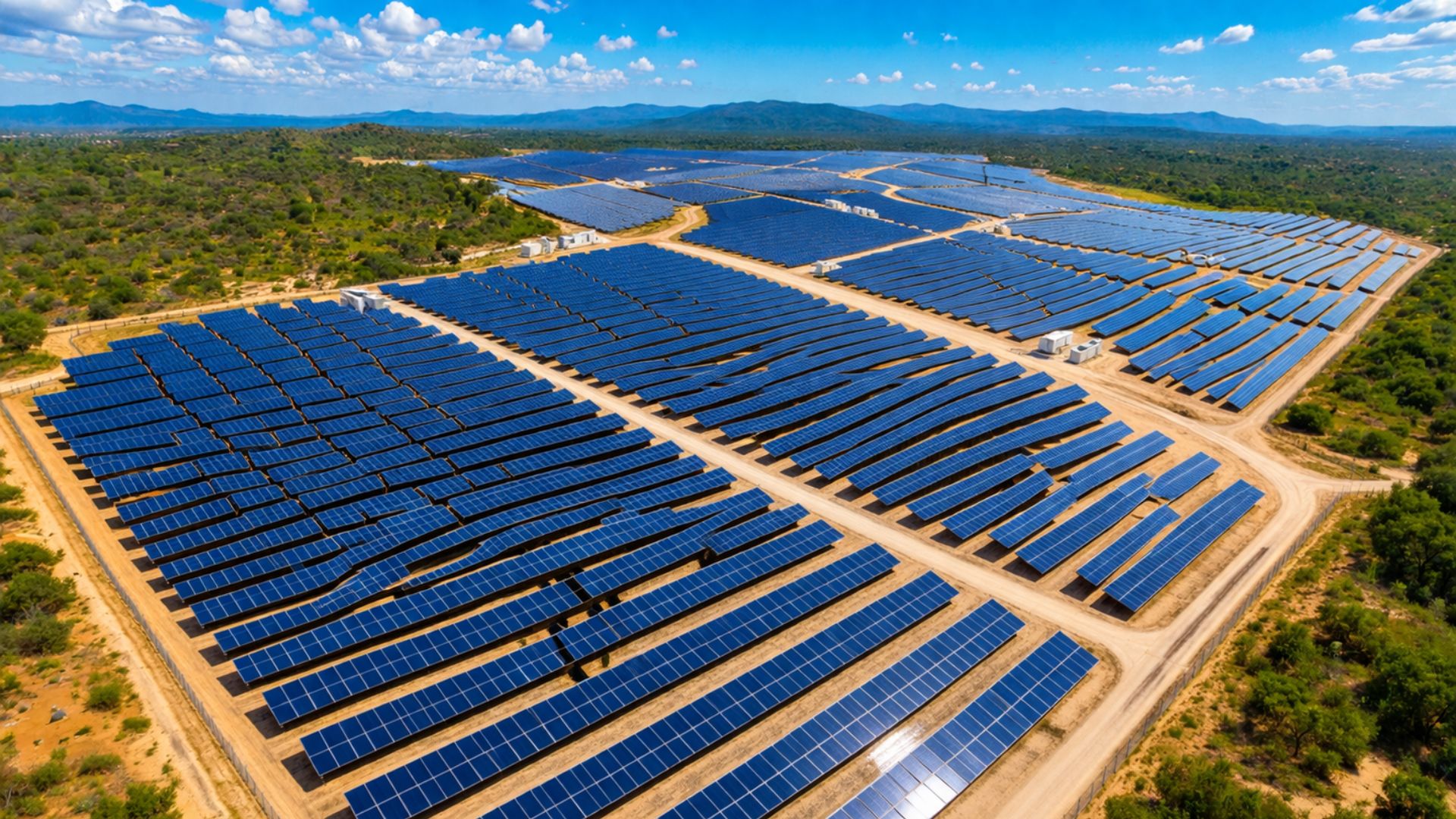
The Sol do Agreste Photovoltaic Complex begins operations in Pernambuco and accelerates the expansion of solar energy in Brazil, directly impacting the reduction of emissions and strengthening the sustainable energy matrix.
-
Renewable energy advances over protected areas in Brazil, and a survey by the Energy Transition Observatory reveals silent impacts that challenge environmental conservation and pressure sensitive traditional territories.

-
Rio Grande do Sul accelerates energy transition: State invests in renewable technologies and consolidates decarbonization strategies and pathways to attract billions in new industrial investments.


In the French case, the Solveig Project has already been put into practice in a pilot phase, with the initial installation of eight solar panels at the technical center of Achères, in the metropolitan area of Paris. The tests are expected to last six months, during which SNCF will evaluate energy efficiency, climate resistance, economic viability, and operational interference.
Modular and Reversible System Facilitates Installation and Transport
One of the highlights of the French project is the modularity and mobility of the system. The solar panels are transported in ISO containers, which also store the inverters and batteries responsible for storing and distributing the generated energy. Installation is carried out with the help of a mechanical arm, which positions the panels over the tracks without the need for fixed foundations.
This allows the system to be reversible, meaning it can be easily disassembled and transferred to other locations, including lines out of service. According to AREP, this facilitates temporary use and prevents compromising existing railway infrastructure.
Additionally, the model can be adapted to meet both the internal needs of SNCF, such as providing electrical power to technical facilities, and to supply energy to local communities near railway lines.
Energy Potential and SNCF Goals by 2030
SNCF’s goal is bold: to install 1,000 megawatts (MW) of solar capacity by 2030. With over 113,800 hectares of operational land, the French railway company sees the use of tracks and underutilized land as a strategic opportunity to increase its share in solar energy generation.
Today, about 80% of trains operated by SNCF already use electricity, making the use of renewable energy to power its own railway network even more consistent with the environmental commitments made by France and the European Union.
If the Solveig Project is successful, it could be replicated not only in other regions of France but also in different countries across Europe and the world, transforming an existing infrastructure into sustainable energy production platforms.
Challenges and Next Steps for the Solveig Project
Although the proposal’s potential is evident, the project is still in the experimental phase. The next steps include:
- Improving Energy Efficiency of the panels used;
- Reducing Costs to make the model viable at scale;
- Assessing Durability of installations under different climatic conditions;
- Integration with the National Grid safely and stably.
The expectation is that the data collected during the tests in Achères will serve as a basis for a potential expansion of the project in larger areas or even for exporting the concept to other countries interested in sustainable and low visual impact solutions.
International Examples Reinforce the Trend
The use of solar panels on train tracks is not exclusive to France. Switzerland, a pioneer in this idea, has already installed solar modules on both tracks and highway walls, seeking to preserve its natural landscapes while increasing the generation of clean energy.
Other countries, such as Germany, Japan, and the Netherlands, are also experimenting with creative integrations between urban infrastructure and renewable energy sources, such as solar coverings in parking lots, train stations, photovoltaic highways, and even floating solar panels on lakes and reservoirs.
Source: Xataka









-

Uma pessoa reagiu a isso.