





 Portuguese
  English
  Spanish
  4 min of reading
  0 comments


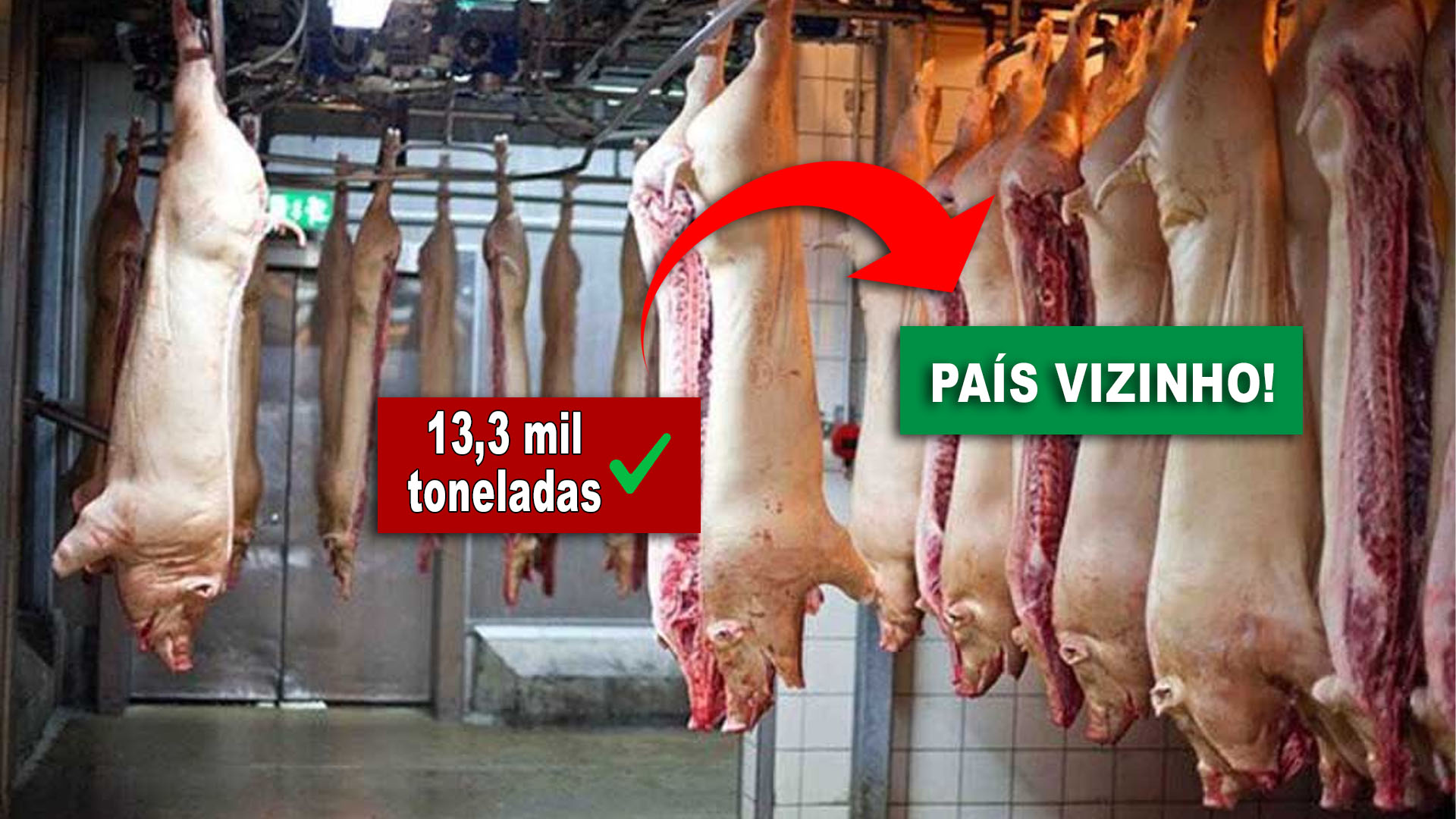
In August 2025, Chile Surpassed China and Ranked 2nd Among Destinations for Brazilian Pork. Know Why This Happened and What the Trend Is for the Sector.
Brazil shipped 121.4 thousand tons of pork (fresh and processed) in August 2025, an increase of 2.8% compared to August 2024. The revenue totaled US$ 294.9 million, up 6.7% in the same comparison, according to the ABPA.
In the destination ranking for the month, the Philippines led with 33.4 thousand tons, Chile appeared in 2nd place, with 13.3 thousand tons and China ranked 3rd, with 10.3 thousand tons. Japan, Mexico, Hong Kong, and Vietnam followed. This data confirms the exchange of positions between Chile and China in August.
In the cumulative total from January to August, shipments reached 970.3 thousand t (+11.5% compared to 2024), with US$ 2.334 billion in revenue (+23.8%). The year remains strong, driven by greater market diversification.
-
With an investment of R$ 612 million, a capacity to process 1.2 million liters of milk per day, Piracanjuba inaugurates a mega cheese factory that increases national production, reduces dependence on imports, and repositions Brazil on the global dairy map.

-
Brazilian city gains industrial hub for 85 companies that is equivalent to 55 football fields.

-
Peugeot and Citroën factory in Argentina cuts production by half and opens a layoff program for more than 2,000 employees after Brazil drastically reduced purchases of Argentine vehicles.

-
A Brazilian city gains a factory worth R$ 300 million with the capacity to process 200 thousand tons of wheat per year, a mill of 660 tons/day, silos for 42 thousand tons, and an industrial area of 276 thousand m².


For the pork industry, the reading is that the diversity of destinations supports the export flow, reducing dependence on a single market and sustaining prices. This movement helps shape the short-term scenario of the sector.
Why Chile Rose: The Sanitary Factor of Paraná
Researchers from Cepea/Esalq-USP point out that the Chilean leap has sanitary and regulatory backing. The volume exported to Chile doubled from the beginning of the year to July and reached 13.3 thousand t in August, after 14.5 thousand t in July. Result: Chile was the 2nd largest destination in July and August, surpassing China.
The trigger was the recognition of the state of Paraná as free of foot-and-mouth disease without vaccination and free of classical swine fever. Chile officially recognized the status on July 15, 2025, after a joint declaration in April during a state visit—opening export pathways for pork from Paraná. More plants and more qualified supply tend to accelerate shipments.
According to Cepea, the recognition of Paraná, the 2nd largest pork producer in the country, deepened access to the Chilean market and explained the exchange of positions with China in the analyzed bimonthly period. Infrastructure and logistics in the South also favored the turnaround.
For exporters, the Chilean pre-listing and the sanitary credibility of Brazil shorten timelines and reduce barriers. This increases predictability for short- and medium-term business.
Who Leads and What About China
Despite Chile’s prominence, who has led since February is the Philippines, which maintains strong demand and continues to be the main destination for Brazilian pork. This Filipino prominence reconfigures the Asian map of the protein.
China, on the other hand, ranked third in August. This does not mean a structural loss of the Chinese market, but rather a cyclical adjustment in purchases and stocks, a common movement, sensitive to exchange rates, domestic prices, and import policies. The accurate reading depends on a few more months of data.
For Brazilian slaughterhouses, dividing the risk between Asia and South America reduces volatility. Less concentration on a single buyer usually stabilizes margins and sustains production schedules.
In the short term, the Philippines, Chile, and Japan should remain relevant. The Chinese behavior remains the factor to monitor, especially if there are purchase windows in the 4th quarter.
China and New Qualifications Can Reorder the Ranking
The base trend is for a continuation of good export pace in 2025, with market diversification and new qualifications sustaining volumes. ABPA projects greater reach and positive flow until the end of the year, while Cepea indicates persistent effects from the sanitary recognition of Paraná.
Points of attention: exchange rates, grain prices, and global competition (Europe, USA, and Canada). Fluctuations in Asian demand may also reorder the monthly ranking, including bringing China closer to 2nd place in specific months. The picture for August is strong, but the film of the year is still ongoing.
For producers, cost management and export contracts with exchange rate locks remain decisive. For the market, sanitary qualification indicators and new plants in the South may increase capacity and reduce logistical bottlenecks. Attention to the regulatory pipeline.
On the commercial front, the communication of sanitary value and the premium positioning in specific cuts reinforce competitiveness in high-value niches in Chile and Asia. This is the differentiation vector in this cycle.
Do you think that Chile taking China out of 2nd place is an isolated fact for August or the beginning of a structural turning point in pork exports? Do you agree that market diversification is more important than relying on China? Leave your comment.










-

-

5 pessoas reagiram a isso.