





 Português
  Inglês
  Espanhol
  4 min de leitura
  8 comentários


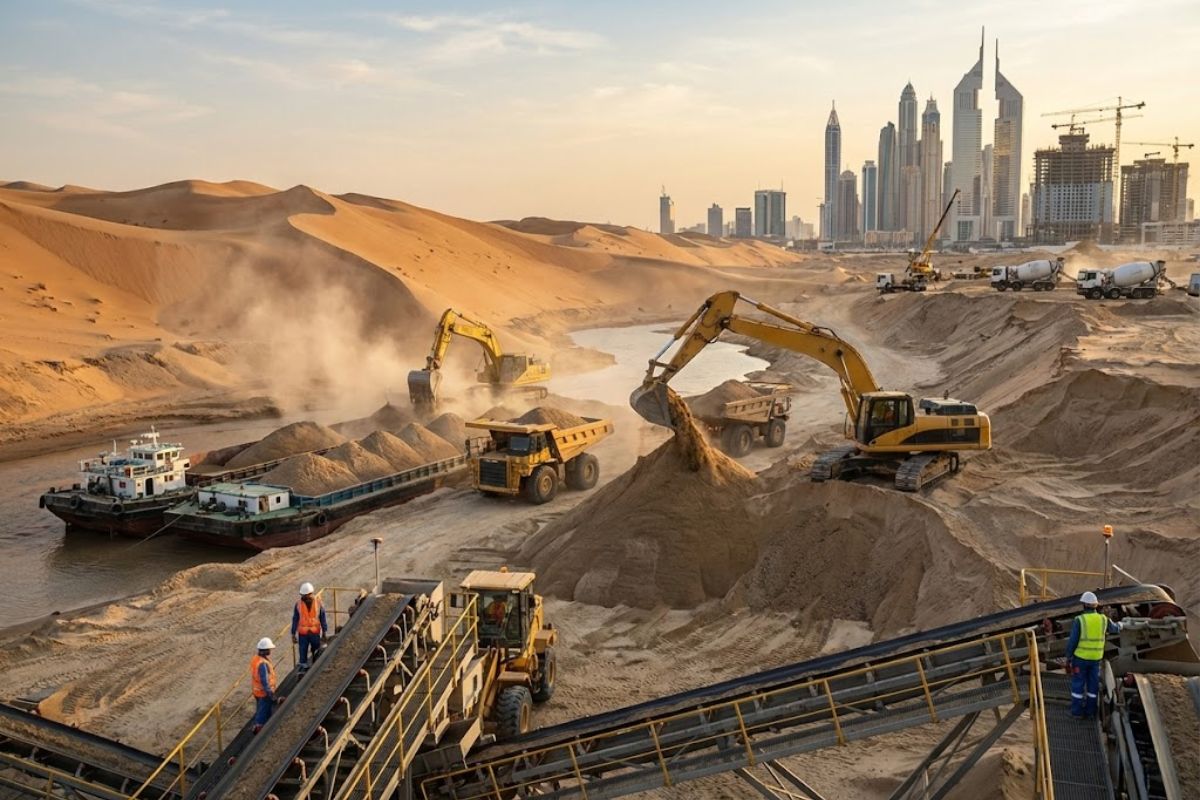


Sand Seems Abundant In Saudi Arabia And The United Arab Emirates, But The Wind-Blown Sand From The Dunes Is Fine And Rounded, Bad For Glass And Concrete. In 2023, The Emirates Imported More Than Six Million Tons. The UN Warns: There Are 50 Billion Per Year And There Is Already International Crime Today
Sand has become a geopolitical and industrial paradox in the Gulf: Saudi Arabia and the United Arab Emirates, countries associated with the desert, import tons and tons of the material that, at first glance, should be in abundance. In 2023, the United Arab Emirates alone purchased more than six million tons, even while sitting on huge expanses of dunes.
The backdrop is larger than a logistical curiosity. Sand has become the second most exploited resource on the planet, second only to water, and the United Nations Environment Programme estimates that the world uses 50 billion tons per year of sand and gravel. The scarcity and value of this input are already fueling criminal networks of international trafficking, signaling that the market has entered a zone of structural pressure.
Why Desert Sand Does Not Serve The Way The Industry Needs

The key lies in the type of material. The sand called wind-blown, accumulated by wind in dunes, tends to be very fine, very uniform, and very rounded. These characteristics hinder the production of glass and concrete, in addition to other industrial products, because the performance of the material depends on texture, grain distribution, and behavior in the mix.
-
Brazilian city gains industrial hub for 85 companies that is equivalent to 55 football fields.

-
Peugeot and Citroën factory in Argentina cuts production by half and opens a layoff program for more than 2,000 employees after Brazil drastically reduced purchases of Argentine vehicles.

-
A Brazilian city gains a factory worth R$ 300 million with the capacity to process 200 thousand tons of wheat per year, a mill of 660 tons/day, silos for 42 thousand tons, and an industrial area of 276 thousand m².
-
Havan will leave the shopping mall in Blumenau to inaugurate something that the chain has never done before: a megastore in half-timbered style in the Historic Center of the city, which is expected to be completed in May and change the landscape of local retail.

In practice, it is not that wind-blown sand is impossible to use. It can even enter industrial processes, but it requires adjustments that raise production costs: controlling grain size, dealing with impurities, managing excess fines, and finely balancing the manufacturing stages. When the cost of adaptation rises, the equation balances out in another way: it becomes cheaper to import sand that is more suitable for standardized processes.
The Size Of Consumption And The UN Warning Of A Global Crisis

Global consumption helps explain why the issue has stopped being a technical detail. The annual scale of use, estimated at 50 billion tons of sand and gravel, pressures supply chains and exposes a resource that is often treated as invisible, despite being vital for construction, manufacturing, and infrastructure.
In this scenario, sand enters a silent dispute: countries buy, companies seek strict specifications, and tensions related to extraction and trade arise. The UN’s warning appears as a summary of this picture: scarcity is already concrete enough to create organized environmental crime and networks that operate across borders.
What Sands Enter Gulf Imports And Why This Matters

There are many types of sand and the differentiation is decisive. The material distinguishes natural sand identified as HS 250590 and silica and quartz sands registered as HS 250510. Gulf countries primarily import the second category, associated with more demanding industrial applications.
The United Arab Emirates illustrate the contrast in values: they spend about half a million per year on natural sand and 87 million on silica and quartz sands. The implicit message is that it’s not enough to have sand in volume. It must be the right sand, with grain size, purity, moisture, fines, contaminants, and consistency in supply compatible with industrial standards.
This technical requirement is directly linked to the uses cited as critical: glass, casting, filtration, and chemical industry. In all these segments, the quality of the input defines yield, cost, and reliability of the final product.
When Importing Sand Becomes Strategy To Avoid Internal Environmental Damage
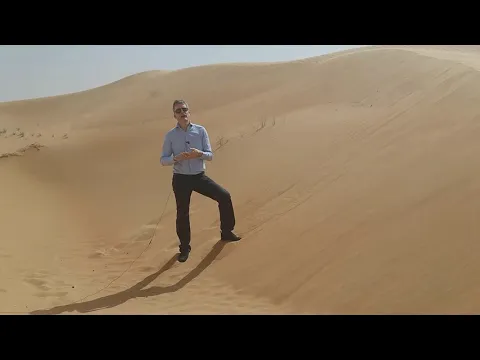

The situation in the Gulf is not limited to the inability of desert sand for certain uses. Countries also import natural sand, even when they could use part of what is available locally. The point is governance and externalities: avoiding the drainage of sand from coastlines and deserts can be seen as a way to reduce negative impacts.
The UN highlights that extracting sand on a large scale can alter livelihoods and increase vulnerabilities. Among the cited effects are impacts on fishing, risks to agriculture due to salinization, damage to coastal tourism, and increased exposure to storms. In some cases, buying from other countries, such as Oman, serves as a way to shift some of the environmental and social cost outside the borders, even if this creates other dilemmas.
From The Case Of Sardinia To The Clandestine Market: The Symptom Of A Larger Dispute
The tension surrounding sand has already produced episodes that go viral and help reveal the extent of the problem. In the summer of 2019, the story of a couple arrested in Sardinia for hiding 40 kilograms of sand in their trunk became famous. The episode turned into a public anecdote, but points to a larger reality: pressure on the resource is growing, and illegal extraction is gaining ground.
Along with the warning about international criminal networks, the scenario suggests that sand has ceased to be merely a cheap and abundant input. It is now treated as a strategic asset, directly affecting industrial costs, environmental policy, and the stability of production chains.
What Is The Most Concerning Aspect For You In This Sand Crisis: Industrial Dependency, Environmental Crime, Or The Impact On Coasts And Local Communities?









No dia em que a areia importada estiver escassa vai compensar tratar a areia do deserto.
Se a areia do deserto ainda nao esta sendo tratada e porque a areia importada ainda e mais barata e por consequência, abundante.
Bom dia eu acredito que geológicamente falando existe um equilíbrio de peso no planeta que vai entrar em desequilíbrio ” é só pensar em uma balança antiga o se usava o contrapeso” parece besteira mas se parar pra pensar faz um grande sentimento….
Seu raciocínio esta correto. Mas as grandezas envolvidas sao muito menores que as necessárias para causar algum disturbio
Acho correto, visto que é um recurso abundante em superfície. A areia pode ser transformada em fibras psra construção e inúmeras estruturas.. a exploração de ferro, calcário e outros minérios profundos estão “cansando” a terra, pois são materiais essências que regulam processos internos. Se o diabo mora no centro da terra.. acho uma solução viável explorar recursos superficiais e não profundos. Obrigado.