





 Portuguese
  English
  Spanish
  3 min of reading
  0 comments


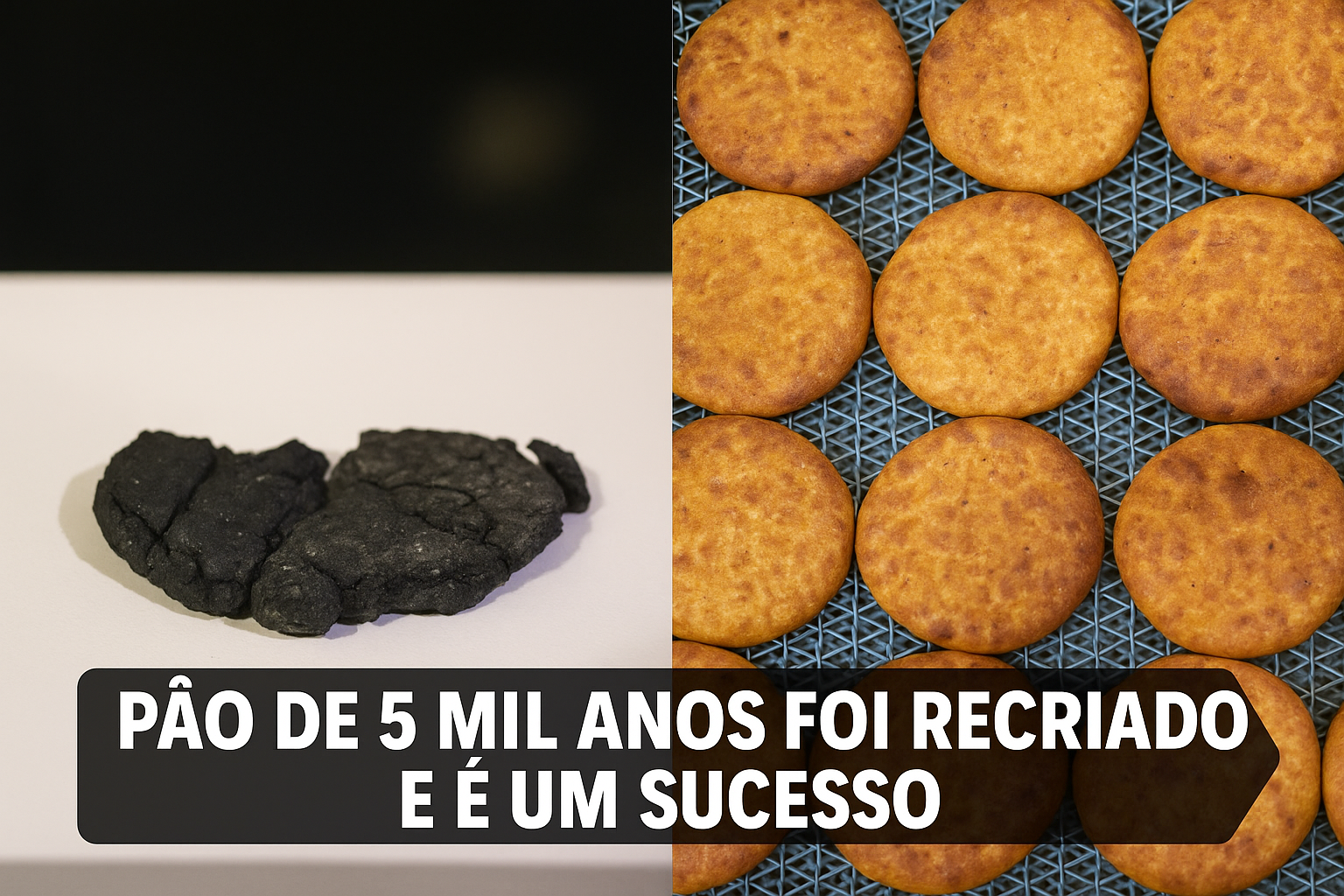
5,000-Year-Old Bread Discovered in Turkey Becomes Attraction, Gains Modern Version, and Boosts Debate on Sustainable Agriculture in Climate Crisis
A 5,000-year-old bread was discovered by archaeologists in Turkey during excavations in the central region of the country in 2024. The find, dated to the Bronze Age, sparked interest from locals and inspired the reproduction of the recipe with the help of a local bakery.
The discovery occurred at the archaeological site of Küllüoba, near the city of Eskisehir. The bread was buried under the entrance of an ancient house built around 3,300 B.C. Round and flattened, the food measures 12 centimeters and was preserved thanks to fire.
Rare Finds in Archaeology
Finding an entire loaf of bread is something rare in excavations. Normally, only fragments are found. “This is the oldest baked bread ever found during an excavation, and it managed to largely preserve its shape,” explained archaeologist Murat Türkteki, the excavation director, to AFP.
-
Motorola launched the Signature with a gold seal from DxOMark, tying with the iPhone 17 Pro in camera performance, Snapdragon 8 Gen 5 that surpassed 3 million in benchmarks, and a zoom that impresses even at night.

-
Satellites reveal beneath the Sahara a giant river buried for thousands of kilometers: study shows that the largest hot desert on the planet was once traversed by a river system comparable to the largest on Earth.

-
Scientists have captured something never seen in space: newly born stars are creating gigantic rings of light a thousand times larger than the distance between the Earth and the Sun, and this changes everything we knew about stellar birth.

-
Geologists find traces of a continent that disappeared 155 million years ago after separating from Australia and reveal that it did not sink, but broke into fragments scattered across Southeast Asia.

A piece was torn off before the bread was burned and buried. Türkteki suggested that this may have been part of a ritual of abundance. The charred bread was removed from the ground in September 2024 and is on display at the Eskisehir Archaeological Museum.
Ingredients Revealed After Analysis
Experts analyzed the remains of the bread and identified the ingredients. They found coarsely ground emmer wheat flour, lentil seeds, and a plant leaf used as yeast.
Since emmer wheat is no longer cultivated in Turkey, researchers used Kavilca, a variety close to the original.
City Hall and Bakery Recreate the Ancient Recipe
The mayor of Eskisehir, Ayse Unluce, commented on the excitement with the discovery. “Talking to our excavation director, I wondered if we could reproduce this bread,” she said.
The city hall partnered with the public bakery Halk Ekmek. The recipe includes Kavilca, bulgur (wheat for kibbeh), and lentils. 300 units are produced daily, handmade. Each bread weighs 300 grams and costs 50 Turkish liras, about R$ 7. Locals line up daily to acquire the product.
According to Serap Guler, manager of the bakery, the bread has a low gluten content, is filling, rich in nutrients, and preservative-free.
New Agricultural Alternative Amid the Climate Crisis
In addition to reproducing the recipe, the find reignited the debate on sustainable agriculture in the region. Kavilca wheat, drought-resistant and disease-resistant, emerges as an option in light of the climate crisis.
“We are facing a climate crisis, yet we still grow corn and sunflowers, which require a lot of water. Our ancestors are giving us a lesson. Like them, we must move towards less water-intensive crops,” said the mayor.
Project for the Resumption of Traditional Cultivation
Now, the administration plans to encourage the cultivation of Kavilca wheat in the region. “These lands preserved this bread for 5,000 years and have given us this gift. We have a duty to protect this heritage and pass it on,” concluded Ayse Unluce.
With information from UOL.







Seja o primeiro a reagir!