





 English
  Francês
  Alemão
  Italiano
  Japonês
  Norueguês
  Portuguese
  Spanish
  5 min of reading
  0 comments


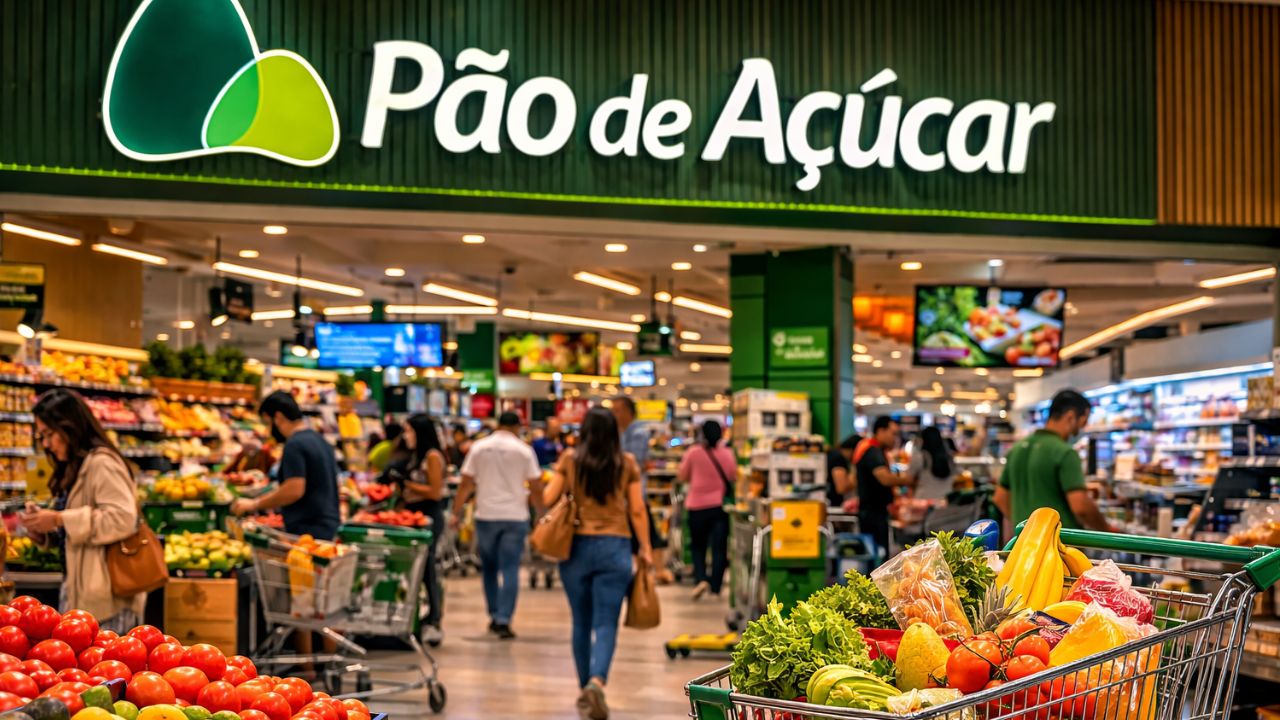
Crisis at Pão de Açúcar Leads Grupo GPA to Launch Recovery Plan to Renegotiate R$ 4.5 Billion in Debts and Reorganize Network Finances.
Pão de Açúcar, one of the most traditional food retail chains in Brazil, has come under the radar of the financial market after Grupo GPA announced an extrajudicial recovery plan to reorganize approximately R$ 4.5 billion in debts.
The measure was announced on Tuesday (10) by the company, responsible for the supermarket chain, which seeks to renegotiate commitments with creditors and rebalance its finances without resorting to judicial recovery.
The agreement was reached with a significant portion of creditors and provides for a temporary suspension of payments while new conditions are negotiated. According to the group, the goal is to improve the debt profile and ensure the company’s financial sustainability in the long term while keeping store operations running normally.
-
Expansion of Federal Institutes: 38 new campuses and R$ 200 million for public education; see the cities included.

-
Lula’s government changes rule in important benefit and thousands of Brazilians will no longer receive it; see what has changed.
-
New Gripen fighter makes Argentines surrender to Brazil, and the heavy reaction exposes envy, frustration, and shock at Brazil’s technological leap.
-
This discovered deposit near the Andes could change the future of Argentina, attract billions, and even shake up the global metals market.

Despite the delicate moment, Grupo GPA, the parent company of Pão de Açúcar, stated that the supermarket chain’s units remain open and that commitments to suppliers, business partners, and employees are still being met.
See more: Meta Acquires Moltbook and Invests in Exclusive Social Network for AI Agents
See more: Uber Mulher: App Allows Rides Only with Female Drivers in Capitals
Pão de Açúcar and Grupo GPA Accumulate Losses and Pressure Finances
The financial crisis at Grupo GPA did not arise suddenly. In recent years, the company has reported consecutive losses, a scenario that has pressured the supermarket chain’s cash flow.
Among the factors that contributed to the increase in debts are:
- decreased consumption during periods of high food inflation;
- high interest rates, which increased borrowing costs;
- expenses related to management changes;
- payment of fiscal and labor obligations;
- closure or poor performance of some stores.
In the balance sheet released recently, the group also warned investors about doubts regarding its ability to maintain operations in the long term.
“These conditions indicate the existence of significant uncertainty that may raise substantial doubt about the company’s ability to continue as a going concern,” the company informed in a document released to the market.
By the end of 2025, GPA had accumulated a net loss of approximately R$ 651 million in continuing operations, in addition to a deficit of around R$ 1.2 billion, mainly driven by loans due in 2026.
How the Recovery Plan of Pão de Açúcar Works
The extrajudicial recovery plan adopted by Grupo GPA allows for the renegotiation of debts directly with creditors, without the need to open a judicial process.
This model tends to be faster and less bureaucratic than judicial recovery. Additionally, it allows the supermarket chain to continue operating normally while negotiations take place.
The plan announced by the company includes:
- renegotiation of approximately R$ 4.5 billion in debts;
- temporary suspension of payments for 90 days;
- seeking new terms and deadlines with creditors.
According to GPA, about 46% of creditors, equivalent to R$ 2.1 billion, already support the initiative. This percentage exceeds the minimum required by law to begin this type of negotiation.
The company states that the measure seeks to strengthen its financial balance and ensure conditions to resolve liquidity issues in the short term.
Supermarket Chain Maintains Operations and 700 Stores in Brazil
Despite the financial difficulties, Pão de Açúcar continues to operate normally throughout the country.
Grupo GPA currently has 728 stores in Brazil, distributed among different food retail banners:
- 187 units of Pão de Açúcar
- 221 Minuto Pão de Açúcar stores
- 164 Extra Mercado units
- 155 Mini Extra stores
Additionally, the group also sells well-known private label brands among consumers, such as Qualitá, Taeq, Pra Valer, and Club des Sommeliers.
The company emphasized that suppliers and business partners will not be affected by the recovery plan.
Management Changes at Grupo GPA Mark Attempt at Restructuring
In recent months, Grupo GPA has also undergone significant changes in its leadership structure.
Grupo Coelho Diniz has become the main shareholder of the company, with approximately 24.6% of the shares, while the French group Casino, the former parent company, still maintains a significant stake.
In October, businessman André Coelho Diniz took over as chairman of the board. Subsequently, then-CEO Marcelo Pimentel, who had led the company since 2022, left the position.
At the beginning of 2026, Alexandre de Jesus Santoro was elected as the new CEO of the company.
Experts See Recovery as an Alternative to Avoid a Larger Crisis
Experts evaluate that the recovery plan of Grupo GPA follows a movement that has been adopted by several companies facing challenging economic conditions.
Attorney Patricia Maia, from Barbosa Maia Advogados, explains that the rising cost of credit has put pressure on companies across various sectors.
“In recent years, many companies have had to deal with more expensive debts, reduced consumption in some sectors, and the need to reorganize their operations. Extrajudicial recovery emerges as an alternative for this without interrupting operations,” she asserts.
She adds that negotiating debts before a deeper crisis can preserve value and prevent greater impacts on the market.
On the other hand, the expert warns that restructuring processes can have indirect effects on consumers.
“Depending on the intensity of the crisis, this may influence product availability, pricing policies, or the company’s own expansion pace,” she points out.
Challenges Remain for the Future of Grupo GPA
Although the recovery plan represents an attempt to reorganize debts and stabilize finances, the scenario still requires attention.
A significant portion of the company’s financial obligations will come due in the coming years, while its operational cash flow is still considered limited in light of the debt level.
Thus, the success of the strategy will depend on Grupo GPA’s ability to renegotiate deadlines, reduce costs, and recover the profitability of the Pão de Açúcar supermarket chain.
In the meantime, the company states that it remains focused on maintaining its operations and ensuring stability for customers, employees, and business partners.








Seja o primeiro a reagir!