





 Portuguese
  English
  Spanish
  5 min of reading
  0 comments


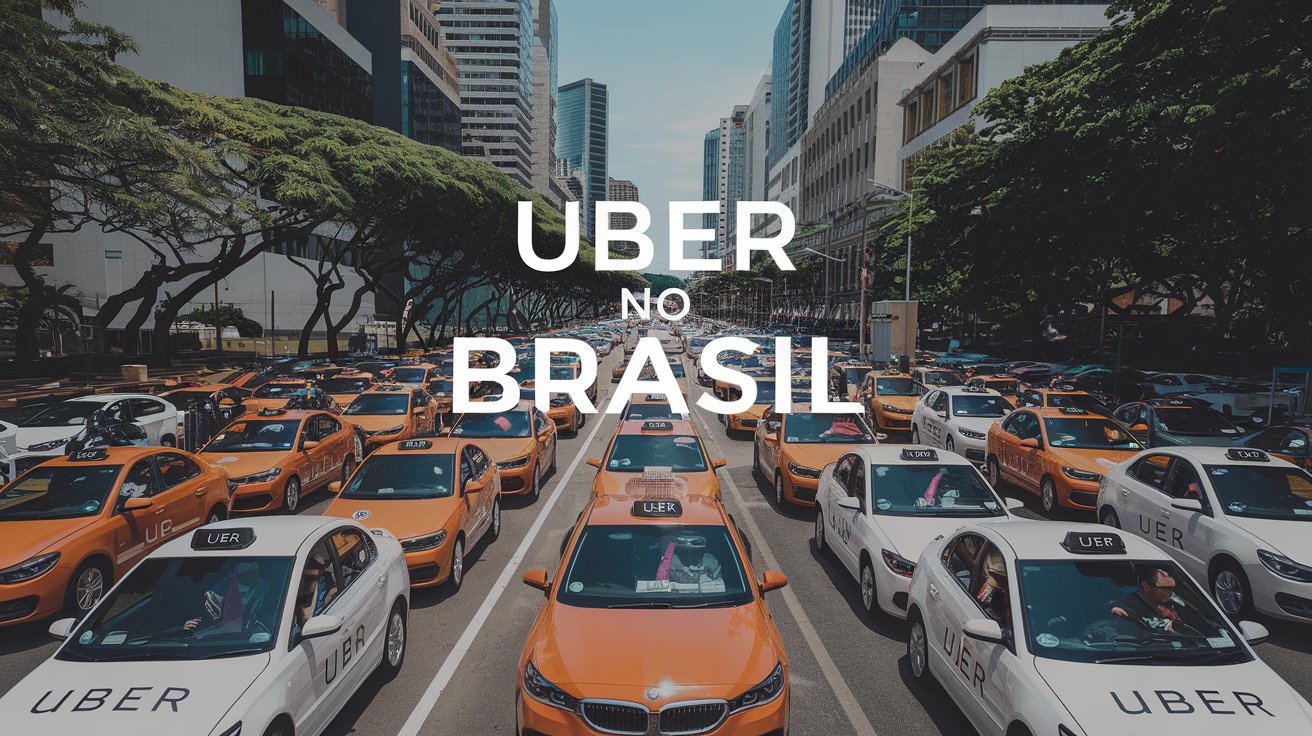
Brazil Establishes Itself As Uber’s Largest Market, With Impressive 1.4 Million Active Drivers and Leading in Number of Rides.
In recent years, urban mobility in Brazil has undergone a true transformation, driven by technological advancement and the exponential growth of transportation apps.
Among these platforms, Uber stands out as one of the main agents of this change, revolutionizing the way millions of Brazilians commute daily.
Since its arrival in Brazil, Uber has carved out a significant space in the national market, becoming not only a viable alternative to public transport and traditional taxis but also an important source of income for millions of drivers and delivery people.
-
Costing R$ 16,000, the new Yamaha features a 125 cc hybrid engine with electric assistance, delivers 8.3 hp, includes ABS, optimized fuel consumption, Y-Connect connectivity, 25 liters of storage space, and a surprising 4-year warranty in the urban segment.

-
OMODA & JAECOO grows in Europe in 2026 with an integrated strategy of sales, innovation, local production, and technological advancement in the United Kingdom, Italy, and Spain.

-
OMODA & JAECOO expands after-sales service in Brazil with competitive maintenance, a 7-year warranty, and high availability of parts for technological SUVs.

-
OMODA & JAECOO appoints Alessandra Souza as executive marketing director in Brazil and accelerates brand expansion with a focus on innovation, networking, and hybrid portfolio.


The consolidation of the company in the country reflects a global trend, but with unique characteristics that make it a unique phenomenon within the mobility sector.
Brazil Leads in Number of Drivers and Rides on Uber
During the CEO Conference 2025, one of the most relevant events for investors in Brazil, Dara Khosrowshahi, global CEO of Uber, made a statement reinforcing the importance of the Brazilian market for the company.
According to him, in an interview published by the portal 55Content, Brazil leads Uber’s global ranking in terms of both the number of completed rides and the number of active drivers and delivery people on the platform.
The country currently has around 1.4 million drivers and delivery people, who together generated approximately US$ 25 billion in earnings over the last decade.
The numbers are impressive and reflect the scale of Uber’s impact on the national economy.
The company has established itself as one of the main sources of income for self-employed workers, offering flexible hours and the possibility of daily earnings.
The success of the platform in Brazil can be attributed to various factors, including high demand for accessible transportation, the challenges of urban mobility in large cities, and the need for income generation for many Brazilians.
Expansion of Operations and Investment in Technology
To ensure it continues to grow sustainably, Uber has been heavily investing in the expansion of its operations in Brazil.
One strategy adopted by the company was to expand its engineering team in the country, utilizing local talent and more competitive costs compared to regions like the United States and Europe.
The decision to strengthen its technological presence in Brazil demonstrates Uber’s commitment to continually improving its services and innovating to meet the needs of the Brazilian market.
Additionally, Uber has been exploring new partnerships and implementing improvements to the platform to optimize the experience for drivers and passengers.
The company is betting on artificial intelligence to enhance its matching algorithm, reduce wait times, and make trips more efficient.
Uber Moto: An Accessible and Expanding Alternative
In recent years, Uber has diversified its services to cater to different user profiles, and one of its most recent bets has been the motorcycle transportation option, known as Uber Moto.
This service offers a more economical alternative compared to traditional UberX and has been widely adopted in various Brazilian cities.
Uber Moto allows passengers to make faster and more affordable commutes, which is especially advantageous in areas with heavy traffic.
The option is already available in cities like Rio de Janeiro, Salvador, and Fortaleza, but its implementation in São Paulo was blocked by a court ruling, which sparked debates about the regulation of the service and user safety.
Uber has been working to enhance Uber Moto’s safety by implementing measures such as appropriate helmets for passengers and rigorous checks for partner motorcyclists.
The company’s expectation is to expand this service to other cities in Brazil in the coming years.
Economic and Social Impact of Mobility Apps
Uber’s presence in Brazil is not limited to transporting passengers. The company’s services also play a crucial role in the economy and daily lives of Brazilians.
A recent survey by Instituto Datafolha revealed that 77% of the population believes that mobility apps have improved their lives, while 92% consider that these platforms have revolutionized the way people move.
Furthermore, Uber has been an important alternative for income generation in a challenging economic scenario.
Many drivers and delivery people have come to rely on the platform as their main source of income, and for some, it has been the gateway to the formal banking system.
According to the company, thousands of partners have opened their first bank accounts and gained access to credit and financial services thanks to the earnings obtained through Uber.
Regulatory Challenges and Government Relations
Despite Uber’s immense success in Brazil, the company faces regulatory challenges in various cities.
The need for a clear and balanced regulatory framework for transportation apps has been a topic of discussion among authorities and sector representatives.
In some regions, specific restrictions and requirements have been imposed that impact the platform’s operations.
Khosrowshahi emphasized the importance of dialogue with local governments to ensure that regulation is fair for all parties involved.
Uber seeks to work together with authorities to promote policies that benefit drivers, passengers, and the urban economy itself.
Artificial Intelligence and Innovation at Uber
Artificial intelligence (AI) plays an increasingly central role in Uber’s operations.
The technology is used to optimize routes, predict demand patterns, and even set dynamic pricing based on factors such as time, traffic, and events in the area.
Moreover, Uber has invested in the use of AI to improve customer experience and streamline internal processes.
The expectation is that artificial intelligence will help transform the company in the coming years, making its services even more efficient and personalized for users.
The Future of Uber: Autonomous Vehicles and Fleet Electrification
Uber is also closely monitoring global trends in sustainable mobility.
The company has ambitious plans for the electrification of its fleet, with the goal that 100% of the vehicles used on the platform in the United States and Europe will be electric by 2030.
In Brazil, however, the implementation of this strategy depends on the expansion of charging infrastructure and the reduction of electric vehicle costs.
Another point of interest for Uber is the technology of autonomous vehicles. Although this innovation is still in the testing phase, the company believes it will have a significant impact on mobility in the future.
However, due to regulatory challenges and high associated costs, it is likely that the first markets to adopt autonomous vehicles will be the United States and Europe.








Seja o primeiro a reagir!