





 Portuguese
  English
  Spanish
 6 min of reading
  0 comments


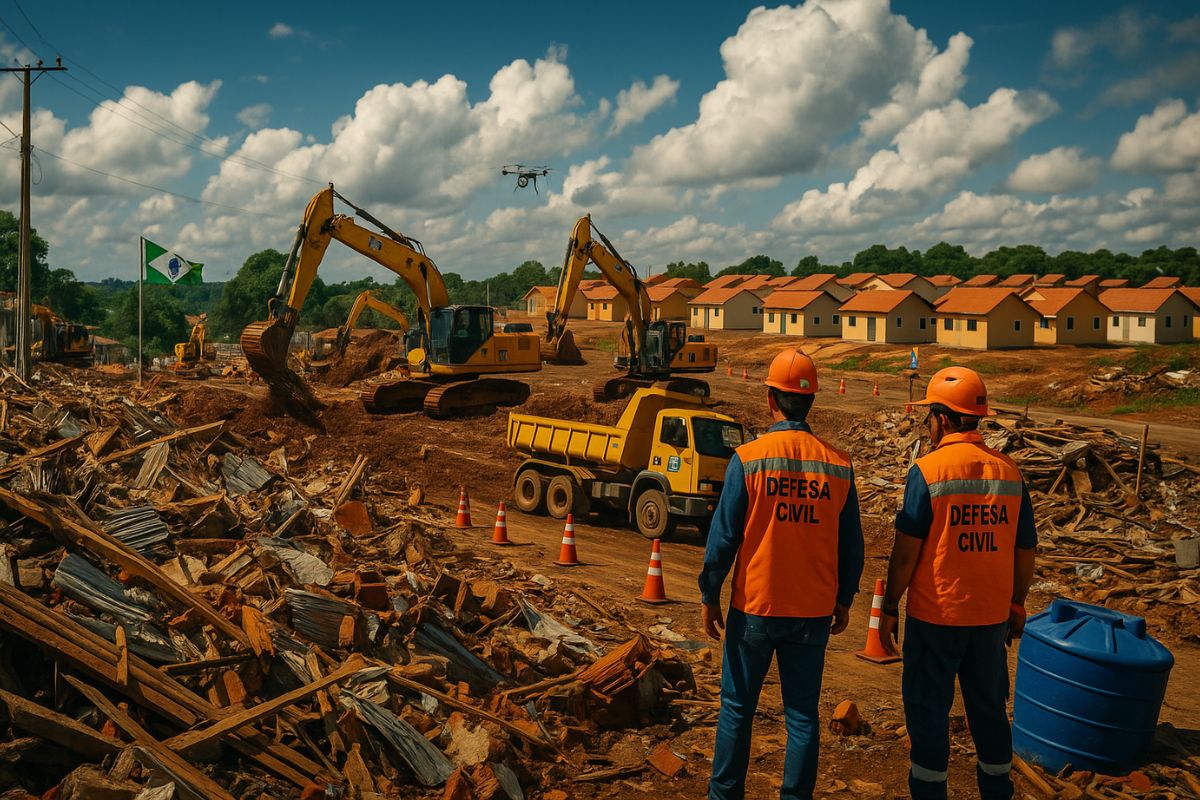
With Emergency Construction, The Government of Paraná Will Build 320 Homes in Rio Bonito do Iguaçu After Tornado Destroys 90% of the City.
The emergency construction of 320 homes in Rio Bonito do Iguaçu was announced by the government of Paraná as a direct response to the F3 category tornado that destroyed about 90% of the city’s structure. The measure combines rapid construction, the use of industrialized building technology, and direct cash transfers to families, in a focused effort to restore minimum housing conditions in one of the most severely devastated scenarios in the state.
At the same time as accelerating the emergency construction of new housing units, the state government is preparing to pay up to 50 thousand reais per family for repairs and partial reconstruction of damaged properties. The strategy involves Cohapar, engineering teams, and legal changes in the State Public Calamity Fund, in an attempt to balance speed with technical safety in a context of high social and logistical pressure.
Tornado Destroys 90% of the City and Demands a Quick Response
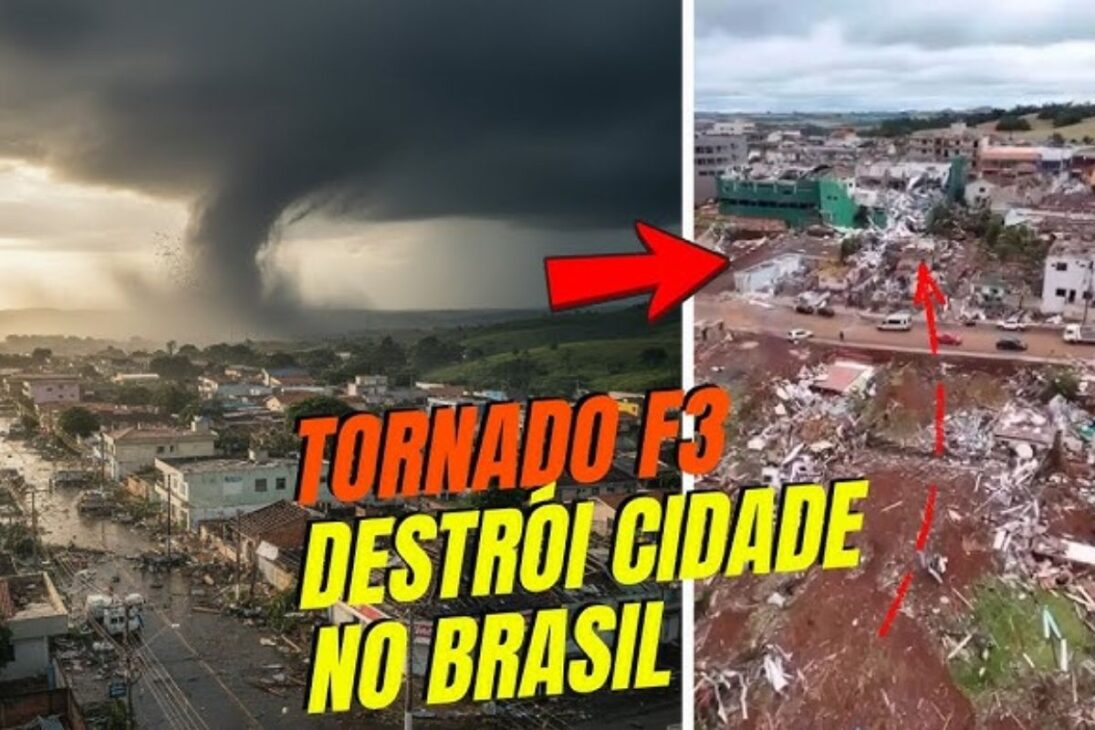
The starting point for the emergency construction plan was the extent of the tornado’s impact in Rio Bonito do Iguaçu.
-
Unemployment rises again to 5.8% at the beginning of 2026, raising alarms about the end of temporary positions and its impact on the Brazilian job market.

-
Document organization can cut invisible costs in small businesses, a simple step that prevents waste, rework, and losses in daily operations.

-
Chinese giant worth nearly R$ 4 billion that manufactures cables for electric cars, solar energy, and robotics wants to open a factory in SC.

-
Many employers do not know, but the law guarantees domestic workers a 25% increase in salary during trips, 50% for overtime, 20% for night shifts, and 17 additional benefits that can lead to labor lawsuits if not paid.


Classified as F3 on the Fujita scale, the phenomenon violently struck the urban area of the municipality, leaving a trail of destruction that compromised approximately 90% of the city’s infrastructure.
Residences, businesses, and public facilities were partially or totally damaged, forcing the evacuation of residents and the setup of temporary shelter structures.
In light of this situation, the state government was pressured to coordinate a solution that went beyond isolated assistance actions.
The absence of safe housing became the central axis of the crisis, making it inevitable to adopt an emergency housing project, with clear deadlines and a specific focus on families who completely lost their homes, with no technical possibility of recovery.
How will the Emergency Construction of the 320 Homes Be?

According to the official announcement, the emergency construction of the 320 homes will begin as soon as the technical and structural diagnoses of each plot are completed by the engineering teams.
The forecast is that work will start within the same week as the announcement, shortening the interval between the damage assessment phase and the actual start of the construction.
Governor Ratinho Junior set a goal of delivering the first homes within 90 days, either totally or partially, depending on the progress of each construction front.
The homes will be allocated free of charge to families who experienced total loss, with no possibility for renovation.
Cohapar is in dialogue with companies already accredited in the Casa Fácil Paraná program, which allows for leveraging existing contracts, cost parameters per square meter, and previous experiences in popular housing projects.
Off-Site Model and Technical Characteristics of the New Residences
The government’s strategy is to prioritize construction companies that operate with an off-site model, a technology that replaces conventional masonry with pre-fabricated panels and walls.
In this system, emergency construction occurs in two complementary stages: manufacturing walls in an industrial environment and subsequent assembly on site, with modules that arrive at the location with integrated doors, frames, and electrical and plumbing systems.
From a technical standpoint, the president of Cohapar, Jorge Lange, indicated that each house will have approximately 45 square meters.
The costs will follow a reference per square meter already used in Casa Fácil Paraná, with a specific price definition for this reconstruction project.
The estimated investment is 60 million reais, considering not only the construction itself but also logistics, land adjustments, and hiring companies capable of meeting reduced deadlines.
The public call planned for this week will prioritize proposals that combine the shortest delivery time with compliance to technical safety and habitability requirements.
Calamity Fund, Direct Transfers, and Reinforcement in Housing Policy
The emergency construction of the houses is just one of the pillars of the response package.
In the financial and legal realm, the government sanctioned an amendment to the State Public Calamity Fund, Fecap, to allow direct cash transfers to families whose homes were destroyed, specifically focusing on Rio Bonito do Iguaçu at this initial moment.
This change reduces intermediate steps and provides greater fluidity to the resource flow for reconstruction.
The preliminary design provides for the release of up to 50 thousand reais per family, with an initial estimated investment of 50 million reais.
The access criteria will be detailed in a decree, based on registrations already being carried out by engineers from Cohapar and the Regional Council of Engineering and Agronomy of Paraná.
The idea is that the emergency construction of new units will complement the recovery of properties that still show technical conditions for renovation, expanding the reach of the policy and avoiding waste of partially preserved structures.
Diagnosis, Local Inputs, and Execution Challenges
To enable the emergency construction on a large scale, the government is also evaluating mechanisms to release the use of supplies available in the region, such as bricks and wood.
Such utilization will depend on technical reports certifying the safety and compliance of the materials with applicable norms, avoiding that urgency leads to the adoption of low-durability solutions or structural risks.
Despite the announcements, the execution challenge remains high.
The coordination among diagnoses, public calls, hiring off-site companies, and tracking fast-paced construction requires a robust management structure.
Any delays in any of these steps could jeopardize the 90-day schedule for delivering the first homes, which keeps high pressure on the state administration for swift results in a scenario of strong public exposure.
Reconstruction as an Opportunity for Urban Revision
More than just replacing what was destroyed, the emergency construction in Rio Bonito do Iguaçu opens space to discuss urban occupancy standards, drainage infrastructure, the resilience of buildings to extreme weather events, and long-term planning.
In a city that had 90% of its structure affected, reconstruction offers a rare opportunity to correct historical vulnerabilities, from street layouts to the sizing of energy and sanitation networks.
If these discussions are incorporated into the project, the new homes may go beyond the emergency nature and become part of a urban resilience strategy, reducing damages in future episodes of extreme winds or severe storms.
Otherwise, there is a risk of simply rebuilding the same vulnerable structure, repeating problems that have already proven critical in the face of the tornado.
Will the Emergency Construction Address the Size of the Tragedy?
The emergency construction plan for 320 homes in Rio Bonito do Iguaçu, combined with the cash transfer of up to 50 thousand reais per family and the flexibilization of the Fecap, represents an ambitious response from Paraná to a tragedy that exposed the vulnerability of an entire city.
The combination of off-site technology, legal changes, and tight deadline goals indicates a willingness to act quickly and in an organized manner, but the success of the project will depend on execution capability and fine coordination between the government, companies, and affected residents.
As the first foundations have yet to be laid and the modules have yet to arrive at the plots, the doubt about the actual pace of reconstruction and how much these measures will be able to restore dignity and safety to the affected population remains.
In light of a scenario where 90% of the city was affected, do you believe that the emergency construction model adopted by Paraná will be sufficient to rebuild Rio Bonito do Iguaçu more safely and resiliently, or do you think other structural actions should be prioritized alongside the new homes?










-

Uma pessoa reagiu a isso.