





 Portuguese
  English
  Spanish
 5 min of reading
  0 comments


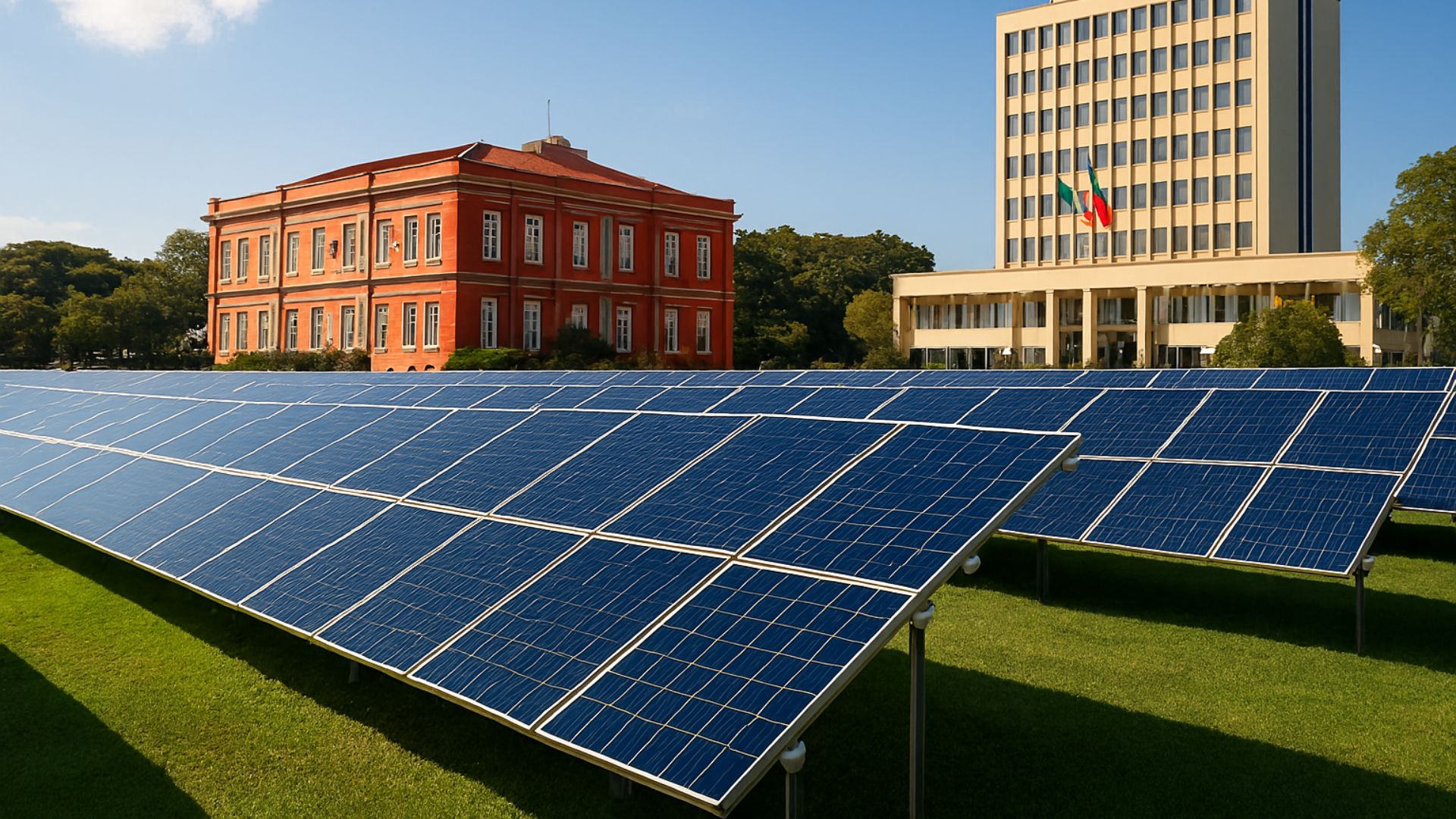
The Government of Paraná Bets on the Expansion of Solar Energy with Eight New Plants to Reduce Costs in Public Buildings, Strengthen Distributed Generation, and Promote Regional Sustainability
On November 12, 2025, the Government of Paraná announced the installation of eight solar plants with a total capacity of 20 megawatts (MW). The aim is to offset the electricity consumption of public buildings, promoting sustainability, distributed generation, and reducing expenses with electricity.
The action, announced by the Government of Paraná itself, is coordinated by the Department of Planning and Urban Development (SEPL), in partnership with the Rural Development Institute of Paraná (IDR) and the State Department of Education (SEED).
Strategic Location of Solar Plants in Paraná
The solar plants will be built on public land distributed across eight municipalities: Ibiporã, Castro, Palmeira, Arapoti, Joaquim Távora, Apucarana, Toledo, and Foz do Iguaçu.
-
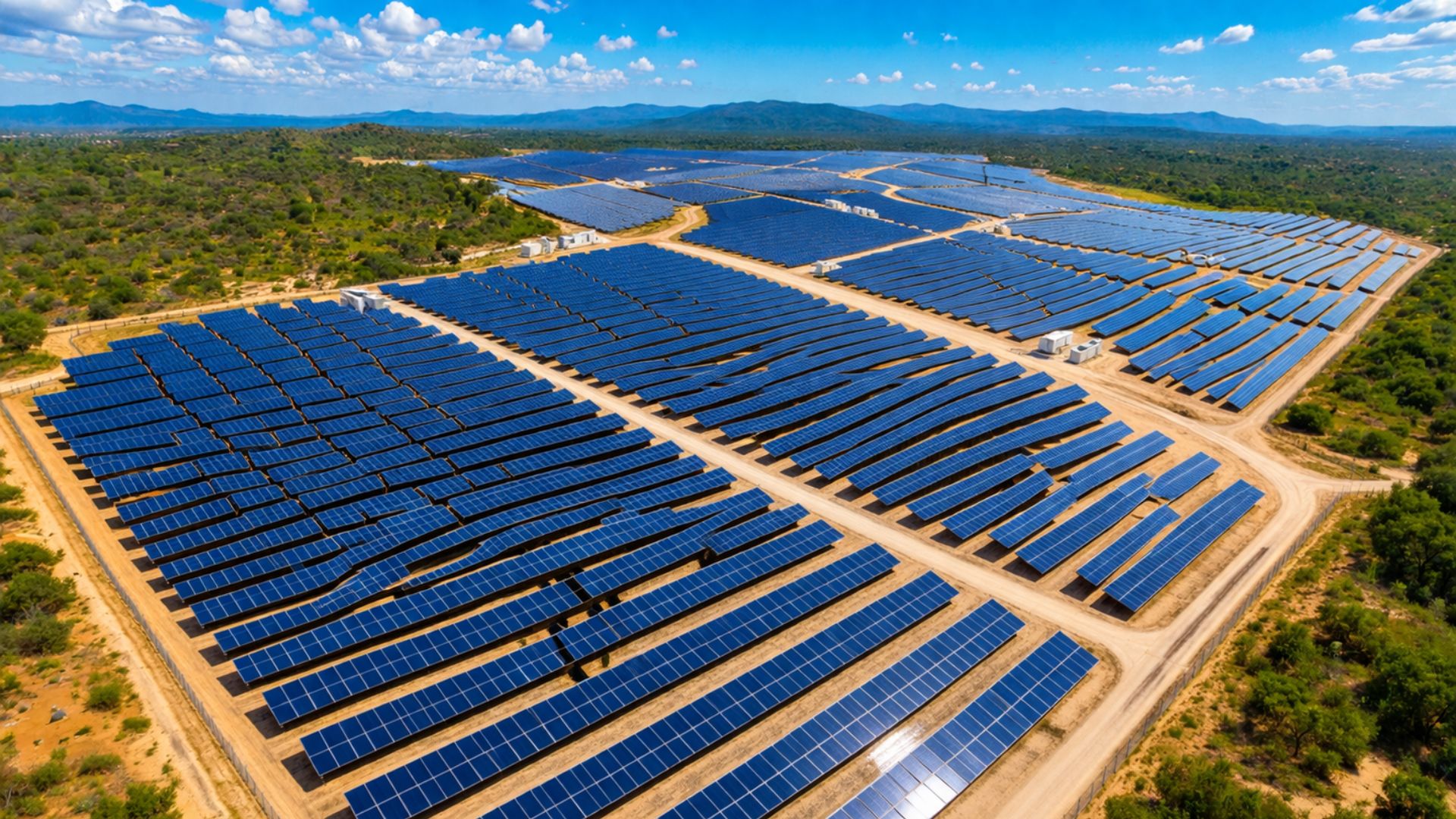
The Sol do Agreste Photovoltaic Complex begins operations in Pernambuco and accelerates the expansion of solar energy in Brazil, directly impacting the reduction of emissions and strengthening the sustainable energy matrix.
-
Roraima bets on the sun to escape high tariffs: Amid the energy crisis and price hikes, solar energy is growing in Roraima and transforming consumption in the North region.
-
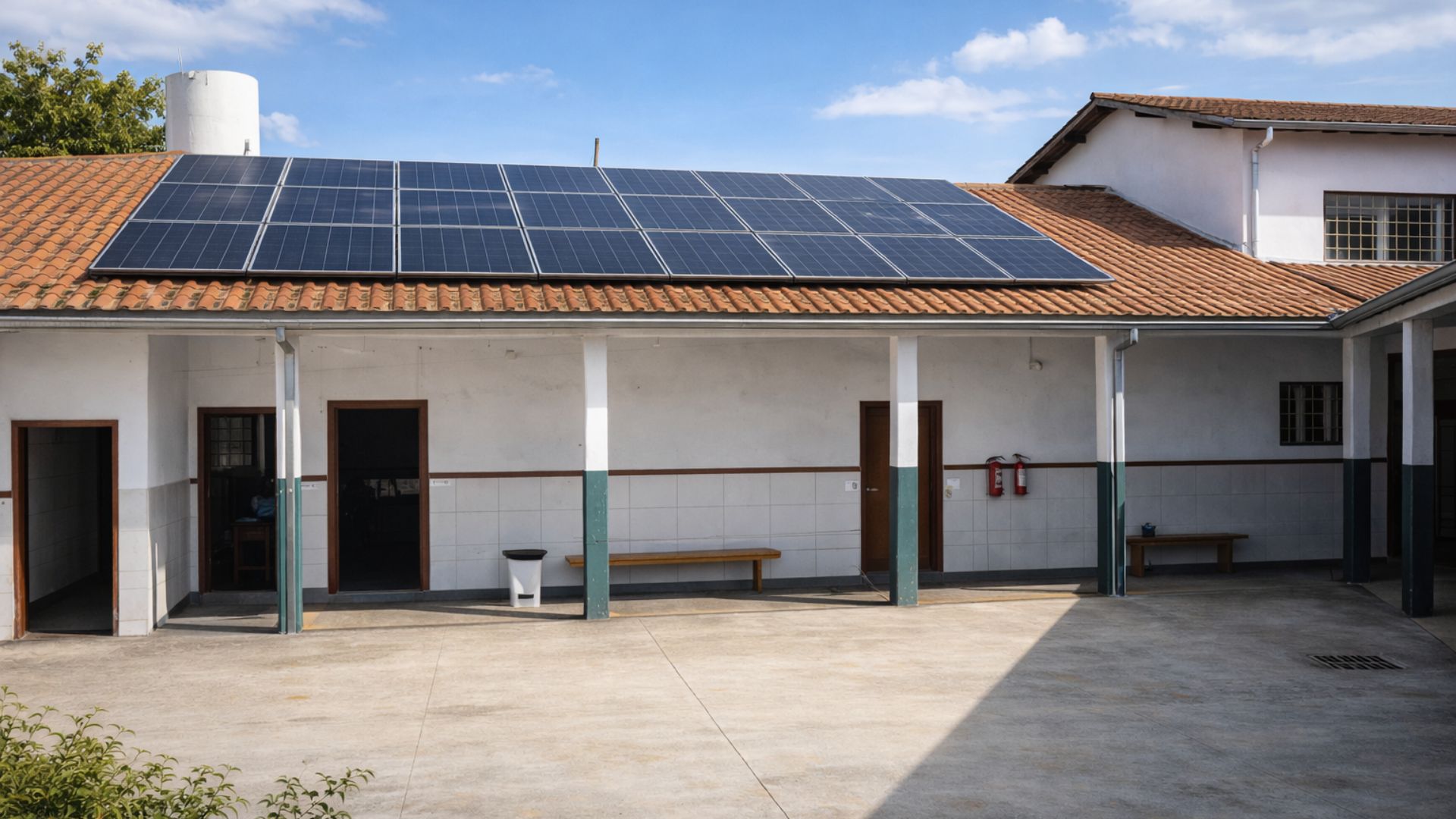
Copel boosts solar energy in Paraná and brings innovation to public schools, promoting savings on electricity bills, energy efficiency, and a direct impact on the quality of education.
-
Brazil reaches historic milestone in solar energy: Sector surpasses 2 million accumulated green jobs and generates billions in the national economy even under market pressure.
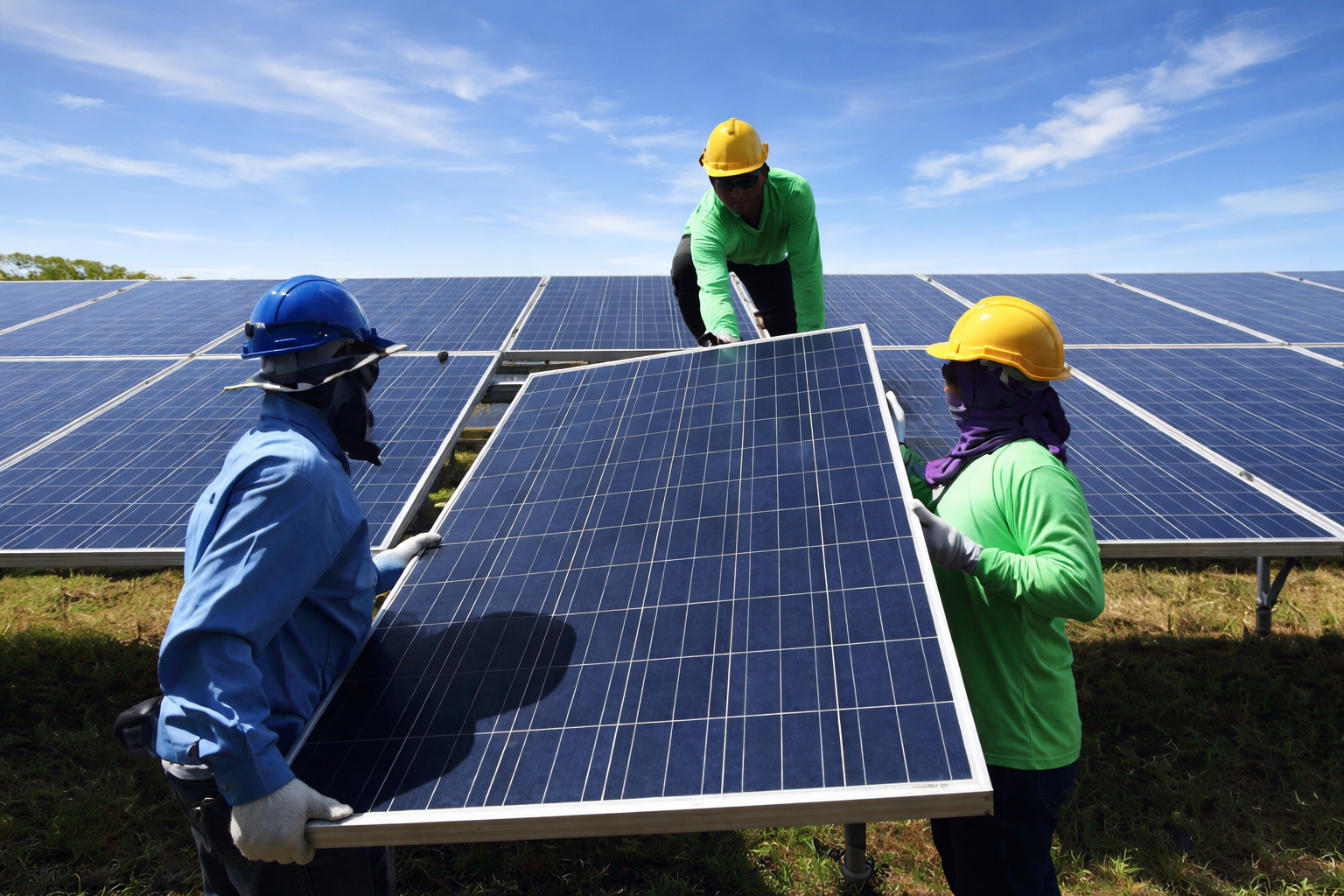

Each plant will occupy about 35,000 m², equivalent to five soccer fields. This geographical distribution was planned to maximize the efficiency of distributed generation, reducing losses in transmission and optimizing local supply.
Furthermore, the choice of locations took into account the availability of public land, solar incidence, and proximity to consumption centers.
Generation Capacity and Impact on Public Buildings in Paraná
With an installed capacity of 20 MW, the plants will have the capacity to meet the energy demand of various public buildings, including schools, administrative units, and citizen service centers. Solar energy will be used to power public buildings, reducing reliance on the conventional grid.
This energy compensation model allows the State to use credits generated by the plants to offset electricity consumption in different units, promoting more efficient resource management. The model adopted by Paraná is that of distributed generation, where energy is produced close to the consumption point. This approach brings several benefits:
- Reduced transmission losses
- Greater energy autonomy
- Lower environmental impact
- Encouragement of technological innovation
Moreover, distributed generation strengthens the State’s energy resilience, making the system less vulnerable to failures and fluctuations. The decentralization of production also facilitates the maintenance and monitoring of solar plants.
Solar Energy and Sustainable Development
The choice of solar energy reflects Paraná’s commitment to the environmental agenda and the United Nations Sustainable Development Goals (SDGs). The photovoltaic source is clean, renewable, and has a low environmental impact.
According to data from the Brazilian Photovoltaic Solar Energy Association (ABSOLAR), Brazil surpassed 37 GW of installed capacity in solar energy in 2025 solely in distributed generation, establishing itself as one of the world leaders in the sector.
Paraná stands out as one of the most engaged states in the energy transition. In addition to reducing greenhouse gas emissions, the use of solar energy contributes to the preservation of natural resources and to the diversification of the Brazilian energy matrix.
Economy and Social Benefits for the People of Paraná
In addition to direct savings on public spending, the project brings indirect benefits to the population:
- Reduction of pressure on the state budget
- Possibility of reinvestment in health, education, and infrastructure
- Generation of local jobs in the construction and maintenance of the plants
- Encouragement of technical training and professional education
The population will benefit from more efficient public services and better-applied resources. The initiative also contributes to educate society about conscious energy use, promoting a culture of sustainability and environmental responsibility.
Planning and Execution with a Focus on Efficiency
The preliminary projects of the solar plants were developed by the technical team from Paraná Projetos and delivered to the IDR and SEED along with the necessary documents for bidding.
The forecast is that the works will begin in the coming years. The process will be conducted with transparency, respecting the principles of public administration and ensuring efficiency in resource allocation.
According to the contracting model, the expectation is that the winning companies of the bidding will be responsible for the construction, operation, and maintenance of the plants, ensuring quality and continuity in energy supply.
Comparison with Other Solar Energy Initiatives in Brazil
Paraná is not alone in adopting solar energy. States like Minas Gerais, São Paulo, and Rio Grande do Sul are also investing in photovoltaic generation to supply public buildings.
However, the Paraná project stands out for its scale and scope, as well as its integration with urban planning and rural development policies. The initiative positions Paraná as one of the national references in solar energy applied to the public sector.
While other states adopt isolated models, Paraná bets on an integrated network of plants, with potential for expansion and replication in other regions. The adoption of solar energy by the Government of Paraná represents a paradigm shift in public management.
By investing in renewable sources, the State demonstrates that it is possible to reconcile administrative efficiency, environmental responsibility, and social benefits. Economy, innovation, and respect for the environment go hand in hand in this project.
The initiative also paves the way for new public policies focused on sustainability, such as incentives for the installation of solar panels in homes, training of professionals in the sector, and partnerships with universities and research centers.
Ways to Expand the Impact of Solar Energy in Paraná
The project of the solar plants is just the beginning of a broader energy transformation. To enhance benefits, the State can invest in:
- Expansion of the distributed generation network to other regions
- Creation of incentive programs for residential solar energy
- Partnerships with educational institutions for technical training
- Continuous monitoring of results and environmental impacts
Solar energy is a powerful tool for promoting sustainable development and energy inclusion.
With strategic planning and political commitment, Paraná has the potential to become a national model of intelligent and responsible energy management.







Seja o primeiro a reagir!