





 Portuguese
  English
  Spanish
 5 min of reading
  0 comments


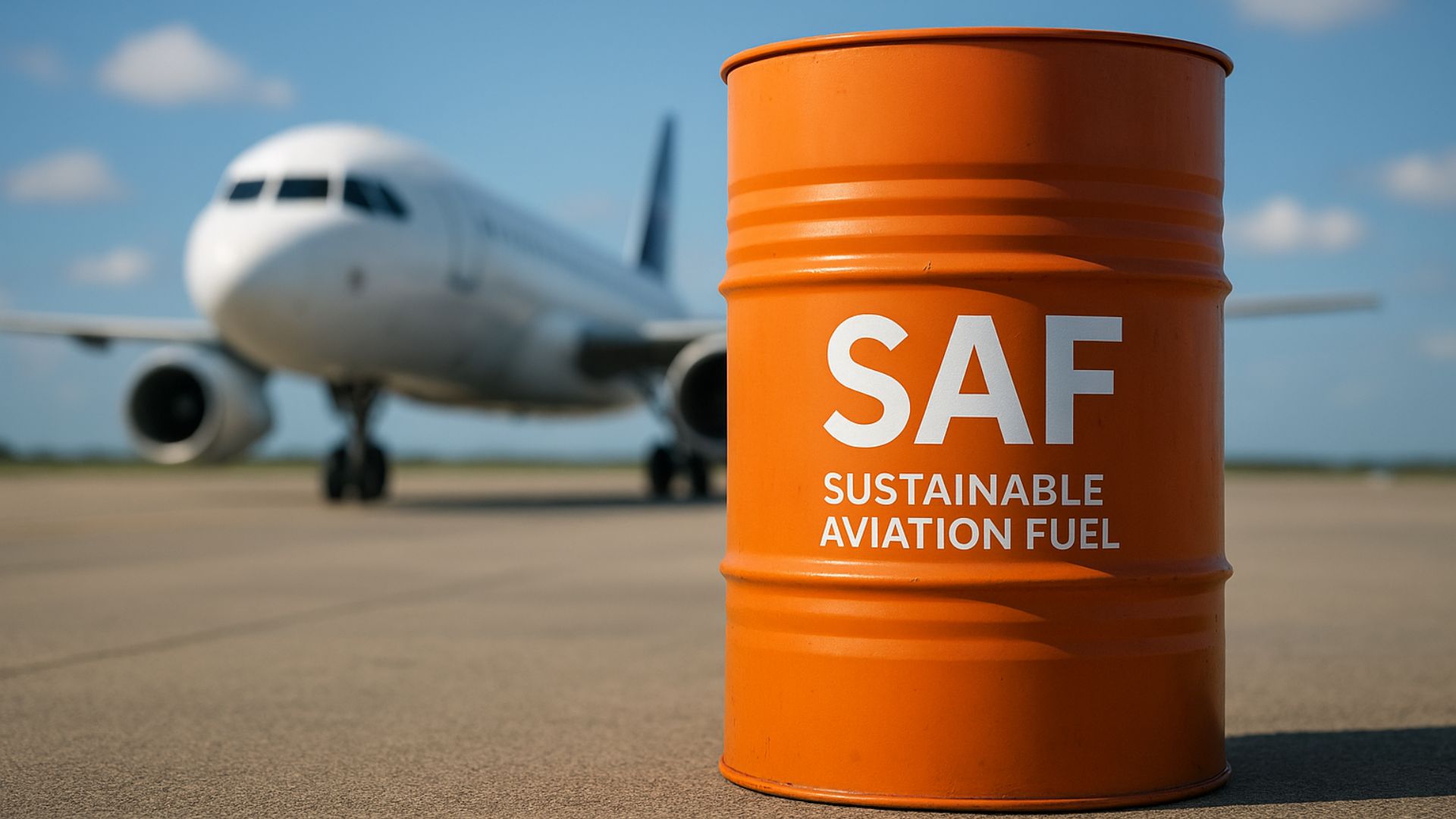
Salvador Airport Starts Regular Supply of Sustainable Fuel from Vibra Energia, Marking an Advance in the Use of SAF in Brazil and Boosting Low-Carbon Aviation with Significant Environmental Gains
On November 26, 2025, the Salvador International Airport became the first in Brazil to supply commercial flights with sustainable aviation fuel (SAF) provided by Vibra Energia. The inaugural operation represents an unprecedented milestone for Brazilian aviation and a significant advancement in the decarbonization of air transport. The initiative involves regular routes operated with a blend of 10% SAF and 90% traditional jet fuel, already being applied to daily flights to Brasília and São Paulo.
Why SAF Represents an Immediate Advance for Brazil
According to information disclosed by the company and the Bahia government, the use of sustainable fuel can reduce up to 80% of greenhouse gas emissions over the product’s lifecycle. Additionally, providing this service positions Salvador as a national benchmark by becoming the first Brazilian airport to have a constant supply of SAF for commercial flights.
The use of SAF is currently considered the fastest and most practical way to reduce emissions in commercial aviation. This is because sustainable fuel can be used in conventional aircraft without requiring any technical modifications or replacement of airport infrastructure. This aspect makes the fuel a strategic ally in accelerating the energy transition of the aviation sector.
-
The Economist states that Brazil has a “secret weapon” against expensive oil and highlights how the country can reduce economic impacts even in international scenarios of high volatility.

-
Brazil accelerates decarbonization in the South: International forum in Foz do Iguaçu gathers leaders to discuss the advancement of biomethane in the energy matrix and the potential of “caipira pre-salt.”

-
As diesel prices soar due to conflicts in the Middle East, a Brazilian city decides to test a little-known biofuel that promises to completely replace fossil fuel without adaptation and could change the future of energy in the country.

-
Innovation with biofuel engines transforms agribusiness by replacing diesel without the need for major adaptations, ensuring energy efficiency and helping to reduce dependence on oil.


The SAF provided by Vibra Energia is produced from renewable waste, such as used oils, residual fats, and byproducts from the agro-industry. By using materials with low environmental impact, the product’s lifecycle emits less carbon, resulting in a significant reduction in greenhouse gases compared to fossil jet fuel.
The international certification applied to the fuel ensures traceability and verification of sustainability. This means that the origin of the raw material, the production process, and transportation are verified by independent entities, ensuring credibility for the claimed environmental results.
Daily Operation at Salvador Airport with Sustainable Fuel
The operation inaugurated at Salvador Airport is not limited to symbolic or experimental flights. Instead, it establishes a daily standard, with two flights regularly supplied with the 10% SAF blend. This consistency demonstrates that the Brazilian market is ready to integrate sustainable fuel into the operational routine of aviation.
The initial supply expected for the implementation phase amounts to several million liters, intended exclusively for routes departing from the capital of Bahia. This shows that there is long-term planning, not just one-off projects.
Vibra Energia, which is responsible for supplying more than 90 airports in the country, has structured its logistics chain to ensure continuous supply of sustainable fuel. Since the company was the first to commercially offer SAF in Brazil, Salvador became the ideal location to start regular operations.
The company is also advancing negotiations to expand SAF availability to other states and airports. If this process evolves, Salvador could become a national hub for sustainable supply, encouraging the expansion of green aviation in the country.
Environmental Impacts of Sustainable Fuel (SAF)
The environmental impact of SAF is the primary reason for its global adoption. Even with only a 10% blend, there is a noticeable reduction in carbon emissions. When used in larger proportions — which is technically possible — the benefit becomes even more significant, bringing aviation closer to the global goals set by international organizations.
Studies indicate that sustainable fuel can reduce up to 80% of CO₂ emissions, depending on the raw material used in the production process. This reduction considers the entire lifecycle of the product, from production to combustion in engines.
For Salvador, the operation creates opportunities for economic and environmental development. The city is already recognized as a logistics and tourism hub, and now strengthens its strategic role in innovation and sustainability initiatives.
For Brazil, the initiative represents a step aligned with internationally assumed emission reduction goals. Aviation is a sector known for its difficulty in decarbonization, and SAF emerges as the most effective alternative in the short and medium term.
Salvador Airport as a National Reference in Sustainable Aviation
By inaugurating this operation, the Salvador International Airport positions itself as a pioneer in the country and reinforces its relevance in the national scene. The initiative joins projects that have already been implemented at the terminal, including energy efficiency systems, infrastructure modernization, and sustainable management practices.
Being the first Brazilian airport to offer regular supply with sustainable fuel is more than a symbolic title — it is recognition of technical capacity, institutional articulation, and commitment to the climate agenda.
With the operation already underway, other airports can observe the model adopted in Salvador to replicate it in their structures. The practical experience will facilitate the development of public policies, regulatory adjustments, and tax incentives that favor the use of SAF throughout the country.
As supply and demand grow, costs tend to decrease, making sustainable fuel more competitive and expanding its use in the aviation sector.
Challenges for the Advancement of SAF in the Country
Despite the environmental benefits, the expansion of SAF use faces challenges. The main one is the production cost, which is still higher than that of conventional jet fuel. As the Brazilian market is in its initial phase, the available volume is also limited.
Another relevant point is the need for specific public policies capable of stimulating domestic production and reducing dependence on imports. Tax incentives, financing, and partnerships between companies and governments are essential to boost the production chain.
The operation in Salvador, however, shows that even with challenges, it is possible to establish a viable and technically safe model.
The Relevance of Using SAF for the Future of Brazilian Aviation
The operation started at the Salvador International Airport represents a decisive milestone for the aviation sector. The use of SAF provides proven environmental benefits, strengthens the country’s competitiveness in the international arena, and demonstrates that the energy transition in aviation is already underway.
By regularly adopting sustainable fuel, Salvador establishes a reference for the entire national territory. The initiative demonstrates that environmental innovation can go hand in hand with commercial operation, maintaining flight safety, efficiency, and regularity.
The advancement of Vibra Energia as a SAF supplier reinforces national leadership in the distribution of cleaner fuels, paving the way for other companies to increase their investments.
From this operation, Brazil takes a concrete step towards sustainable aviation. As fuel becomes more accessible and national infrastructure evolves, it will be possible to expand this transformation to other airports and flights, significantly reducing aviation’s impact on the climate and bringing the country closer to global sustainability goals.









Seja o primeiro a reagir!